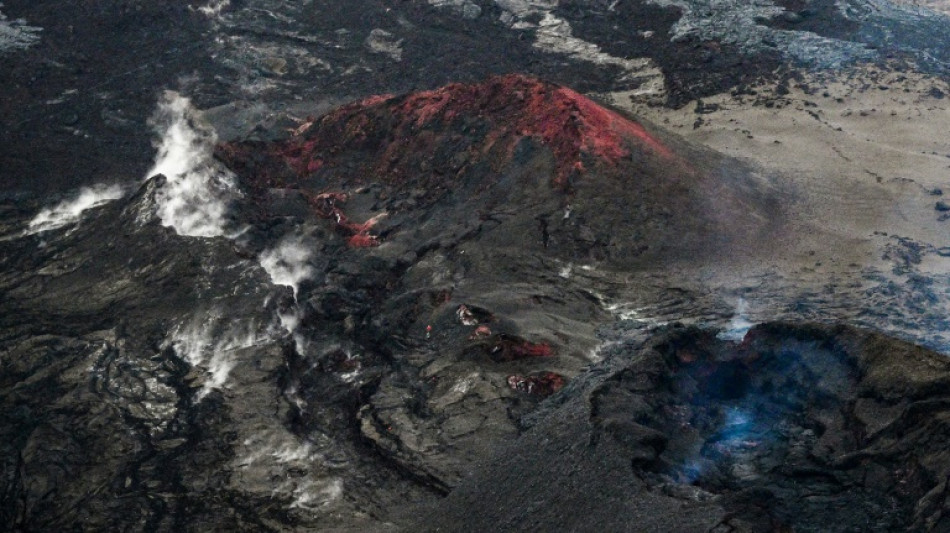
Hawaii volcano goes quiet after spectacular display / Photo: Robyn BECK - AFP

 Bishop Museum Races to Save Rare Megamouth Shark Specimen

 Zach Hickerson Recounts Hayden Panettiere's Final Moments in New Interview

 Luxembourg Housing Petition Passes Threshold for Parliamentary Consideration

 Raheem Sterling Receives Suspended Sentence After Lamborghini Crash

 Audience to Choose the Set List at Luxembourg's First FAMIL Jukebox Night

 Luxembourg Pay Rise Delayed as Regional and World Headlines Develop

 Chennai Urbanist Sashna Develops 'Anniki' Card Game to Gamify Tamil Nadu History

 Transport Minister Defends Land Seizure Powers for Toronto-Quebec City High-Speed Rail

The world's largest volcano, which has offered a spectacular weeks-long show in its first eruption for almost four decades, has gone quiet, scientists in Hawaii said Tuesday.
At the height of the flare-up, Mauna Loa spewed fountains of lava 200 feet (60 meters) into the sky, and sent rivers of molten rock gushing down its sides, wowing vulcanologists and helicopter-riding tourists.
Huge fissures on the volcano, which makes up the bulk of Hawaii's Big Island, vented tons of gas, and sprayed slivers of volcanic glass -- known as Pele's Hair.
But on Tuesday, experts at the US Geological Survey said the show was largely over.
"Mauna Loa is no longer erupting," an update said.
"Lava supply to the fissure 3 vent on the Northeast Rift Zone ceased on December 10 and sulfur dioxide emissions have decreased to near pre-eruption background levels.
"Volcanic tremor and earthquakes associated with the eruption are greatly diminished."
But such is the volume -- and intense heat -- of the viscous rock that issued from the Earth's belly, that hot spots could remain visible for weeks.
"Spots of incandescence may remain near the vent, along channels, and at the flow front for days or weeks as the lava flows cool," the scientists said.
"However, eruptive activity is not expected to return based on past eruptive behavior."
- 'Long Mountain' -
The biggest volcano on Earth by volume, Mauna Loa, whose name means "Long Mountain," is larger than the rest of the Hawaiian islands combined.
The volcano's submarine flanks stretch for miles to an ocean floor that is in turn depressed by Mauna Loa's great mass -- making its summit some 11 miles above its base, according to the USGS.
One of six active volcanoes on the Hawaiian islands, Mauna Loa has erupted 33 times since 1843.
Kilauea, a volcano on the southeastern flank of Mauna Loa, erupted almost continuously between 1983 and 2019, and a minor eruption there has been ongoing for months.
W.Stewart--AT

