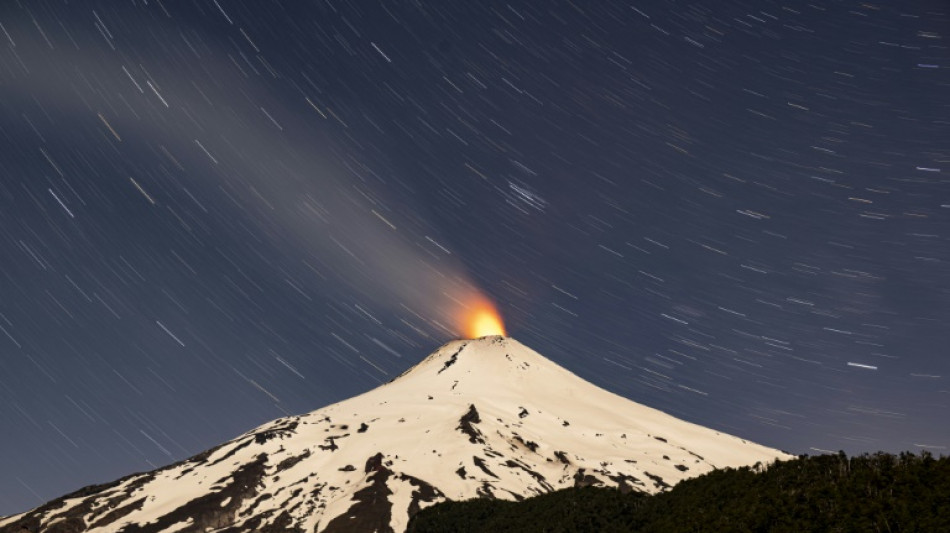
Chile on alert as active volcano rumbles, spits fire / Photo: MARTIN BERNETTI - AFP/File

 Bishop Museum Races to Save Rare Megamouth Shark Specimen

 Zach Hickerson Recounts Hayden Panettiere's Final Moments in New Interview

 Luxembourg Housing Petition Passes Threshold for Parliamentary Consideration

 Raheem Sterling Receives Suspended Sentence After Lamborghini Crash

 Audience to Choose the Set List at Luxembourg's First FAMIL Jukebox Night

 Luxembourg Pay Rise Delayed as Regional and World Headlines Develop

 Chennai Urbanist Sashna Develops 'Anniki' Card Game to Gamify Tamil Nadu History

 Transport Minister Defends Land Seizure Powers for Toronto-Quebec City High-Speed Rail

Chile's snow-capped Villarrica volcano has been shaken by earthquakes and is belching fire, placing authorities on alert for a possible eruption in a picturesque area beloved by tourists.
Since October, the 2,847-meter (9,300-foot)-high Villarrica has been the site of gas explosions and seismic events, with pillars of fire up to 220 meters high shooting out of its lava lake.
Alvaro Amigo, the head of the National Volcanic Surveillance Network, told AFP that "while we cannot predict when the volcano will erupt, the conditions are in place," according to daily assessments of activity at the site.
The glacier-clad volcano overlooks the city of Pucon, with a population of around 28,000 people who live just 15 kilometers (10 miles) from the peak.
The region's lakes and lush forests are a popular tourist draw and some 10,000 visitors climb Villarrica each summer, according to official figures.
"The thing about Villarrica is the risk, because many people are living in areas that are highly exposed" to potential damage from the volcano, said geophysicist Cristian Farias.
He warned that residents had forgotten the hazards of "what Villarrica can do."
Amigo said the volcano was dangerous because its eruptions often cause perilous volcanic rock and mud flows "and because it has a large population and infrastructure around it."
Experts compare the current level of activity to that seen before the previous eruption in 2015, when an explosion of lava, gas and ash shot up 1.5 kilometers into the air, causing no damage before the volcano quieted down again.
Villarrica's last major eruption was in 1984.
The National Geology and Mining Service issued a yellow alert in November in four towns close to the peak, meaning no one can come within 500 meters of the crater. The body has also put in place emergency evacuation plans and real-time monitoring of volcanic activity.
A yellow alert is the step before an orange alert, which indicates imminent eruption.
Mining Minister Marcela Hernando said the idea was to reassure citizens that technology and experts are constantly keeping an eye on Chile's 45 "most important volcanoes."
M.O.Allen--AT

