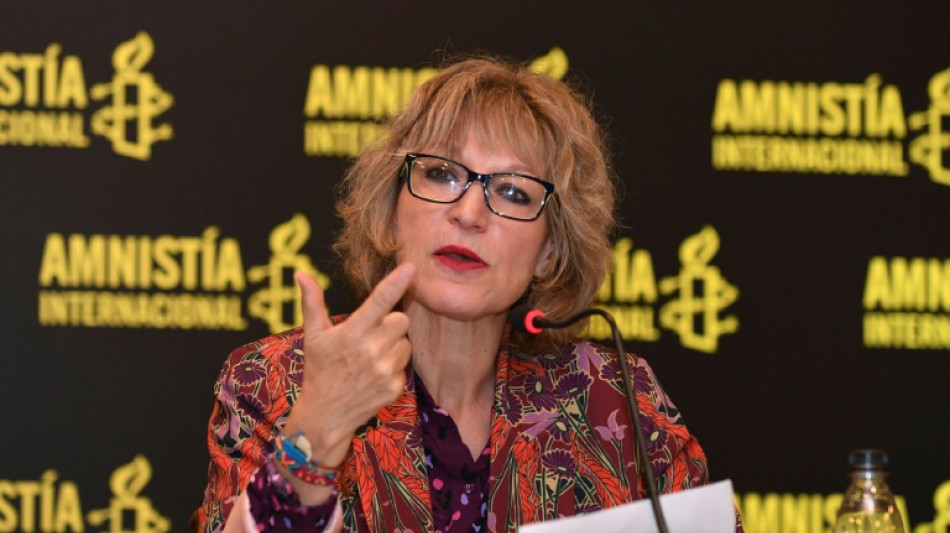
Colombia police sexually abused at least 28 during protests: Amnesty / Photo: DANIEL MUNOZ - AFP

 Bishop Museum Races to Save Rare Megamouth Shark Specimen

 Zach Hickerson Recounts Hayden Panettiere's Final Moments in New Interview

 Luxembourg Housing Petition Passes Threshold for Parliamentary Consideration

 Raheem Sterling Receives Suspended Sentence After Lamborghini Crash

 Audience to Choose the Set List at Luxembourg's First FAMIL Jukebox Night

 Luxembourg Pay Rise Delayed as Regional and World Headlines Develop

 Chennai Urbanist Sashna Develops 'Anniki' Card Game to Gamify Tamil Nadu History

 Transport Minister Defends Land Seizure Powers for Toronto-Quebec City High-Speed Rail

At least 28 people were sexually abused by police during Colombia's mass anti-government protests last year, Amnesty International said Thursday.
Having received hundreds of reports of gender-based violence during that upheaval, the international rights NGO documented 28 cases in seven cities, including the South American country's capital Bogota.
The cases detailed in Amnesty's 68-page report, entitled "The police does not care for me: Sexual violence and other gender-based violence in the 2021 National Strike," occurred between April 28 and June 30, 2021.
During that time, hundreds of thousands of people enduring economic strife caused by the pandemic took to the streets to protest against a proposed tax hike by then-President Ivan Duque (2018-2022), which he ultimately withdrew.
Police brutally cracked down on the unprecedented youth-led social uprising, with the UN reporting at least 46 deaths and accusing security personnel of serious human rights violations.
Erika Guevara, Amnesty's director for the Americas, said at a Bogota event presenting the report that "state violence faced by the population... was part of a generalized pattern against the protesters."
The Amnesty report details multiple instances of police, after deploying tear gas and other dispersal measures on peaceful gatherings, taking women aside and assaulting them.
The report also describes police insinuating to detained male protesters that they would be punished through sexual violence, before placing them in rooms where they were sexually assaulted.
"The common factor in all cases is the intention behind this use of violence: the perpetrators sought to punish the victims for contravening social gender norms and going out onto the streets to claim their rights," the report says.
Deploring the lack of convictions for the sexual violence, Amnesty secretary general Agnes Callamard said: "The violence of the street translated into the violence in the judicial system translated into the violence of the system altogether."
J.Gomez--AT

