China's power paradox: record renewables, continued coal / Photo: GREG BAKER - AFP/File

 NBA close to picking new $12-13bn Vegas team owners: report

 LA28 Olympics torch relay to visit all 50 states

 Spain brush aside Croatia in Nations League, England down Czechs
 Trump hails 'morally binding' AI self-regulation pledge
 Yamal inspires Spain to Croatia romp on World Cup homecoming

 UN to hold fourth informal poll of secretary-general candidates

 Who are the Emiratis behind crisis-hit Manchester City?

 Singer Angelique Kidjo urges Africans to 'create together'

 Alleged Rihanna mansion shooter mentally fit for trial, says judge
 Mystery over UK airbase scare as police find petrol not explosives

 OpenAI unveils low-cost AI model, a day after shelving Astra upgrade
 Premier League confirms Man City guilty of serious financial breaches
 Brazil's Lula turns to Bad Bunny tune to criticise Trump ahead of polls

 Nigerian dancer eyes world record after seven-day marathon

 Swiss regulator concludes Julius Baer bank probe
 Brazil's patron saint pulled into latest election scrap

 Football overload leaves players near 'breaking point', warns Tebas

 Paris Eiffel Tower says chief to step down after uproar over removing women staff

 Amaze Holdings (NYSE: AMZE) Executes Binding LOI to Acquire BullionFX | Alchemy, a Decentralized Gold-Backed Financial Ecosystem for Valued at US$155 Million

 Clashes between French teens, police as school blockades intensify
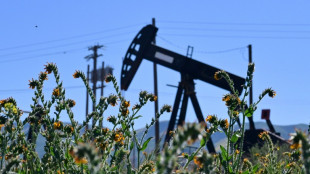 Stocks move sideways despite oil moving lower

 African leaders to gather in Egypt for business summit

 UK decides against charging foreign visitors for museums

 Dallaglio to sell England World Cup winners' medal

 Brazil come from behind to beat Australia 4-2 in friendly

Call it the China power paradox: while Beijing leads the world in renewable energy expansion, its coal projects are booming too.
As the top emitter of greenhouse gases, China will largely determine whether the world avoids the worst effects of climate change.
On the one hand, the picture looks positive. Gleaming solar farms now sprawl across Chinese deserts; China installed more renewables last year than all existing US capacity; and President Xi Jinping has made the country's first emissions reduction pledges.
Yet in the first half of this year, coal power capacity also grew, with new or revived proposals hitting a decade high.
China accounted for 93 percent of new global coal construction in 2024, the Centre for Research on Energy and Clear Air (CREA) found.
One reason is China's "build before breaking" approach, said Muyi Yang, senior energy analyst at think tank Ember.
Officials are wary of abandoning the old system before renewables are considered fully operational, Yang said.
"Think of it like a child learning to walk," he told AFP.
"There will be stumbles -- like supply interruptions, price spikes -- and if you don't manage those, you risk undermining public support."
Policymakers remain scarred by 2021–22 power shortages tied to pricing, demand, grid issues and extreme weather.
While grid reform and storage would prevent a repeat, officials are hedging with new coal capacity, even if it sits idle, experts said.
"There's the basic bureaucratic impulse to make sure that you don't get blamed," said Lauri Myllyvirta, CREA co-founder and lead analyst.
"They want to make absolutely sure that they don't block one possible solution."
- Grid and transmission -
There's also an economic rationale, said David Fishman, a China power expert at Lantau Group, a consultancy.
China's electricity demand has increased faster than even record-breaking renewable installations.
That may have shifted in 2025, when renewables finally met demand growth in the first half of the year. But slower demand played a role, and many firms see coal remaining profitable.
Grid and transmission issues also make coal attractive.
Large-scale renewables are often in energy-rich, sparsely populated regions far from consumers.
Sending that power over long distances raises the cost and "incentivises build-out of local energy capacity," Fishman told AFP.
China is improving its infrastructure for long-distance power trading, "but it's definitely not where it needs to be", he added.
Coal also benefits from being a "dispatchable resource" -- easily ramped up or down -- unlike solar and wind, which depend on weather.
To increase renewables, "you have to make the coal plants operate more flexibly... and make space for variable renewables," Myllyvirta said.
China's grid remains "very rigid", and coal-fired power plants are "the beneficiaries", he added.
- 'Instrumental' economic driver -
Other challenges loom. The end of feed-in tariffs means new renewable projects must compete on the open market.
Fishman argues that "green power demand is insufficient to keep capacity expansion high", though the government has policy levers to tip the balance, including requiring companies to use more renewables.
China wants 3,600 gigawatts of wind and solar by 2035, but that may not meet future demand, risking further coal increases.
Still, coal additions do not always equal coal emissions -- China's fleet currently runs at only 50 percent capacity.
And the "clean energy" sector -- including solar, wind, nuclear, hydropower, storage and EVs -- is a major economic driver.
CREA estimates it contributed a record 10 percent to China's gross domestic product last year, and drove a quarter of growth.
"It has become completely instrumental to meeting economic targets," said Myllyvirta.
"That's the main reason I'm cautiously optimistic in spite of these challenges."
M.Robinson--AT