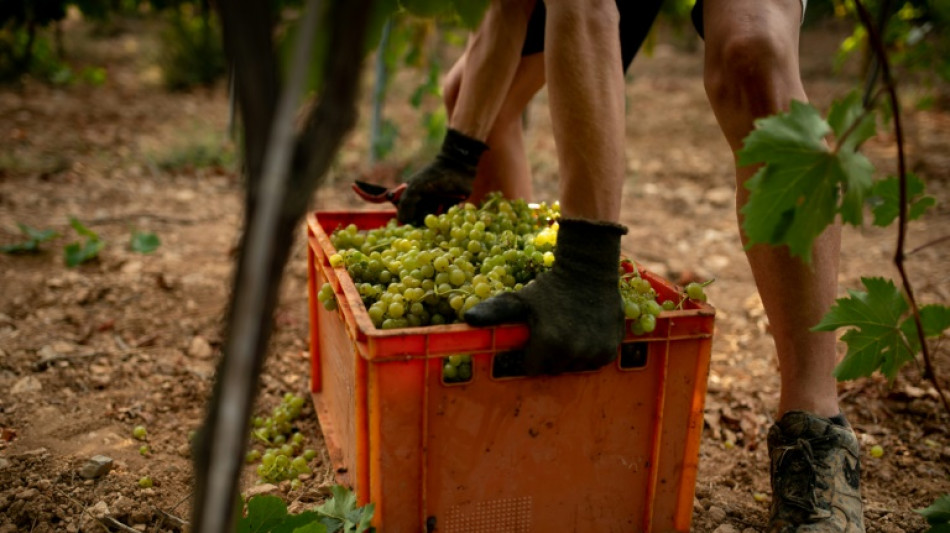
Spain, Portugal dryness 'unprecedented' in 1,200 years / Photo: Josep LAGO - AFP/File

 China-Nepal flood toll tops 1,000 as tunnel rescue offers last hope

 Japan to relax overtime regulation under workaholic PM

 Thwarted Niger mutiny exposes junta's Russia dependence

 Illegal mining ravages S.Africa's economic hub

 Nepal's wall of missing offers last hope after Himalayan flood

 US to press G20 on light-touch AI regulation

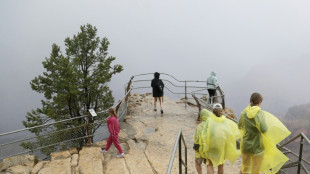 2 die in Grand Canyon flash flood, only 1 person unaccounted for

 US Army Secretary Driscoll submits resignation: White House

 Oil extends gains, stocks drop as Trump issues fresh Iran warning

 Tsitsipas says Kyrgios's positive cocaine test 'kind of expected'

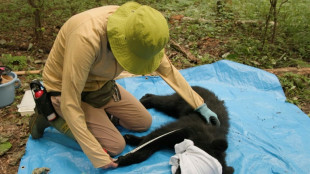 In Japan's mountains, a different way to manage bears

 Middle East war a boon for UAE defence giant with global ambitions
 Former gang member found guilty of murdering Tupac Shakur

 InterContinental Hotels Group PLC Announces Transaction in Own Shares - September 01

 Connecting Excellence Group PLC Announces First Acquisition Heads of Terms & Trading Update

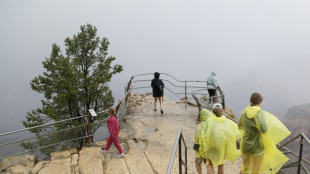 Heavy rain at Grand Canyon after flood kills 2, dozen missing

 Kushner blames soccer power struggle for World Cup plan collapse

 Buoyant Alcaraz shakes off nerves to advance at US Open

 US draws European pushback with Russia G20 finance invite

 Jury begins deliberations in Tupac Shakur murder trial

 US Supreme Court allows Trump ballroom project to proceed

 Trump says US reviewing position on Falkland Islands

 Saka strikes as flawless Arsenal punish troubled Villa

 Oil prices surge on renewed fighting in US-Iran war

 Cycling superstar Pogacar has surgery after Vuelta crash
Parts of Portugal and Spain are the driest they have been in a thousand years due to an atmospheric high-pressure system driven by climate change, according to research published Monday, warning of severe implications for wine and olive production.
The Azores High, an area of high pressure that rotates clockwise over parts of the North Atlantic, has a major effect on weather and long-term climate trends in western Europe.
But in a new modelling study published in the journal Nature Geoscience, researchers in the United States found this high-pressure system "has changed dramatically in the past century and that these changes in North Atlantic climate are unprecedented within the past millennium".
Using climate model simulations over the last 1,200 years, the study found that this high-pressure system started to grow to cover a greater area around 200 years ago, as human greenhouse gas pollution began to increase.
It expanded even more dramatically in the 20th century in step with global warming.
The authors then looked at evidence of rainfall levels preserved over hundreds of years in Portuguese stalagmites, and found that as the Azores High has expanded, the winters in the western Mediterranean have become drier.
The study cites projections that the level of precipitation could fall a further 10 to 20 percent by the end of this century, which the authors say would make Iberian agriculture "some of the most vulnerable in Europe".
They warn that the Azores High will continue to expand during the 21st century as greenhouse gas levels rise, leading to an increasing risk of drought on the Iberian Peninsula and threatening key crops.
"Our findings have important implications for projected changes in western Mediterranean hydroclimate throughout the twenty-first century," the authors said.
- Wither vines -
The Azores High acts as a "gatekeeper" for rainfall into Europe, according to the study, with dry air descending in the summer months to cause hot, arid conditions in much of Portugal, Spain and the western Mediterranean.
In the cool, wetter winter period, the high-pressure system swells, sending westerly winds carrying rain inland.
This winter rain is "vital" for both the ecological and economic health of the region, but it has been decreasing, particularly over the second half of the 20th century.
While previous research had not untangled the effects of natural variability on the Azores High, the authors said their findings show its expansion during the industrial era is linked to the rise of atmospheric greenhouse gas concentrations.
A study cited in the latest research estimates that the area suitable for grape growing in the Iberian Peninsula could shrink by at least a quarter and potentially vanish almost completely by 2050 because of severe water shortages.
Meanwhile, researchers have predicted a 30-percent drop in production for olive regions in southern Spain by 2100.
Winemakers are already looking for ways to adapt to the changing climate, such as moving vineyards to higher altitudes and experimenting with more heat-tolerant varieties.
Last year, scientists found that a severe spring frost that ravaged grape vines in France was made more likely by climate change, with the plants budding earlier and therefore more susceptible to damage.
K.Hill--AT