Deadly Indian Himalayan flood likely caused by glacier collapse, experts say / Photo: Biju BORO - AFP

 With elections ahead, Latvia's Russian-speakers reject Moscow's help

 Brazil football clubs face massive sponsorship blow from betting ban
 ChatGPT maker wants to be the App Store for AI as safety concerns grow

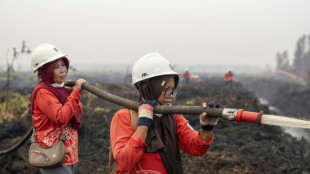 Women fight fires and sexism in Indonesian Borneo

 Forsling's OT blast lifts Florida over Carolina in NHL opener

 Hurricane Polo sweeps over Mexico's Pacific coast, heads inland

 Grynspan pulls ahead in race to lead UN: diplomat

 Trump touts AI boss pledge to self-regulate

 Oil down, but stocks lower as bond yields rise

 England break down stubborn Czechs to claim first Nations League win

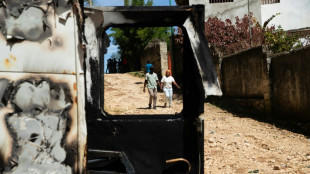 UN Security Council extends Haiti anti-gang force by 6 months

 Manchester City guilty of Premier League charges: What comes next?

 Man City chief Soriano slams Premier League 'conspiracy theory'

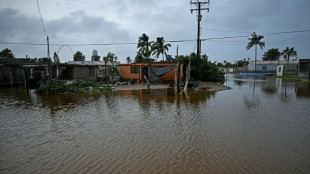 Hurricane Polo sweeps over Mexico's Pacific coast

 Man City must be relegated after guilty verdict says club's former chairman

 German far-right aims to lead Saxony-Anhalt govt in December

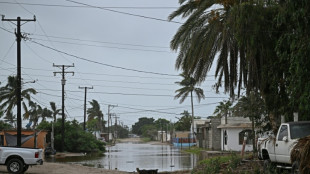 Little damage as Hurricane Polo sweeps over Mexico's Pacific coast

 Manchester City guilty of breaking financial rules - Premier League

 FIFA boss Infantino blasted as would-be 'emperor' by UEFA's Ceferin

 Stocks move lower despite oil prices dropping

 AI driving up innovation investment: UN

 UN Security Council extends Haiti mission by 6 months
 Man Utd do not deserve medals if Man City stripped of titles: Rooney

 Vana Completes Expanded Staking as Part of the Vega Upgrade, Publishes Expanded VANA Token Economics

 Spain to cap gas price hikes, extend fuel discounts
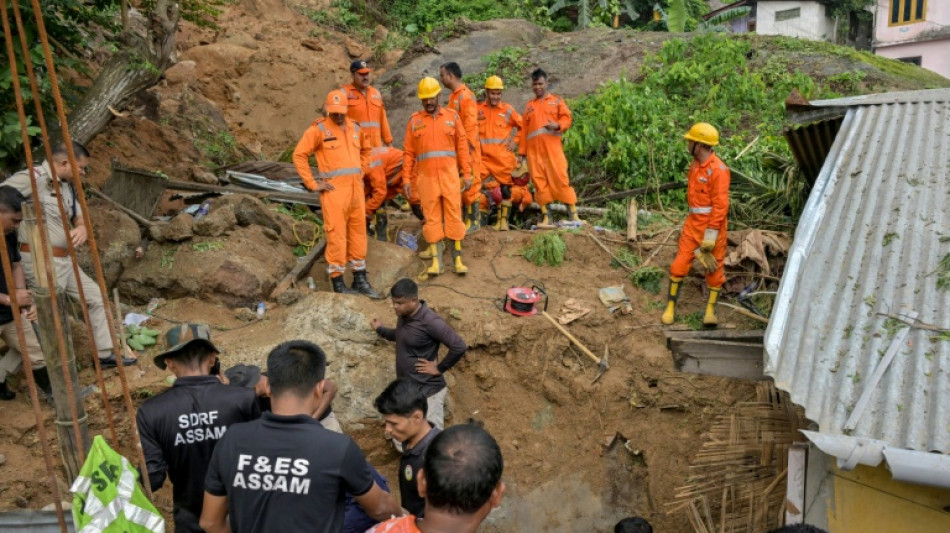
A deadly wall of muddy water that swept away an Indian Himalayan town this week was likely caused by a rapidly melting glacier exacerbated by the rising effects of climate change, experts said on Thursday.
Scores of people are missing after water and debris tore down a narrow mountain valley, smashing into the town of Dharali in Uttarakhand state on Tuesday.
Several people could be seen in videos running before being engulfed as waves uprooted entire buildings, leaving others smothered in freezing sludge.
At least four people have been confirmed killed, but at least 50 others are missing.
Government officials said shortly after the disaster that the flood was caused by an intense "cloudburst" of rain.
However, experts assessing the damage suggested that it was only the final trigger, adding to days of prolonged rains that had already soaked and loosened the ground.
P.K. Joshi, of New Delhi's Jawaharlal Nehru University, an expert on Himalayan hazards, said it appeared the flood was caused by the collapse of debris -- known as moraine -- that had dammed a lake of meltwater from a retreating glacier.
"Given the persistent rainfall over preceding days and the sudden discharge observed, a glacial lake outburst flood (GLOF) or collapse of a moraine-dammed lake is suspected as the primary trigger," Joshi told AFP.
That would have contributed to a "sudden high energy flash flood", he said, noting that glacial terrain upstream of the town included "unstable sediment zones".
Cloud cover has obstructed satellite imagery to check for the exact source of the debris, and Joshi cautioned that there was not enough satellite data for a "definitive confirmation".
- 'Disaster severity' -
Safi Ahsan Rizvi, an adviser to the National Disaster Management Authority, also said that it was "likely" that the cause was a "glacio-fluvial debris landslide".
Sandip Tanu Mandal, a glaciologist at New Delhi's Mobius Foundation, also pointed to the "possibility of a GLOF", caused by "significant water accumulation in the lake due to increased melting and rainfall".
Mandal noted that while heavy, the amount of rain immediately before the flood was "not very significant" in comparison to the vast volumes of water that poured down the valley.
That would indicate the source was a potentially collapsing lake.
Himalayan glaciers, which provide critical water to nearly two billion people, are melting faster than ever before due to climate change, exposing communities to unpredictable and costly disasters, scientists warn.
The softening of permafrost increases the chances of landslides.
Joshi said the latest disaster "highlights the complex and interconnected nature of Himalayan hazards".
Rapid development and building downstream meant that the damage caused was multiplied.
"The land use patterns in the floodplain exacerbated the disaster severity," Joshi said.
F.Ramirez--AT