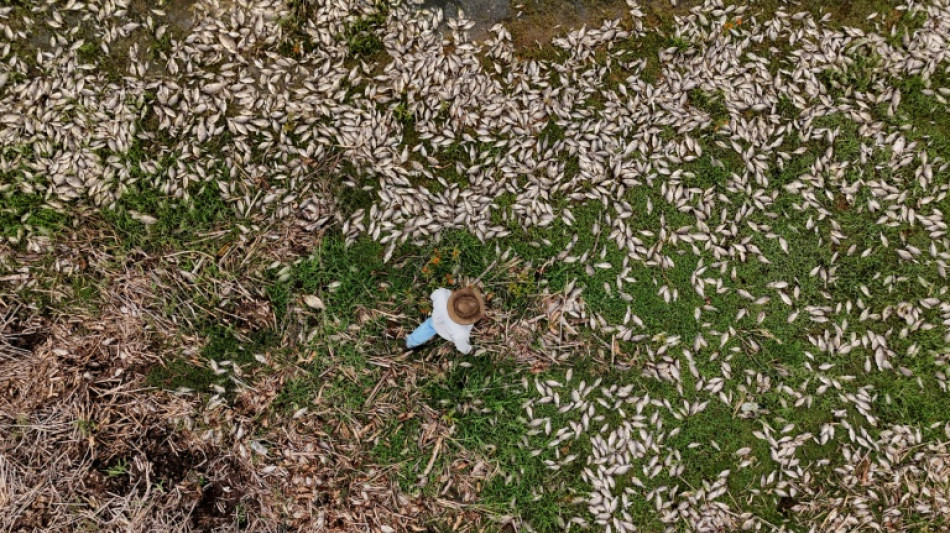
UN nature talks 'close' to breaking funding deadlock / Photo: ULISES RUIZ - AFP/File

 Dangote to launch $16bn refinery in Kenya
 North Korean leader 'extremely obese': Seoul spy agency
 Yankees and pope-backed White Sox start MLB playoffs with wins
 Malaysia's ex-PM Mahathir in hospital for observation

 'No limits': Marathon world record holder Sawe chasing history
 Countdown begins to biggest-ever Rugby World Cup
 Bangladesh women lose ground after quota reform
 Vietnam admits 'differing opinions' on Hanoi development
 Stocks temper gains as oil pares heavy losses, US data in focus
 New Zealand denies breaching climate commitments to EU

 Albert becomes youngest US scorer in 4-2 win over Chile
 Pirate island's plunging population shows Greece's demographic decline
 With elections ahead, Latvia's Russian-speakers reject Moscow's help
 Brazil football clubs face massive sponsorship blow from betting ban
 ChatGPT maker wants to be the App Store for AI as safety concerns grow

 Women fight fires and sexism in Indonesian Borneo

 Forsling's OT blast lifts Florida over Carolina in NHL opener

 Alpha Growth Management Opens Rep Office in Japan

 NBA close to picking new $12-13bn Vegas team owners: report

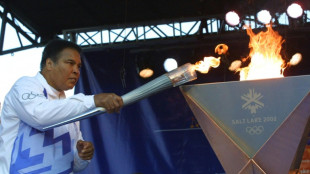 LA28 Olympics torch relay to visit all 50 states
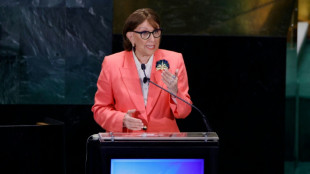
 Spain brush aside Croatia in Nations League, England down Czechs
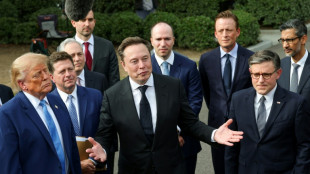
 Trump hails 'morally binding' AI self-regulation pledge
 Yamal inspires Spain to Croatia romp on World Cup homecoming

 UN to hold fourth informal poll of secretary-general candidates
 Who are the Emiratis behind crisis-hit Manchester City?
Nations were locked in last-ditch efforts to break deadlock on funding for nature at UN talks in Rome Thursday, in what several countries framed as a test for international cooperation in the face of geopolitical tensions.
Rich and developing countries broadly agree over the scale of the crisis that threatens the ecosystems and wildlife that humans rely on for food, climate regulation and economic prosperity.
But their disagreements over how to govern the billions of dollars needed to protect species caused a previous meeting in Cali, Colombia last year to end in disarray.
The rebooted COP16 talks are tasked with bridging those differences.
There were signs that countries were pulling closer together in the early evening Thursday, after intense closed door talks based on a "compromise attempt" text that Brazil put forward on behalf of the BRICS country bloc that includes Russia, China and India.
"I think that we have made great progress and are quite close to, you know, agreeing on this document," said the European Union negotiator Hugo Schally at an evening plenary.
COP16 president Susana Muhamad of Colombia presented what she called a "well advanced" document Thursday evening, with just one paragraph in brackets, showing that it is still unresolved.
It will be put to negotiators later in the evening.
The talks come as countries face a range of challenges, from trade disputes and debt worries to the slashing of overseas aid by new US President Donald Trump
Washington, which has not signed up to the UN's Convention on Biological Diversity, sent no representatives to the meeting.
Brazil's negotiator Maria Angelica Ikeda told AFP that financing has been a flashpoint long before the current international tensions, adding that the BRICS proposal sought to be "very sensitive" to a broad spectrum of views.
"So instead of fighting each other, what we need is to prove that yes, we can adopt a multilateral decision that will clearly set a path forward," she said.
"If we don't unite here, we run the risk of losing everything back home as well. So that's what's at stake in this COP."
- 'Test case' -
A European Union official, who asked to remain anonymous because they were not authorised to speak publicly said countries were reeling from economic constraints and a "fundamentally changed landscape geopolitically".
"Everybody knows what's at stake, it's multilateralism that is at stake. It's a test case here," they told AFP.
And scientists have warned that action is urgent.
A million species are threatened with extinction, while unsustainable farming and consumption destroys forests, depletes soils and spreads plastic pollution to even the most remote areas of the planet.
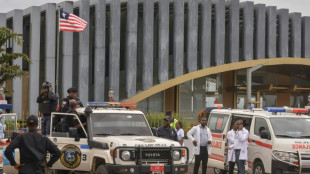
Young protesters greeted negotiators as they arrived at the building of the UN Food and Agriculture Organization on Thursday, playing a soundtrack of rainforest noises and handing out flyers urging: "Don't let silence be our legacy".
- Money worries -
The BRICS proposal sought to clarify two main goals to be agreed -- closing the multi-billion-dollar biodiversity financing gap and deciding on the institutions that will deliver that money.
That is a key next step after a landmark 2022 agreement that saw countries agree to halt the destruction of nature by the end of this decade.
They laid out a programme of objectives to be achieved by 2030, including protecting 30 percent of the world's land and seas.
Countries have already agreed to deliver $200 billion a year in finance for nature by 2030, including $30 billion a year from wealthier countries to poorer ones.
The total for 2022 was about $15 billion, according to the OECD.
The main debate is over developing countries' demand for the creation of a specific biodiversity fund, which has seen pushback from the EU and other wealthy nations, who have argued against multiple funds.
The failure to finalise agreement in Cali was the first in a string of disappointing outcomes for the planet at UN summits last year and comes as trade disputes and conflicts rattle global cooperation.
A climate finance deal at COP29 in Azerbaijan in November was slammed as disappointing, while separate negotiations about desertification and plastic pollution stalled in December.
E.Flores--AT