-
 Dangote to launch $16bn refinery in Kenya
-
Nagoya mayor says sorry for Asian Games 'inconveniences'
-
 North Korean leader 'extremely obese': Seoul spy agency
-
G20 trade officials meet under shadow of tariffs, overcapacity

-
 Yankees and pope-backed White Sox start MLB playoffs with wins
-
India's fat dog vote goes viral
-
 Malaysia's ex-PM Mahathir in hospital for observation
-
Asian Games crowds in spotlight as 998 see hosts in 50,000 stadium

-
 'No limits': Marathon world record holder Sawe chasing history
-
The eight stadiums for the 2027 Rugby World Cup

-
 Countdown begins to biggest-ever Rugby World Cup
-
Thieves swipe drugs under nose of Fiji police, swap with flour

-
 Bangladesh women lose ground after quota reform
-
South Korea demands North apologise for DMZ mine blasts

-
 Vietnam admits 'differing opinions' on Hanoi development
-
In Nepal's flood zone, teachers mourn students who never returned
-
 Stocks temper gains as oil pares heavy losses, US data in focus
-
US Supreme Court lifts limits on third-country deportations

-
 New Zealand denies breaching climate commitments to EU
-
Antonelli eager to 're-establish order' as F1 returns to Malaysia

-
 Albert becomes youngest US scorer in 4-2 win over Chile
-
Paw-fect candidate: Australia finds new koala rescue dog

-
 Pirate island's plunging population shows Greece's demographic decline
-
One third of world population exposed to harmful air pollution: monitor
-
 With elections ahead, Latvia's Russian-speakers reject Moscow's help
-
North Korea denies South's claim it was apparently behind DMZ mine blasts

-
 Brazil football clubs face massive sponsorship blow from betting ban
-
West Bank's violent settlers part of a new generation fuelled by ideology
-
 ChatGPT maker wants to be the App Store for AI as safety concerns grow
-
US-led coalition ends mission in Iraq

-
 Women fight fires and sexism in Indonesian Borneo
-
Pope-backed White Sox join Braves with MLB playoff wins

-
 Forsling's OT blast lifts Florida over Carolina in NHL opener
-
InterContinental Hotels Group PLC Announces Transaction in Own Shares - September 30

-
 Alpha Growth Management Opens Rep Office in Japan
-
Guardian Metal Resources PLC Announces Total Voting Rights

-
 NBA close to picking new $12-13bn Vegas team owners: report
-
Hurricane Polo sweeps over Mexico's Pacific coast, heads inland
-
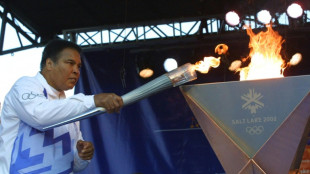 LA28 Olympics torch relay to visit all 50 states
-
Grynspan pulls ahead in race to lead UN: diplomat
-
 Spain brush aside Croatia in Nations League, England down Czechs
-
Trump touts AI boss pledge to self-regulate
-
 Trump hails 'morally binding' AI self-regulation pledge
-
Oil down, but stocks lower as bond yields rise

-
 Yamal inspires Spain to Croatia romp on World Cup homecoming
-
England break down stubborn Czechs to claim first Nations League win

-
 UN to hold fourth informal poll of secretary-general candidates
-
UN Security Council extends Haiti anti-gang force by 6 months
-
 Who are the Emiratis behind crisis-hit Manchester City?
-
Manchester City guilty of Premier League charges: What comes next?

Climate change made ferocious LA wildfires more likely: study
Human-driven climate change set the stage for the devastating Los Angeles wildfires by reducing rainfall, parching vegetation, and extending the dangerous overlap between flammable drought conditions and powerful Santa Ana winds, according to an analysis published Tuesday.
The study, conducted by dozens of researchers, concluded that the fire-prone conditions fueling the blazes were approximately 35 percent more likely due to global warming caused by burning fossil fuels.
"Climate change increased the risk of the devastating LA wildfires," said Clair Barnes of Imperial College London, the lead author of the study by World Weather Attribution, an international academic collaboration.
"Drought conditions are increasingly pushing into winter, raising the likelihood of fires breaking out during strong Santa Ana winds that can transform small ignitions into deadly infernos.
"Without a faster transition away from planet-heating fossil fuels, California will continue to get hotter, drier, and more flammable."
- Projected to worsen -
The study does not address the direct causes of the wildfires, which erupted around Los Angeles on January 7, killing at least 29 people and destroying more than 10,000 homes, the most destructive in the city's history.
Investigators are probing the role of power company Southern California Edison in one of the blazes, the Eaton Fire.
Instead, researchers analyzed weather data and climate models to assess how such events have evolved under today's climate, which has warmed approximately 2.3 degrees Fahrenheit (1.3 degrees Celsius) above pre-industrial levels.
Using peer-reviewed methods, they found that the hot, dry, and windy conditions were 1.35 times more likely due to climate change.
Looking ahead, the study warns that under current scenarios, where global warming reaches 4.7F (2.6C) by 2100, similar fire-weather events in January will become a further 35 percent more likely.
Historically, October through December rainfall has marked the end of wildfire season.
However, these rains have decreased in recent decades.
The study found that low rainfall across these months is now 2.4 times more likely during neutral El Nino conditions, leading to drier, flammable conditions persisting into the peak of the Santa Ana wind season in December and January.
- Areas of Uncertainty -
The relationship between climate change and Santa Ana winds -- which form in western deserts, then heat up and dry out as they flow down California's mountains -- remains unclear.
While most studies predict a decline in these winds as the climate warms, some suggest hot Santa Ana wind events and particularly strong years will persist.
This year's fires followed two wet winters in 2022–2023 and 2023–2024, which spurred the growth of grass and brush. However, almost no rain this winter left the vegetation dry and highly flammable.
Globally, extreme shifts between very wet and very dry conditions, known as "precipitation whiplash," are becoming more common. These swings are driven by a warmer atmosphere that can hold and release greater amounts of moisture, exacerbating weather extremes.
Th.Gonzalez--AT