The fight to save 'sacred' Carpathian forests from loggers / Photo: Ionut IORDACHESCU - AFP

 With elections ahead, Latvia's Russian-speakers reject Moscow's help

 Brazil football clubs face massive sponsorship blow from betting ban
 ChatGPT maker wants to be the App Store for AI as safety concerns grow

 Women fight fires and sexism in Indonesian Borneo

 Forsling's OT blast lifts Florida over Carolina in NHL opener

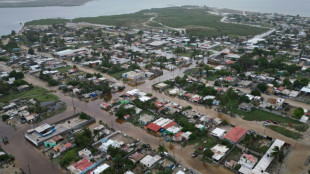 Hurricane Polo sweeps over Mexico's Pacific coast, heads inland

 Grynspan pulls ahead in race to lead UN: diplomat

 Trump touts AI boss pledge to self-regulate

 Oil down, but stocks lower as bond yields rise

 England break down stubborn Czechs to claim first Nations League win

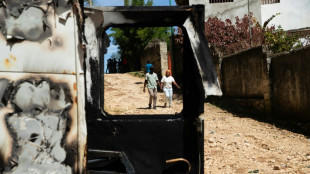 UN Security Council extends Haiti anti-gang force by 6 months

 Manchester City guilty of Premier League charges: What comes next?

 Man City chief Soriano slams Premier League 'conspiracy theory'

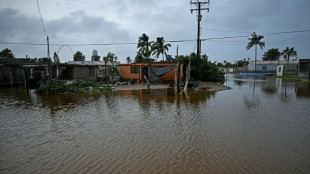 Hurricane Polo sweeps over Mexico's Pacific coast

 Man City must be relegated after guilty verdict says club's former chairman

 German far-right aims to lead Saxony-Anhalt govt in December

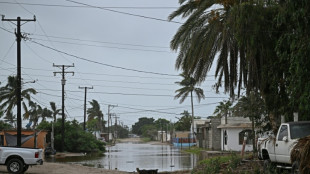 Little damage as Hurricane Polo sweeps over Mexico's Pacific coast

 Manchester City guilty of breaking financial rules - Premier League

 FIFA boss Infantino blasted as would-be 'emperor' by UEFA's Ceferin

 Stocks move lower despite oil prices dropping

 AI driving up innovation investment: UN

 UN Security Council extends Haiti mission by 6 months

 Man Utd do not deserve medals if Man City stripped of titles: Rooney

 Vana Completes Expanded Staking as Part of the Vega Upgrade, Publishes Expanded VANA Token Economics
 Spain to cap gas price hikes, extend fuel discounts
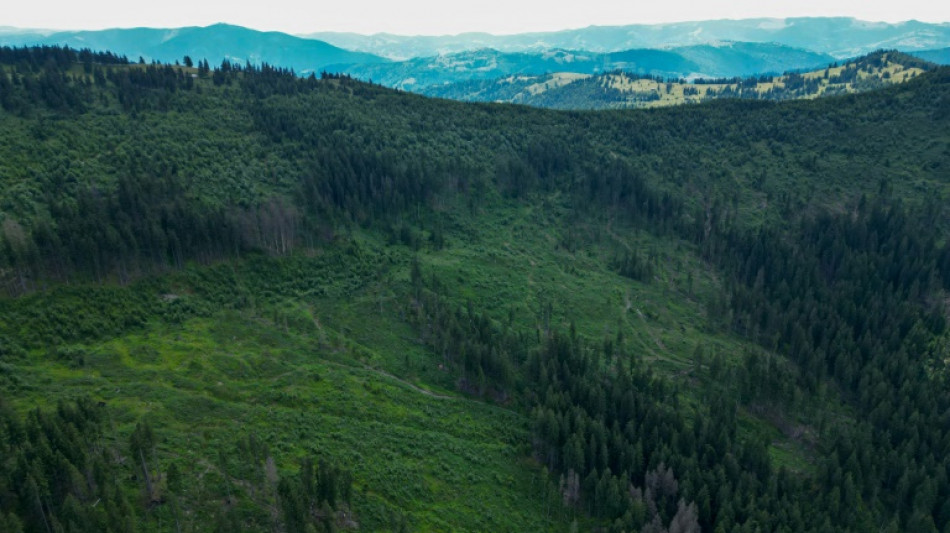
Vast gaps in the forest canopy are visible from above Romania's Carpathian mountains, while stumps studding the ground are reminders of the trees chopped into logs and piled beside dirt roads.
Forest engineer Gabriel Oltean has fought against this intense, often illegal logging with cameras that broadcast live on YouTube the incessant passage of woodcutters' trucks.
He said he caused "a psychological shock" among locals at the gates of the legendary Transylvania region, which led to investigations and wood confiscations -- though no criminal convictions yet.
People like him are fighting for forests blanketing the 1,500-kilometre (900-mile) mountain range that spans eight nations and sits in a region that is supposed to be among the best preserved in the EU.
But in reality a lack of enforcement and vast profits for the taking mean the forests' destruction, which is leading to pressure in Romania, is still largely greeted with indifference in Poland.
"This forest should be sacred. We should be protecting such places," Greenpeace Poland spokesman Marek Jozefiak said in the village of Zatwarnica in the country's southeast.
"You see that hill? They've already logged it. Like 50 metres (160 feet) from a bear den," said Jozefiak, noting only some 150 brown bears are left in Poland.
One of Europe's "last remaining biodiversity havens", the forests covering the Carpathians house bison, lynx, wolves and wildcats, along with scores of bird species like the three-toed woodpecker or the Ural owl.
The old-growth forests of the mountain range are also important for mitigating climate change.
Worldwide, forests absorb a net amount of 7.6 billion tonnes of carbon dioxide, or 1.5 times what the United States emits, according to a study published in 2021 in the journal Nature Climate Change.
But "on average a forest area of more than five football pitches is lost to wood extraction every single hour" in the Carpathians, Greenpeace said in a report last November.
- Lucrative business -
More than half of the area of the Carpathians is in Romania, with the range also running through Slovakia, Poland, Ukraine and to a lesser extent Hungary, Serbia, the Czech Republic as well as Austria.
On paper it's one of the most preserved regions in the EU, but only one to three percent of the forest is strictly protected in Poland, according to the Greenpeace report.
The state forestry agency, responsible for both protecting the forests and cutting the wood, owns the majority of forests.
Its revenue increased by 50 percent in 2022 year-on-year to 15.2 billion zlotys (3.4 billion euros), 90 percent of which comes from the sale of wood.
The agency is "trying to dig as much money as they can out of it", Jozefiak said.
In 2018, Europe's top court ruled that Poland's government broke the law by logging in Bialowieza, a UNESCO world heritage site that is Europe's largest surviving primeval forest.
Authorities have responded to accusations of illegal logging by planting new trees -- which activists have dismissed as failing to compensate for the ecological damage.
Instead, environmentalists would like to see more forests declared national parks for better protection.
Greenpeace is calling on the European Union to develop and fund an action plan to safeguard the mountain range.
"We want to brand the Carpathians, just like the Alps... The Carpathians should be famous too," Jozefiak said.
Poland has not created a single new national park in over two decades because of legislation according local authorities a veto.
Even in those that exist, exploitation is not prohibited.
In Stuposiany, a state forest division in the Carpathians that is curiously wedged into a national park, officials say protection is already high on the agenda.
"The timber harvesting process does not have a negative impact on the forest ecosystem," chief forester Ewa Tkacz told AFP, adding that "nature is very dear to us".
- 'Don't realise what we are losing' -
Still, concern for the mountains has spawned protests, including logging blockades organised by a citizens' initiative.
Andrzej Zbrozek, a biology teacher who lives deep in the woods, said the Carpathians "are becoming a farmland of sorts, subordinated to timber harvesting".
"It's hard for me to accept that the forests I've been wandering through my whole life are becoming much less valuable, thinned out," the 53-year-old told AFP against a backdrop of birdsong.
Zbrozek -- soft-spoken, with animated eyes, his long-hair tied back in a ponytail -- said he struggles to instil concern for the Carpathians in his students, who include the children of foresters, hunters and farmers.
"They're used to it. They don't see it, they aren't able to appreciate" the nature surrounding them, he said.
"We don't realise what we're losing," he added as he blamed logging for also worsening the effects of any floods.
Slovakia's share of the Carpathians -- second in size to Romania's -- has also come in for environmental concern.
Geographer Mikulas Huba said that while on paper forest cover exceeds 40 percent of Slovak territory, "these are no longer real forests" but often logging sites or bushes.
- Surveillance cameras, tracking app -
In eastern Romania, deep in the Carpathians in Ghimes-Faget commune, the forest engineer Oltean searched in vain for trees that he marked two years ago.
But the method -- still used to track illegal logging -- is not efficient with some markings simply fading over time or becoming covered by resin.
"If I couldn't find them (the marked trees), what can you expect of a forest guard inspector who is teleported here from another place to find problems and possible illegalities?" the 32-year-old asked.
While the forests were largely preserved under the regime of communist dictator Nicolae Ceausescu, who used them as hunting ground, the authorities have long struggled to stop the rampant illegal logging that took hold after his death in 1989.
Some 80 million cubic metres of timber were cut illegally between 1990 and 2011, according to an estimate by the Romanian Court of Auditors dating from 2013.
Currently, forests cover 6.6 million hectares, or a third of the country, while the timber industry is estimated to be worth nearly 10 billion euros, or 4.5 percent of the country's GDP, according to accounting giant PwC.
The cut wood is used as firewood, especially in rural areas, or exported for the international furniture and DIY markets.
While it is difficult to have exact figures, the World Wildlife Fund (WWF) estimates on the basis of spot checks that a third of the convoys carrying wood are illegal.
Alerted by activist groups, the European Commission launched an infringement procedure in early 2020, which could see Romania face financial sanctions.
To better track looters, a digital tool, called Sumal, was implemented in 2014 and has since been upgraded -- with former environment minister Barna Tanczos hailing it as "the most sophisticated system in Europe".
Carriers must upload photos showing the amount of timber leaving the forest into an app so that it can be checked with their loads when they reach the warehouses.
But criminal groups still often manage to circumvent these checks by organising several transports with a single authorisation notice.
Only a small part is confiscated: Last year, nearly 90,000 cubic metres of wood were seized, according to the environment ministry.
So the government decided to go further. In June, parliament passed a law to make cameras compulsory on forest roads. In 2024, the first 350 will be deployed.
- Corruption -
To be able to intercept suspects, software capable of alerting in real time would be needed, said Romania WWF expert Radu Melu.
"Otherwise the trucks pass by the video camera, the image is recorded and archived, but then deleted after a certain amount of time without anything happening," he said.
The government plans to implement a sophisticated surveillance system with satellite images, drones and planes flying over the areas -- an investment of 46 million euros financed by European funds.
For Oltean, too, only technology will make it possible to fight against logging.
Criminal groups often benefit from complicity within a corrupt forestry administration, as several resounding scandals have shown in recent years.
"It is clear to me that human involvement must be reduced," he said. "No matter how good a friend you are with the policeman that caught you, if your speed is recorded on radar, there's nothing you can do about it."
In his area of Ghimes, ranger Petre Oltean -- who is not related to Gabriel Oltean -- sees the fight against logging is gaining pace thanks to the mobilisation of "competent people" and the arrival of rangers who are "younger, with a different mentality".
But those who fight sometimes do so at the risk of their lives.
Attacks on activists and forest agents have been recorded, two of whom were killed in 2019.
burs-amj-anb/jza/jmm/giv
R.Lee--AT