
Europe, US heatwaves 'virtually impossible' without climate change / Photo: Louisa GOULIAMAKI - AFP/File

 With elections ahead, Latvia's Russian-speakers reject Moscow's help

 Brazil football clubs face massive sponsorship blow from betting ban

 ChatGPT maker wants to be the App Store for AI as safety concerns grow

 Women fight fires and sexism in Indonesian Borneo

 Forsling's OT blast lifts Florida over Carolina in NHL opener

 Hurricane Polo sweeps over Mexico's Pacific coast, heads inland

 Grynspan pulls ahead in race to lead UN: diplomat

 Trump touts AI boss pledge to self-regulate

 Oil down, but stocks lower as bond yields rise

 England break down stubborn Czechs to claim first Nations League win

 UN Security Council extends Haiti anti-gang force by 6 months

 Manchester City guilty of Premier League charges: What comes next?

 Man City chief Soriano slams Premier League 'conspiracy theory'

 Hurricane Polo sweeps over Mexico's Pacific coast

 Man City must be relegated after guilty verdict says club's former chairman

 German far-right aims to lead Saxony-Anhalt govt in December

 Little damage as Hurricane Polo sweeps over Mexico's Pacific coast

 Manchester City guilty of breaking financial rules - Premier League

 FIFA boss Infantino blasted as would-be 'emperor' by UEFA's Ceferin

 Stocks move lower despite oil prices dropping

 AI driving up innovation investment: UN

 UN Security Council extends Haiti mission by 6 months

 Man Utd do not deserve medals if Man City stripped of titles: Rooney

 Vana Completes Expanded Staking as Part of the Vega Upgrade, Publishes Expanded VANA Token Economics

 Spain to cap gas price hikes, extend fuel discounts
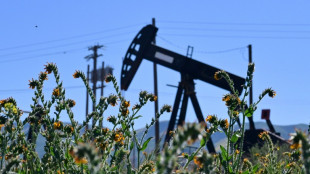
Blistering heat that has baked swathes of North America and Europe this month would have been "virtually impossible" without human-caused climate change, researchers said Tuesday, as intense temperatures spark health alerts and stoke ferocious wildfires.
With tens of million people affected in the northern hemisphere and July on track to be the hottest month globally since records began, experts warn that worse is to come unless we reduce planet-heating emissions.
Severe heatwaves have gripped southern Europe, parts of the United States, Mexico and China this month, with temperatures above 45 degrees Celsius.
In the new rapid analysis of the scorching temperatures, scientists from the World Weather Attribution group found that the heatwaves in parts of Europe and North America would have been almost impossible without climate change.
Temperatures in China were made 50 times more likely by global warming, they found.
"The role of climate change is absolutely overwhelming," said climate scientist Friederike Otto, of the Grantham Institute for Climate Change and the Environment, Imperial College London.
Intense temperatures have swept much of the southwest and southern United States -- including in Phoenix, Arizona, which suffered a record-breaking three straight weeks of highs above 43C.
Blazes on the Greek mainland and islands have caused tens of thousands to flee, sent tourists scrambling for evacuation flights and prompted the prime minister to say the country is "at war".
In Beijing, the government urged the elderly to stay indoors and children to shorten outdoor playtime to reduce exposure to the heat and ground-level ozone pollution.
- 'More extreme' -
Scientists have already established that climate change -- with about 1.2C of global warming since the late 1800s -- has made heatwaves in general hotter, longer and more frequent.
To trace how far the July heatwaves in the northern hemisphere had departed from what would have been expected without that warming, Otto and her WWA colleagues used weather data and computer model simulations to compare the climate as it is today with that of the past.
Researchers said they focused on periods when "the heat was most dangerous in each region".
Otto said in the past it would have been "basically impossible" that such severe heat waves would happen at the same time and that people should no longer be surprised to see temperature records tumbling.
The future could be even worse.
"As long as we keep burning fossil fuels we will see more and more of these extremes."
The researchers found that these severe heatwaves can now be expected roughly once every 15 years in North America, every 10 years in southern Europe and every five years in China.
And they will become even more frequent -- happening every two to five years -- if temperature rise reaches 2C, expected in around 30 years unless countries fulfil their Paris Agreement pledges and rapidly cut emissions.
The study also found that these heatwaves were hotter than they would have been without climate change.
Last week leading NASA climatologist Gavin Schmidt told reporters that July 2023 is not just on track to be the hottest absolute month since records began, but also the hottest in "hundreds, if not thousands, of years".
Experts have said that the surging heat cannot be attributed solely to the warming El Nino weather pattern, which is not expected to strengthen until later on in the year.
As with other impacts from climate change, it is those most vulnerable who are most at risk.
Last week, the World Health Organization said the extreme heat was straining healthcare systems, hitting older people, infants and children.
The WHO said it was particularly concerned about people with cardiovascular diseases, diabetes and asthma.
W.Moreno--AT