Heat-struck Mediterranean is climate change 'hot spot' / Photo: Anibal MAIZ CACERES, Guillermo RIVAS PACHECO - AFP

 With elections ahead, Latvia's Russian-speakers reject Moscow's help

 Brazil football clubs face massive sponsorship blow from betting ban
 ChatGPT maker wants to be the App Store for AI as safety concerns grow

 Women fight fires and sexism in Indonesian Borneo

 Forsling's OT blast lifts Florida over Carolina in NHL opener

 Hurricane Polo sweeps over Mexico's Pacific coast, heads inland

 Grynspan pulls ahead in race to lead UN: diplomat

 Trump touts AI boss pledge to self-regulate

 Oil down, but stocks lower as bond yields rise

 England break down stubborn Czechs to claim first Nations League win
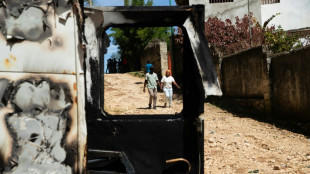 UN Security Council extends Haiti anti-gang force by 6 months

 Manchester City guilty of Premier League charges: What comes next?

 Man City chief Soriano slams Premier League 'conspiracy theory'

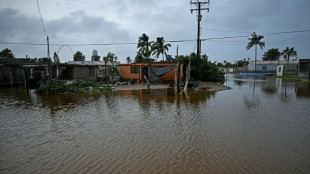 Hurricane Polo sweeps over Mexico's Pacific coast

 Man City must be relegated after guilty verdict says club's former chairman

 German far-right aims to lead Saxony-Anhalt govt in December
 Little damage as Hurricane Polo sweeps over Mexico's Pacific coast

 Manchester City guilty of breaking financial rules - Premier League

 FIFA boss Infantino blasted as would-be 'emperor' by UEFA's Ceferin
 Stocks move lower despite oil prices dropping

 AI driving up innovation investment: UN

 UN Security Council extends Haiti mission by 6 months
 Man Utd do not deserve medals if Man City stripped of titles: Rooney

 Vana Completes Expanded Staking as Part of the Vega Upgrade, Publishes Expanded VANA Token Economics
 Spain to cap gas price hikes, extend fuel discounts
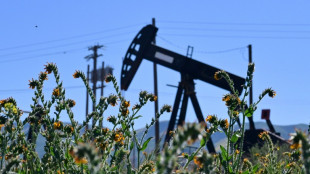
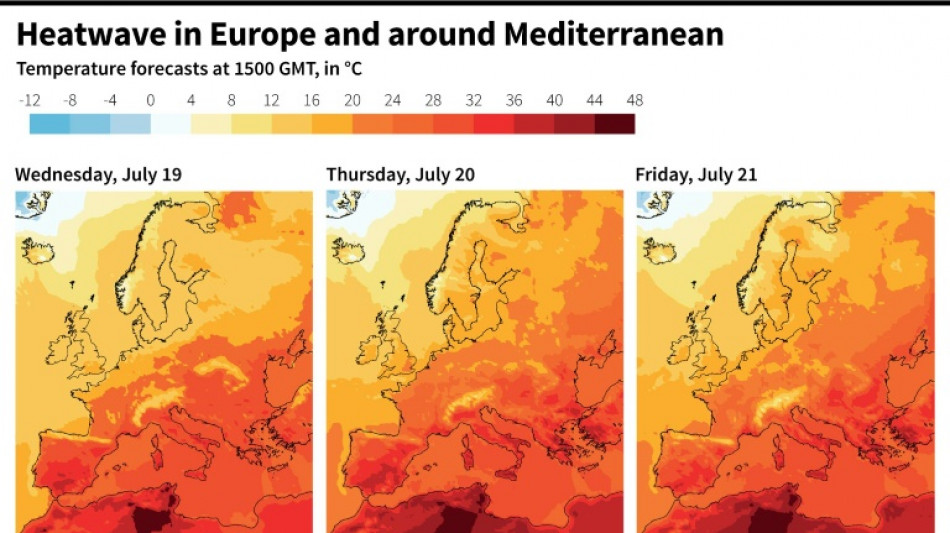
Struck by near-record temperatures and wildfires during this week's heatwave, the Mediterranean region is ranked as a climate-change "hot spot" by scientists.
The beaches, seafood and heritage sites in the region spanning parts of southern Europe, northern Africa and western Asia are under threat.
Here are five key threats to the region flagged by the United Nations' Intergovernmental Panel on Climate Change (IPCC). Its reports are the most comprehensive summary of scientific knowledge on global warming.
- Deadly heatwaves -
Like parts of the United States and Asia, the Med has been hit by extreme heat in recent weeks. The Italian islands of Sardinia and Sicily are forecast to possibly top a continent-wide record of 48.8C (119.8F).
"Heatwaves are increasing due to climate change in the Mediterranean, and are amplified in cities due to urbanisation practices," causing illness and death, the IPCC said in its 2022 report on impacts of climate change and how to adapt to them.
One study published in 2010 led by scientists at the University of Bern calculated that the intensity, length and number of heatwaves in the eastern Mediterranean had increased by about six or seven times since the 1960s.
- Wheat and olives -
A drought in North Africa has left farmers bracing for a terrible harvest. "We've never seen a drought this bad," Tunisian wheat farmer Tahar Chaouachi told AFP. "It's been dry for the last four years but we expected some rain this season. Instead, it's become worse."
With hotter weather drying up groundwater for irrigating farms, the IPCC said that with global warming of more than 1.5C olive yields could fall by a fifth in the northern Mediterranean. The world has warmed more than 1.1C since the 19th century.
Researchers at Stanford University found "the Mediterranean experiencing significant adverse impacts on most crops".
- Water and politics -
A drought in Spain has raised political tensions over water management ahead of a general election on July 23. The European Drought Observatory said groundwater tables across half the Mediterranean region were running low already in June.
The IPCC report warned climate change will worsen water shortages "in most locations" in the region. Lakes and reservoirs are expected to decline by up to 45 percent this century, and surface water availability by up to 55 percent in North Africa.
Meanwhile "terrestrial and freshwater ecosystems are impacted by climate change in the Mediterranean, resulting in loss of habitats and biodiversity," it added.
- Rising seas -
The sea level in the Mediterranean basin has risen 2.8mm a year over recent decades, threatening shorelines and cities such as Venice, which regularly suffers tidal floods.
"Sea level rise already impacts extreme coastal waters around the Mediterranean and it is projected to increase coastal flooding, erosion and salinisation risks," said the IPCC.
"These impacts would affect agriculture, fisheries and aquaculture, urban development, port operations, tourism, cultural sites and many coastal ecosystems."
- Invasive species -
As well as its cherished beaches, climate change threatens the Mediterranean sea and the food produced by its fisheries.
"A shift in Mediterranean marine ecosystems, characterised by biodiversity decline and invasive species, has occurred since the 1980s" due to climate change and other human impacts, the IPCC said.
With global warming of more than 1.5C, more than 20 percent of exploited fish and invertebrates in the Eastern Mediterranean could become locally extinct by 2060 and fishing revenues could decrease up to 30 percent by 2050, it said.
B.Torres--AT