Climate change challenges hydropower-dependent Austria / Photo: JOE KLAMAR - AFP

 NBA close to picking new $12-13bn Vegas team owners: report
 LA28 Olympics torch relay to visit all 50 states
 Spain brush aside Croatia in Nations League, England down Czechs
 Trump hails 'morally binding' AI self-regulation pledge

 Yamal inspires Spain to Croatia romp on World Cup homecoming

 UN to hold fourth informal poll of secretary-general candidates
 Who are the Emiratis behind crisis-hit Manchester City?

 Singer Angelique Kidjo urges Africans to 'create together'

 Alleged Rihanna mansion shooter mentally fit for trial, says judge
 Mystery over UK airbase scare as police find petrol not explosives

 OpenAI unveils low-cost AI model, a day after shelving Astra upgrade
 Premier League confirms Man City guilty of serious financial breaches
 Brazil's Lula turns to Bad Bunny tune to criticise Trump ahead of polls
 Nigerian dancer eyes world record after seven-day marathon
 Swiss regulator concludes Julius Baer bank probe
 Brazil's patron saint pulled into latest election scrap

 Football overload leaves players near 'breaking point', warns Tebas
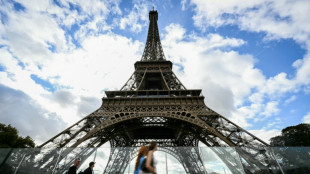 Paris Eiffel Tower says chief to step down after uproar over removing women staff

 Amaze Holdings (NYSE: AMZE) Executes Binding LOI to Acquire BullionFX | Alchemy, a Decentralized Gold-Backed Financial Ecosystem for Valued at US$155 Million
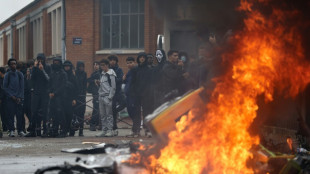 Clashes between French teens, police as school blockades intensify
 Stocks move sideways despite oil moving lower
 African leaders to gather in Egypt for business summit
 UK decides against charging foreign visitors for museums

 Dallaglio to sell England World Cup winners' medal

 Brazil come from behind to beat Australia 4-2 in friendly

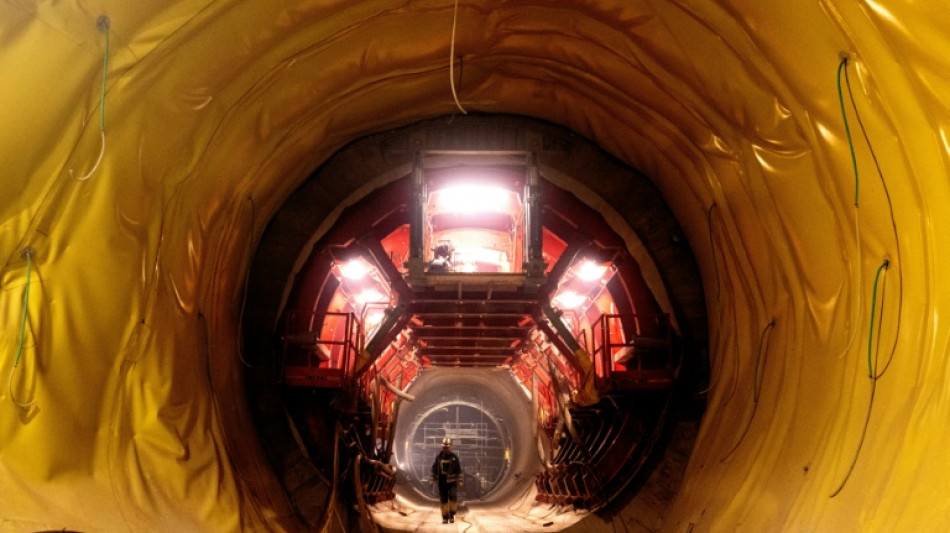
High in the Austrian Alps, hundreds of construction workers toil in a huge underground project aimed at storing hydropower as climate change has reduced the country's water-dependent electricity production.
Austria draws more than 60 percent of its electricity output from the renewable energy source, compared to a global average of 16 percent, with more than 3,100 dams spread across its rivers.
But the amount of electricity generated through hydropower in the European Union country is down -- from some 45 terawatt hours (TWh) in 2020 to 42 TWh in 2021 -- as water levels are falling.
For the first time last year, Austria -- which also still relies heavily on Russian gas -- had to import electricity, ringing alarm bells.
Inside the snow-capped mountain range, above the Austrian village of Kaprun in the Salzburg region, trucks thunder in and out of the vast subterranean construction site, which is dotted with statues of Saint Barbara, patron of miners and others plying dangerous trades.
Excavation work for the Limberg 3 pumped storage power plant is wrapping up.
- 'Well prepared' -
The plant is to be operational by 2025 to store power in order to cater to peaks in electricity consumption and mitigate a change in weather patterns, including increasingly capricious and irregular rainfall.
"We want to be prepared well," said Klaus Hebenstreit, an executive of main electricity producer Verbund.
"The distribution (of water) over the year will change: we will have less water in summer (due to drought) and more in winter" due to snow melt, he added.
Two years of drought have hit Austria, like the rest of Europe, according to Roman Neunteufel, a senior researcher at Vienna's University of Natural Resources and Life Sciences.
"If there are several dry years in a row, then this becomes very noticeable... Water levels have never been lower since records began" some 100 years ago, he said.
Europe should brace for more deadly heatwaves driven by climate change, said a report last month by the World Meteorological Organization and the European Union's Copernicus Climate Change Service.
The report noted the world's fastest-warming continent was some 2.3 degrees Celsius hotter last year than in pre-industrial times.
In the Alps, glaciers saw a new record mass loss for a single year in 2022, caused by very low winter levels of snow, a hot summer as well as deposits of wind-blown Saharan dust.
- Difficult diversification -
Verbund, a semi-public company, continues to pour billions of euros into hydropower generation despite criticism from activists who say the dams and plants have a big impact on the environment.
"Hydropower expansion must be ecologically and socially compatible.... The complete expansion of hydropower is not the solution to our energy problem. Instead, it is necessary to save energy," the Word Wildlife Fund says on its site.
Verbund is looking at alternatives.
"Water will continue to be extremely important for us, but we also want to develop photovoltaic and wind energy... We are diversifying," Hebenstreit told AFP in Vienna on a day temperatures soared to 37 degrees Celsius (99 degrees Fahrenheit).
Austria, which aims to draw all of its electricity from renewable energy by 2030, has been slow to develop wind and solar power, which make up only 13 percent of its electricity.
"Solar energy is wonderfully abundant in summer... But production is too low in winter, precisely when we need it for heating," Neunteufel said.
"And with wind, it's even harder to plan: There can be days any time without wind, and then wind power production largely stops," he said.
G.P.Martin--AT