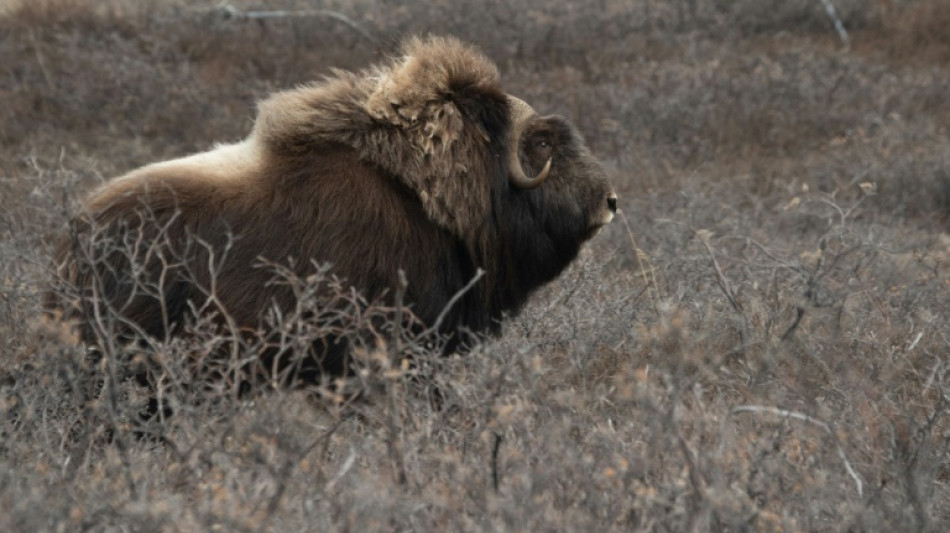
As Arctic warms, caribou and muskoxen slow biodiversity loss / Photo: SAUL LOEB - POOL/AFP/File

 NBA close to picking new $12-13bn Vegas team owners: report
 LA28 Olympics torch relay to visit all 50 states

 Spain brush aside Croatia in Nations League, England down Czechs

 Trump hails 'morally binding' AI self-regulation pledge

 Yamal inspires Spain to Croatia romp on World Cup homecoming

 UN to hold fourth informal poll of secretary-general candidates

 Who are the Emiratis behind crisis-hit Manchester City?

 Singer Angelique Kidjo urges Africans to 'create together'

 Alleged Rihanna mansion shooter mentally fit for trial, says judge
 Mystery over UK airbase scare as police find petrol not explosives

 OpenAI unveils low-cost AI model, a day after shelving Astra upgrade

 Premier League confirms Man City guilty of serious financial breaches
 Brazil's Lula turns to Bad Bunny tune to criticise Trump ahead of polls

 Nigerian dancer eyes world record after seven-day marathon

 Swiss regulator concludes Julius Baer bank probe

 Brazil's patron saint pulled into latest election scrap

 Football overload leaves players near 'breaking point', warns Tebas

 Paris Eiffel Tower says chief to step down after uproar over removing women staff

 Amaze Holdings (NYSE: AMZE) Executes Binding LOI to Acquire BullionFX | Alchemy, a Decentralized Gold-Backed Financial Ecosystem for Valued at US$155 Million

 Clashes between French teens, police as school blockades intensify

 Stocks move sideways despite oil moving lower
 African leaders to gather in Egypt for business summit
 UK decides against charging foreign visitors for museums

 Dallaglio to sell England World Cup winners' medal

 Brazil come from behind to beat Australia 4-2 in friendly

Rapidly warming conditions in the Arctic and the loss of sea ice caused by climate change are driving a steep decline in biodiversity, including among plants, fungi and lichen.
But a new study out Thursday in Science found the presence of caribou and muskoxen help to reduce the rate of loss by roughly half, suggesting the large herbivores have an under-recognized role as ecosystem climate defenders.
Co-author Christian John of the University of California, Santa Barbara told AFP the results showed that "in some cases 'rewilding' (reintroduction of large herbivores) may be an effective approach to combating negative effects of climate change on tundra diversity."
The paper was the result of a 15-year-long experiment that began in 2002 near Kangerlussuaq, a small settlement of around 500 people in western Greenland.
An international team of scientists used steel fencing to set up 800-square-meter plots, or about a fifth of an acre, to exclude or include herbivores and measure the impact on the surrounding environment.
They also used "passive warming chambers," which act like miniature greenhouses to raise the temperature a few degrees, to see how biodiversity might fare under conditions even warmer than today. Herbivores were given access to some warmed plots and not others.
Each day, the team hiked for miles to tally up the ungulates.
"There were a lot of demands to the job, working long hours hiking across uneven terrain, living in a tent under a sun that doesn't set, all the while with the ubiquitous whine of mosquitos in the background," said John.
"But at the end of the day, none of these challenges ever overshadowed the joy of seeing the first caribou calf of the year."
Sadly, tundra community diversity declined across the board over the course of the study, both as a direct result of warming but also changing precipitation patterns associated with melting ice, and the increasing shrub cover in the tundra squeezing out other species.
However, "tundra community diversity dropped at almost double the rate in plots where herbivores were excluded compared to plots where herbivores were able to graze," said John.
In the warmed plots, the difference was yet more dramatic. Diversity declined by about 0.85 species per decade when herbivores were excluded, whereas this decline was only about 0.33 species per decade when they were allowed to graze.
The scientists attributed this to herbivores keeping species such as shrubs, dwarf birch and gray willow in check so that other plants could better flourish.
"Efforts focused on maintenance or enhancement of large herbivore diversity may therefore under certain conditions help mitigate climate change impacts on at least one important element of ecosystem health and function: tundra diversity," wrote the team.
K.Hill--AT