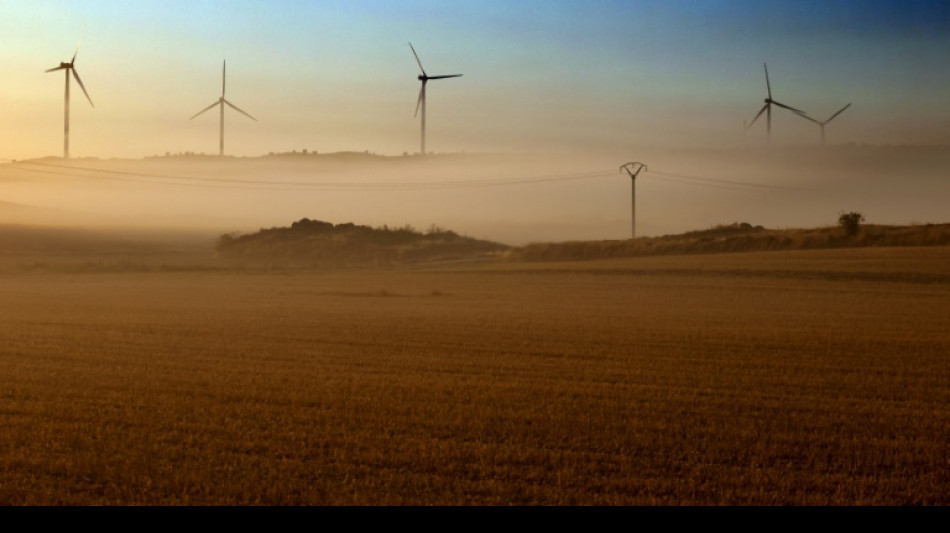
World near positive 'tipping point' on climate solutions: expert / Photo: Thomas COEX - AFP/File

 Alleged Rihanna mansion shooter mentally fit for trial, says judge
 Mystery over UK airbase scare as police find petrol not explosives

 OpenAI unveils low-cost AI model, a day after shelving Astra upgrade
 Premier League confirms Man City guilty of serious financial breaches
 Brazil's Lula turns to Bad Bunny tune to criticise Trump ahead of polls

 Nigerian dancer eyes world record after seven-day marathon

 Swiss regulator concludes Julius Baer bank probe
 Brazil's patron saint pulled into latest election scrap

 Football overload leaves players near 'breaking point', warns Tebas

 Paris Eiffel Tower says chief to step down after uproar over removing women staff

 Amaze Holdings (NYSE: AMZE) Executes Binding LOI to Acquire BullionFX | Alchemy, a Decentralized Gold-Backed Financial Ecosystem for Valued at US$155 Million

 Clashes between French teens, police as school blockades intensify
 Stocks move sideways despite oil moving lower
 African leaders to gather in Egypt for business summit

 UK decides against charging foreign visitors for museums

 Dallaglio to sell England World Cup winners' medal

 Brazil come from behind to beat Australia 4-2 in friendly

 Ruthless An retains Asian Games badminton crown as Kunlavut triumphs

 Alonso to stay with F1 team Aston Martin in 2027
 China badminton 'still strong' despite Asian Games slump
 'Exceptional' Turner painting shown in Rome before sale

 European stocks climb as oil dips

 Spain aims to ban evictions until 2030 amid housing protests

 Kunlavut first Thai man to win Asian Games badminton singles gold

 French far right says antisemitism claims part of 'total war' to derail presidency bid

With climate-enhanced droughts, heatwaves and fires ravaging three continents and the threat of a new surge in global warming, the world urgently needs to ramp-up solutions for slashing carbon pollution. But which solutions are most critical?
The organisation Project Drawdown has detailed the potential, feasibility and cost of nearly a hundred climate solutions since it was set up in 2017.
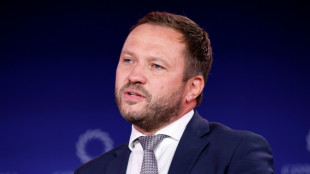
Executive director Jonathan Foley, a leading climate scientist, spoke to AFP about how to assess and prioritise the actions needed to keep Earth liveable.
The following interview has been edited for length and flow:
Q: What are the three most important questions in assessing the usefulness and integrity of carbon-cutting solutions?
A: Is it available now and ready to deploy? Because we need to start bending the emissions curve immediately.
Is it cost-effective? Otherwise, it's not going to scale effectively.
Does it create co-benefits for people, especially in terms of health, jobs, equity, and justice? This will make it far more appealing.
Q: A lot of hope -- and investment -- is going into technological solutions such as filtering fossil fuel pollution or pulling CO2 out of the air. Comment?
A: While some very limited carbon removal will be needed by mid-century, the vast, vast majority of the work we need to do -- more than 95 percent -- is cutting emissions, and doing it now.
Of the five percent focused on carbon removal, I think it should be more than 90 percent nature-based removal, such as ecological restoration and regenerative agriculture. Machine-based removal is unlikely to work at any meaningful scale.
Q: We often hear that solutions are already available, all that's missing is political will. Is that it?
A: It's not political will. It's money and power, which right now is still with fossil fuels, polluting industries, and unsustainable agriculture. That's why too many politicians are still in bed with them.
But effective climate solutions are here, now, and they are starting to growing exponentially and beat the older, polluting systems at their own game -- in the marketplace. When renewables and other climate solutions are cheaper, better, faster, and more popular than the old systems, we will hit a dramatic tipping point on climate solutions. We are getting close to that now. It's finally a real race.
Q: Government, business, consumers -– who's not pulling their weight on climate action?
A: The climate crisis will be changed in culture and business and technology, not politics. Governments aren't leading, not at all. At best, they're followers.
Government regulation has been a very small contributor. So far, businesses and communities are leading on climate action. We have already seen dramatic reductions in emissions -- 20 percent in the US since peaking in 2007, and 40 percent since the mid-1990s in the UK -- in major economies around the world, fuelled by changes in technology, business, investment, and culture.
Activists have also contributed to these positive changes, largely pushing how businesses and investors see the climate problem.
Q: Is greenwashing the new climate denial?
A: Sadly, yes. Outright denial of climate change as an issue is no longer credible. So the new approach is focused on delay and greenwashing -- making it look like we are doing things, but nothing really changes. One could also say delay is the new denial.
But we should also be aware of "doom-washing": the narrative that nothing good is happening on climate change and that we have no hope to stop the climate crisis. Neither of these is true.
Q: Is mainstream media conveying the balanced portfolio of climate action needed?
A: No. Far too much of the coverage is focused on the problem and impacts of climate change -- roughly 99 percent in the US media -- and almost nothing focusing on the solutions.
Mainstream media is doing more harm than good in some cases by promoting more fear and anxiety, leading to disengagement and inaction. This feeds a terrible feedback loop in our broken politics and activists cultures. We need a better, more balanced conversation on how climate solutions can benefit communities around the world.
E.Rodriguez--AT