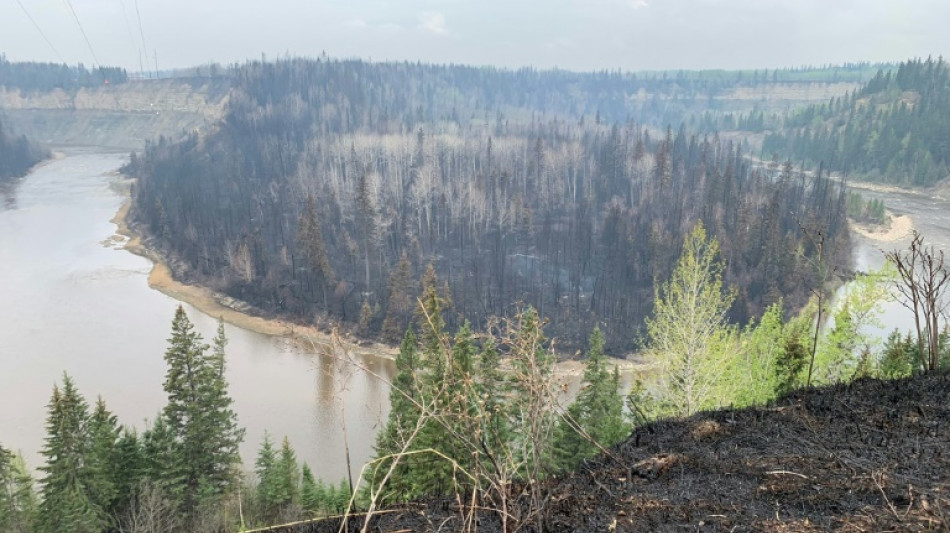
'Perfect storm' of heat, dryness fuel western Canada's extreme wildfires / Photo: Anne-Sophie THILL - AFP

 Alleged Rihanna mansion shooter mentally fit for trial, says judge
 Mystery over UK airbase scare as police find petrol not explosives

 OpenAI unveils low-cost AI model, a day after shelving Astra upgrade

 Premier League confirms Man City guilty of serious financial breaches
 Brazil's Lula turns to Bad Bunny tune to criticise Trump ahead of polls

 Nigerian dancer eyes world record after seven-day marathon

 Swiss regulator concludes Julius Baer bank probe
 Brazil's patron saint pulled into latest election scrap

 Football overload leaves players near 'breaking point', warns Tebas
 Paris Eiffel Tower says chief to step down after uproar over removing women staff

 Amaze Holdings (NYSE: AMZE) Executes Binding LOI to Acquire BullionFX | Alchemy, a Decentralized Gold-Backed Financial Ecosystem for Valued at US$155 Million

 Clashes between French teens, police as school blockades intensify
 Stocks move sideways despite oil moving lower
 African leaders to gather in Egypt for business summit
 UK decides against charging foreign visitors for museums

 Dallaglio to sell England World Cup winners' medal

 Brazil come from behind to beat Australia 4-2 in friendly

 Ruthless An retains Asian Games badminton crown as Kunlavut triumphs

 Alonso to stay with F1 team Aston Martin in 2027
 China badminton 'still strong' despite Asian Games slump

 'Exceptional' Turner painting shown in Rome before sale

 European stocks climb as oil dips

 Spain aims to ban evictions until 2030 amid housing protests

 Kunlavut first Thai man to win Asian Games badminton singles gold

 French far right says antisemitism claims part of 'total war' to derail presidency bid

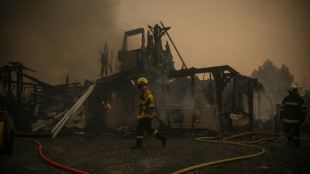
Dry vegetation, record temperatures and powerful winds: this "perfect storm" of weather phenomena fueled the massive forest fires in western Canada's Alberta province this year, according to researchers.
The extent of the fires and their appearance so early in the year illustrate the impacts of climate change, scientists say.
"We've already had 390,000 hectares (963,710 acres) burned. So it's already 10 times the typical fire year and we're really just getting started," said Danielle Smith, premier of Alberta province where a state of emergency was declared.
"It's an extraordinary (and) unprecedented event, which is I think what we have to be prepared for in future," she told reporters on Tuesday.
Around 30,000 people have been ordered to evacuate their homes while hundreds of firefighters work to control the flames.
"It is an exceptional year insofar as the accumulation of burned areas is very rapid, as is the number of very large fires at the same time," Yan Boulanger, a specialist in forest fires at the Canadian ministry for natural resources, told AFP.
The vast majority of fires are of human origin, including cigarette butts, campfires that weren't properly snuffed out or sometimes malicious acts, he said.
- 'Dangerous' month of May -
Spring is a risky time for fires in the area, as no snow remains on the ground and it's before plants turn green.
"We end up with very dry undergrowth and trees that are also very flammable, because they have no leaves," said Boulanger, who noted that the conditions in recent weeks "have been very dry."
Terri Lang, a meteorologist for Environment Canada, said that dry conditions make spring a "dangerous time."
In early May, a weather phenomenon set in that "brought really unseasonably hot and dry conditions to the province," Lang told AFP.
A ridge of high pressure pushed aside the precipitation and kept the heat in place, breaking several temperature records in the region.
In the provincial capital of Edmonton, the mercury reached 28.9 degrees Celsius (84 degrees Fahrenheit) on May 1, beating the previous all-time high of 26.7C (80F) set almost a century ago. Farther north, it reached 32.2C (89.9F) in Fort McMurray on Thursday.
Added to this were strong winds fueled by the typical temperature differential between the cold north and the warmer south.
"It was a perfect storm," said Lang.
Boulanger added that "if the conditions remain extreme, it could last for weeks or months."
A previous major fire in 2016 disrupted production in the oil sands region near Fort McMurray, pummelling the nation's economy.
That fire took almost a year to be put out, Boulanger said.
- More common with global warming -
Diana Stralberg, a researcher in Edmonton for the Canadian Forest Service, explained that human-caused climate change is making the fire season longer and causing "extreme fire weather conditions" to occur more often.
"Although fire is a natural, forest-renewing process, more frequent fires, as well as fires followed by droughts, can interrupt regeneration of conifer trees" and lead to a withdrawal of wooded areas in favor of grasslands, the climate specialist told AFP.
Little by little, the forest is being nibbled away, with direct consequences for dozens of species of migratory birds and caribou.
"Modeling of future fire and vegetation conditions has shown that, in Alberta, up to 50 percent of upland boreal forests could be at risk of conversion to grassland systems by the end of the 21st century under high-end warming scenarios," said Stralberg.
More and more fires also lead to the massive emissions of greenhouse gases, further exacerbating climate change, in a mechanism researchers call the "fire-climate feedback loop."
Ch.Campbell--AT