-
 Liverpool boss Iraola urges Isak to raise his level
-
US warns of rapid escalation in Middle East war

-
 Evenepoel wins record 4th straight world time-trial title
-
Germany's far-right AfD celebrates another state election win

-
 France's Macron, Canada's Carney announce closer ties
-
Russia vows revenge for election-day attacks as poll shows ruling party win

-
 Carrick defends troubled Man Utd after Fulham escape
-
Spaun late shows snatches PGA Championship win

-
 Horror movie 'Resident Evil' tops N. American box office
-
Conceicao strikes as Juventus beat Atalanta

-
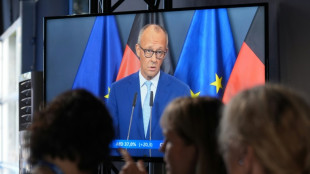 Germany's Merz vows to stay course despite new vote losses
-
Britain, Zverev-inspired Germany, Spain complete Davis Cup finals

-
 Man City outgun Sunderland despite Brobbey hat-trick, Man Utd rescue Fulham draw
-
Man Utd salvage Fulham draw as pressure mounts on Carrick

-
 Mourinho blames ref committee for Real Madrid derby defeat
-
Spanish civil war drama 'The Black Ball' wins at Toronto festival

-
 Maresca craves a 1-0 win after eight-goal Man City thriller
-
Germany's Merz shaken by far-right and far-left gains in state votes
-
 Atletico Madrid beat Real Madrid in tense derby clash
-
Macron welcomes Canada's Carney to French Atlantic territory

-
 Reusser retains world time-trial title
-
Fiorentina frustrate Napoli with Serie A draw, Como upset

-
 Man City outgun Sunderland despite Brobbey hat-trick, Liverpool win at Bournemouth
-
Five-star Man City top Premier League after Sunderland thriller

-
 Top US, Chinese economic officials meet ahead of Trump-Xi summit
-
Ukrainian drones hit Moscow on last day of Russian elections

-
 Erdogan's LGBTQ crackdown 'first step of election campaign': activist
-
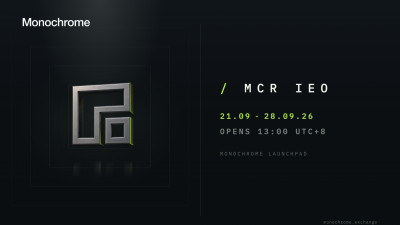
Multi-Asset Trading Venue Monochrome Exchange Announces IEO of Its Native Token, $MCR
-
 Mass drone barrage on Moscow kills two
-
South Korea break Japan hearts to win Asian Games basketball gold

-
 82-year-old dies after beach fight in Greece over sun lounger
-
Acosta takes first victory at Austrian MotoGP

-
 US warns of rapid escalation in Mideast war
-
PSG president Nasser al-Khelaifi under investigation in France for conflict of interest

-
 Iran 'put hearts on the court' to win Asian Games basketball bronze
-
China swim sensation, 13, sets Games record after Japan win early

-
 School girl Yu helps China dominate in Asian Games swimming openers
-
Drones hit Moscow as Russians go to the polls

-
 Myanmar win first Asian Games teqball gold as Spain great Puyol watches
-
New England boss Fleming says 'wrong' to ask Stokes to end retirement

-
 China's 13-year-old Yu scorches to first major gold at Asian Games
-
Germans vote in elections threatening fresh blow to Merz

-
 Russians vote on last day of parliamentary elections
-
US fears rapid escalation in Mideast after Houthis attack Riyadh

-
 Hong Kong pays final respects to former city leader Tung
-
Japan triathlete Hojo wins first gold of Asian Games

-
 Typhoon put people off Asian Games opening ceremony, official says
-
IOC president impressed by 'beautiful' Asian Games wooden huts

-
 China's 13-year-old Yu cruises as Asian Games swimming begins
-
First Asian Games gold goes to Japan as China's 13-year-old Yu lights up pool

Meta's announcements and digital services?
Recent announcements by Meta, the technology conglomerate formerly known as Facebook, are raising questions about compliance with new and upcoming European digital regulations. In particular, critics argue that Meta’s proposed changes—ranging from expanded encryption options to the way it handles user data—could conflict with the European Union’s (EU) Digital Services Act (DSA).
The Digital Services Act is part of the EU’s broader effort to modernize internet governance, alongside the Digital Markets Act (DMA) and other legislation.
The DSA aims to:
- Increase Transparency: Large online platforms must disclose how their algorithms rank content and ads.
- Enhance Accountability: Platforms must tackle illegal or harmful content promptly, and offer clear mechanisms for users to report it.
- Protect User Rights: Users should be able to appeal content takedowns and have better insight into how and why posts are removed or demoted.
These rules place heightened responsibilities on big tech companies—those classified as “very large online platforms” with tens of millions of European users.
Meta’s Recent Announcements:
Over the past few months, Meta has shared several updates about its business strategy and platform operations, including:
- Increased End-to-End Encryption: Meta plans to make messaging on Facebook Messenger, Instagram, and WhatsApp more robustly encrypted.
- Data Collection and Personalization: Meta continues to prioritize data-driven ad targeting, which remains a central component of its revenue model.
- Content Moderation Tools: The company has signaled new automated detection systems to handle harmful content.
At first glance, these moves might appear aligned with a more privacy-focused approach. However, some experts contend that the heightened encryption and ongoing data collection practices might not fully align with the EU’s expectations for transparency, oversight, and user empowerment.
Potential Areas of Conflict
Algorithmic Transparency:
The DSA requires large platforms to provide clearer information on how content is promoted or suppressed. Critics say Meta’s push toward deeper encryption and minimal disclosure about proprietary ranking algorithms may hinder third-party audits.
User Rights and Appeals:
With increased automation in content moderation, users must have meaningful ways to appeal decisions. Observers note that Meta’s announcements have not specified whether appeals processes will be enhanced alongside new AI-driven moderation systems.
Data Governance and Consent:
Meta’s continued reliance on personalized advertising could come under scrutiny if user data is processed in ways that the DSA considers insufficiently transparent. The EU seeks stronger user consent mechanisms and clearer data usage disclosures, which might push Meta to adjust its business model in Europe.
Regulatory and Public Reactions
EU Officials:
While no formal statement has condemned Meta’s announcements outright, policymakers in Brussels remind all major platforms that “partial compliance” will not be enough under the DSA. Fines for non-compliance can reach up to 6% of a company’s global annual revenue.
Digital Rights Advocates:
Several advocacy groups argue that fully end-to-end-encrypted messaging, while privacy-enhancing, should not exempt a platform from accountability measures. They urge Meta to release more details about how it will reconcile encryption with obligations to remove illegal content.
Meta’s Response:
Thus far, Meta has reiterated its commitment to meeting the “highest regulatory standards” in Europe, pointing to ongoing investments in safety, content moderation, and user privacy. However, no specific roadmap for DSA compliance has been published.
What Lies Ahead:
As the DSA comes fully into force, large platforms like Meta will be closely monitored for breaches. A key question is whether Meta can strike a balance between encryption, monetization via targeted ads, and the new transparency and accountability requirements. Failure to do so could result in hefty fines or even a partial suspension of services within the EU.
Ultimately, the coming months will reveal how Meta’s strategies align—or clash—with Europe’s digital vision. If Meta can demonstrate robust compliance and meaningful user protections, it may preserve its market stronghold. If not, a confrontation with Brussels seems inevitable. Either way, the outcome will have sweeping implications for how major tech firms operate under a stricter European regulatory regime.

Saudi Arabia's Economic Crisis

Iran: Allies abandoned

Israel-Iran: USA Strikes

Israel's War on Iran's Ayatollahs

Demographic Collapse Crisis

Brazil tests Milei’s gamble

Iran-War and dangerous Lines

30 Days to Save the Economy?

No red lines: Israel vs Iran

Cuban regime nears collapse

EU India deal gains unveiled