-
 Iran offers new proposal amid stalled US peace talks
-
Gulf countries' plans to bypass Hormuz still far off, experts warn

-
 Luis Enrique says 'unique' PSG-Bayern first leg could have gone either way
-
Rebels take key military camp in Mali's north

-
 Activists on Gaza aid flotilla seized by Israeli forces disembark in Crete
-
Turkish police fire tear gas, arrest hundreds at Istanbul May Day rallies

-
 French hub monitors Hormuz tensions from afar
-
Flick happy Raphinha back for Barca with title in sight

-
 UN troubled by rejected appeal of Cambodian opposition leader
-
Activists on Gaza aid flotilla detained by Israel disembark in Crete

-
 Suspect appears in UK court charged with attacking two Jewish men
-
Oil steady after wild swing, stocks diverge in thin trading

-
 Lufthansa says searching for Oscar lost after US airport security row
-
Howe says Saudi backers are fully behind Newcastle

-
 Chinese swimmer Sun Yang reports cyberbullying to police
-
Salah 'deserves big send-off', says Liverpool boss Slot

-
 UK police charge man with stabbing attack on two Jewish Londoners
-
Solomon Islands leader loses court appeal, must face no confidence vote

-
 Former world skating champion Uno joins pro eSports team
-
Japan baseball umpire hit by bat still unconscious two weeks on

-
 Nakatani says won't be intimidated in sold-out Inoue title clash
-
T-Wolves eliminate Nuggets as Knicks demolish Hawks in NBA playoffs

-
 Timberwolves eliminate Jokic's Nuggets from NBA playoffs
-
Iran activates air defences as Trump faces congressional deadline

-
 Arsenal seek to ramp up heat on Man City in title race
-
PSG closing in on another French title before Bayern second leg

-
 Espanyol must stop rot against Real Madrid as Barca eye title
-
Leipzig can book return to Champions League as Bundesliga top-four rivals meet

-
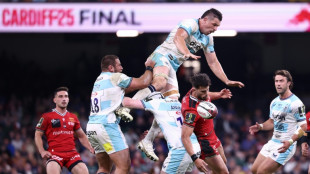 Injuries add to Bath's challenge for Champions Cup semi in Bordeaux
-
Karius getting 'back to the top' with promotion-chasing Schalke

-
 King Charles arrives in Bermuda after whirlwind US visit
-
Clashes erupt in Australian town over death of Indigenous girl

-
 Iran war redraws sea routes with Africa as the pivot
-
India's cows offer biogas alternative to Mideast energy crunch

-
 Afghans celebrate spring in bright red poppy fields
-
Finland's 'Flamethrower' and 4 other Eurovision favourites

-
 Crude edges up after wild swing, stocks track Wall St rally
-
Eurovision: 70 years of geopolitics, patriotism, music and glitter

-
 Knicks demolish Hawks to advance in NBA playoffs
-
Blockbuster EU-Mercosur trade deal enters into force

-
 'Uncharted': US court ruling shakes up battle for Congress
-
Florida executes man who spent nearly 50 years on death row

-
 Ace lifts rookie Green to share of LPGA lead as Korda lurks
-
Wear a bulletproof vest? I don't want to look fat, says Trump

-
 Vertosoft LLC Recognized with the 2026 OpenGov High-Performance Innovation Partner Award
-
Elektros to Leverage IBM Ecosystem to Shield Real Estate and Hotel Portfolios From Rising Utility Costs

-
 Global Experts call for Paradigm Shift in Medicine, Health and Education to Save Lives and Fight Escalating Health Crisis
-
Kingsway to Report Financial Results for First Quarter 2026 on Thursday, May 7, 2026

-
 SETO Holdings Subsidiary Shinju Japanese Whisky Joins FullScale Marketplace to Expand Creator-Led Commerce and Digital Distribution
-
CCL Industries Closing of ALT Technologies Acquisition

Adobe down 40%: Kodak moment?
Adobe’s stock has spent the summer trading roughly 40% below its 52-week high, a striking reversal for a company long treated as a bellwether of the creative economy. The sell-off reflects a convergence of pressures: intensifying AI-driven competition, regulatory scrutiny of subscriptions, controversial pricing changes, and a shifting center of gravity from applications to underlying AI infrastructure. The question hanging over the market is whether Adobe faces a Kodak-style disruption—or is merely navigating a bruising but temporary reset.
The slide behind the headline
As of mid-August, shares remain about 40% beneath last year’s 52-week high, underscoring how swiftly sentiment has flipped from euphoria around generative AI to worries about commoditization. The drop has also been amplified by analyst downgrades that argue value may be migrating from application-layer software to AI infrastructure and platforms.
Competitive shock: AI eats software (and design)
The rise of text-to-image and text-to-video tools has lowered creative barriers for individuals and enterprises alike. Web-first design platforms and AI-native video apps are courting Adobe’s core audience with lower prices, simpler workflows, and collaborative features that feel “good enough” for many use cases. Adobe’s aborted attempt to buy a fast-growing design rival left that competitor independent—and emboldened. Meanwhile, a separate deal created a powerful alternative bundle for creative pros by combining a mass-market design platform with a full professional suite.
Pricing, packaging and customer trust
Adobe is hiking and repackaging parts of Creative Cloud, rebranding “All Apps” to “Creative Cloud Pro” with expanded generative features. For some customers, the shift promises more AI value; for others, it reinforces “subscription fatigue” and raises the risk of churn to cheaper alternatives. Compounding the perception problem, U.S. regulators have sued Adobe over alleged “dark patterns” in subscription cancellations—claims the company denies. Regardless of the legal outcome, the episode has kept pricing and trust squarely in the headlines.
Product reality check: far from standing still
It would be a mistake to equate a falling share price with a failing product engine. Adobe continues to ship at pace: newer Firefly models add higher-fidelity image generation and expanding video features; core apps like Photoshop, Illustrator and Lightroom keep absorbing AI-assisted tooling; and the company is pushing “content credentials” and indemnities aimed at enterprises wary of copyright risk. Under the hood, the financial machine still hums: record quarterly revenue, double-digit growth in its Digital Media segment, and a large recurring-revenue base suggest substantial resilience.
Buybacks vs. disruption
Management has been retiring shares under a multi-year, $25 billion repurchase authorization—classic playbook for signaling confidence and supporting EPS. But buybacks don’t answer the existential question: if AI ultimately turns many creative tasks into commodity services, can Adobe preserve pricing power and premium margins at application level?
Is this really a “Kodak moment”?
Kodak’s mistake wasn’t missing a feature—it was clinging to a cash-cow business model while the medium itself changed. Adobe’s risk rhymes, but is not identical:
- The bear case: If AI creation and editing consolidate into low-cost, browser-based suites and assistants embedded by cloud and OS giants, Adobe’s subscription pricing could face sustained pressure. Regulatory and reputation hits around subscriptions or data use could accelerate defections at the margin.
- The bull case: Creative workflows remain multi-step, brand-sensitive, and quality-obsessed. Enterprises still prize compliance, provenance, and integration across design, marketing, and document ecosystems—areas where Adobe is deeply entrenched. If Firefly and Acrobat AI become indispensable “copilots,” Adobe can monetize AI inside a platform customers already trust.
- Most likely near-term: A grind. Revenue and ARR continue to grow at a healthy clip, but multiples reflect uncertainty about long-run AI economics. Execution on pricing, retention, and enterprise AI value will decide whether this reset becomes a rerating upward—or a slow leak. Enterprise AI adoption of Firefly and Acrobat AI (features used at scale, not just trials). Regulatory outcomes in the U.S. subscription case and any spillover into practices globally.
Partner ecosystem—how deeply Adobe’s AI models integrate with (or get displaced by) hyperscaler stacks. Adobe’s 40% drawdown signals a market repricing of app-layer software in the AI era—not proof of a Kodak-style collapse. The company still has brand, distribution, and cash flow on its side. Whether that’s enough will depend less on dazzling demos and more on something prosaic: making AI raise productivity, reduce friction, and earn its keep for paying customers.

Georgia: Ruling party celebrates election victory

Asylum seekers: Return centres – a Solution?

Climate change: A farm in Rotterdam

EU: Overcoming barriers to equality

Germany and its outdated pension system
How important is sustainable development?

Berlin: EU-Summit of western Balkan heads of state

Putin's War Will Go Bankrupt if the Oil Prices Drop

Germany: The fight against economic migrants

Polish PM and the danger of asylum seekers

Ukraine: Recruiters searched Kyiv venues