Cougars of LA imperiled by more frequent wildfires / Photo: Handout - NATIONAL PARK SERVICE/AFP

 Prosecutors can review Woods medical records in DUI case: judge

 Japan deploys bear cameras in mountains as attacks surge

 Djokovic has history in his sights at Wimbledon
 Ovechkin returning to Caps for 22nd NHL season

 Faster than Mbappe: Australia flyer Bos races into World Cup conversation

 Trump wants 'senseless killing' in Ukraine to end: US official
 Eala writes history for Philippines in 'electric' Wimbledon atmosphere

 Wolff urges 'perspective' as Russell chases Mercedes' teammate Antonelli

 Superb Swiatek, Zverev cruise into Wimbledon last 32

 Ukraine, Russia vow escalation after Moscow attack kills 21 in Kyiv

 Slowing US job growth poses midterms challenge for Trump

 Klopp poised to replace Nagelsmann as Germany coach: reports

 More than 400 dead in DR Congo's spreading Ebola outbreak

 Hot spell roasts eastern US as holiday weekend approaches

 Superb Swiatek storms into Wimbledon last 32, Zverev waits
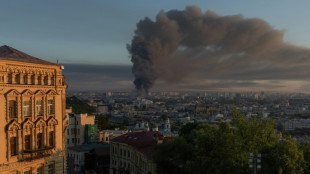 Russian strikes kill 21 in biggest ever attack on Kyiv, mayor says

 Swiatek sees off Pliskova to race into Wimbledon third round

 Dollar down, stocks shine after disappointing US jobs data

 US job growth slows, posing questions for Trump before midterms

 Chanel eyes menswear with Charvet shirtmaker takeover

 Chanel eyes menswear with Charvet shirtmaker takevoer

 'I grabbed my child': Kyiv residents face devastation of biggest Russian barrage of war

 Former top jockey Dettori breaks ribs in car crash

 Rees-Zammit returns to wing as Wales face Fiji

 Renovations on historic Paris Opera house extended by three years

They are beautiful, powerful and stalk the hills above Los Angeles.
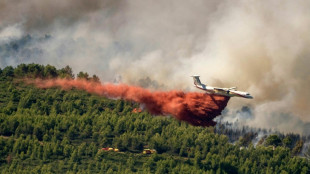
But more frequent wildfires caused by climate change have placed the survival of the city's last remaining mountain lions in doubt, by increasing their exposures to car collisions and hostile encounters with their own kind.
Rachel Blakey of the University of California, Los Angeles led a study published Thursday in Current Biology examining the impact of the 2018 Woolsey fire, which scorched half the big cats' habitat in the Santa Monica mountains.
The biggest takeaway: "It's not just about how many animals perished in that fire -- in this case two mountain lions," she told AFP.
"We need to think about how that change in the landscape is then going to influence how these animals experience all the other stresses that they're currently dealing with."
Blakey, a native of Australia who has been researching California's wildlife for about seven years, says she was "blown away" to learn that a city of 10 million people supported a population of mountain lions, also known as cougars.
The apex predators are one of two large cat species in the Western Hemisphere, along with jaguars found further south in Mexico and Central America.
Generally speaking, the species is healthy enough, explained Blakey, though their range was once much bigger, roaming from coast to coast before the arrival of Europeans to the Americas.
But there are pockets within California where the lions are hemmed in by urban areas and freeways, decreasing their genetic diversity and placing great pressures on their survival. Los Angeles is one such region.
- More crossings, more fights -
Over the past 20 years, the National Park Service (NPS) has been tracking this isolated population, which generally numbers around 10-12 individuals.
They had already noticed worrying signs of inbreeding, such as kinked tails and low-quality sperm, but the lions were nonetheless clinging on.
Blakey and NPS colleagues decided to leverage GPS and accelerometer data from tags on the animals to understand the impacts of the Woolsey fire, which burned 97,000 acres (40,000 hectares) in November 2018.
What they found was far from encouraging.
After the fire, the lions avoided the burned areas, which they previously used as cover to ambush their prey -- deer and small mammals -- as well as to avoid conflicts between males.
They also placed themselves at great risk by crossing more roads, including freeways.
Their rate of crossing Highway 101, a busy 10-lane freeway, increased from once every two years to once every four months.
Blakey said this change was "very, very striking considering these roads are the major source of mortality for this population."
The lions also had to put in a lot more work to eke out survival.
They traveled nearly 400 kilometers a month on average compared to 250 kilometers, increasing their food needs and placing them at further risk of lethal skirmishes with other mountain lions.
- Animal crossing -
One piece of good news from the study: contrary to residents' fears, the lions remained deeply shy of humans, spending only four or five percent of their time in urban areas both before and after the fire.
Co-author Seth Riley of the NPS told AFP that while the population had since returned to their former range after the forest recovered, and the lions were back to their pre-fire numbers, climate change continued to pose risks.
"With climate change, there's concern about more and bigger fires, and drought doesn't help, which is something we've been experiencing for quite a while here," he said.
Researchers and conservationists are placing great hope on the Wallis Annenberg wildlife crossing, a vegetated overpass currently under construction that was designed with the lions and other species in mind.
Some animals will of course continue to get hit, said Riley.
But they believe the crossing will help restore connectivity between the Santa Monica lions and other populations to the north, providing a much-needed boost to genetic exchange.
W.Moreno--AT