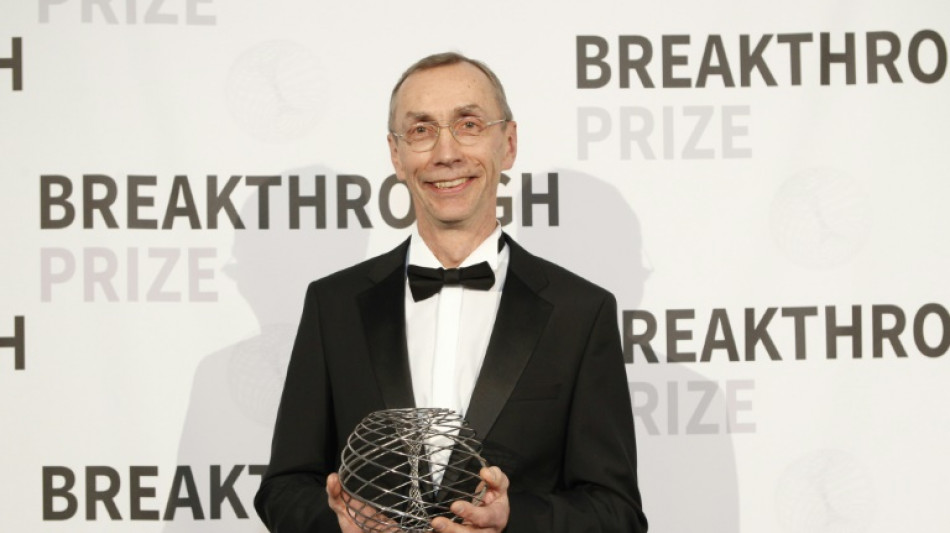
Svante Paabo, Swedish medicine Nobel-winner follows in father's footsteps / Photo: Kimberly White - GETTY IMAGES NORTH AMERICA/AFP/File

 Cyberattack ruled out in UK air traffic glitch that hit hundreds of flights

 Ogura to miss San Marino MotoGP with hand injury

 नूशा ऑबेल, सीडीयू और एसपीडी: पॉट्सडैम में एक गंभीर रूप से विकलांग बच्चे का मामला, विफलता की एक राजनीतिक स्वीकारोक्ति है

 Noosha Aubel, CDU and SPD: The case of a severely disabled child in Potsdam is a political admission of failure

 Noosha Aubel, CDU ve SPD: Potsdam’daki ağır engelli bir çocuğun durumu, siyasi bir iflas ilanıdır

 ヌーシャ・オーベル、CDUおよびSPD:ポツダムで起きた重度障害児の事例は、政治的な破綻を露呈している

 نوشا أوبيل، حزب الاتحاد الديمقراطي المسيحي (CDU) والحزب الاشتراكي الديمقراطي (SPD): قضية طفل يعاني من إعاقة شديدة في بوتسدام هي إعلان إفلاس سياسي

 Josh Kerr: I pick my races and I'm not a robot
 Apple unveils its first foldable smartphone iPhone Duo

 Rampant Raphinha bags brace as Barcelona rout Feyenoord

 Rybakina ensures rise to world no. 1 by reaching US Open semis

 How hot can the US-Canada trade war get?
 Iran strikes ships, expands no-go zone outside Hormuz strait

 'Gambling with our lives': AI researcher quits Anthropic

 Belgium raids illicit cigarette factory in push to stub out growing trade

 Vuelta debutant Brennan claims fifth victory on stage 17

 US had warmest summer on record: climate agency

 Meta tests fact-check replacement in Latin America
 Soviet brutality, ideology backdrop of controversial Venice film

 McIlroy predicts player exodus after LIV files for bankruptcy protection

 Global Multi-Asset Broker FP Markets Secures UAE CMA Category 5 Licence

 Brent oil passes $100 on Mideast flare-up, stoking inflation worries
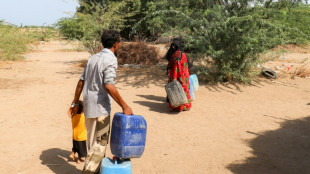 'Nothing left': thousands in Yemen flee deadly Houthi clashes

 Spain endured hottest summer on record: weather agency

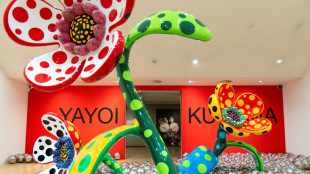 'A celebration': Amsterdam museum unveils Kusama show weeks after death

Swedish paleogeneticist Svante Paabo, who won the Nobel Medicine Prize on Monday for using DNA to reveal the link between humans and Neanderthals, drew early inspiration from his Nobel laureate father.
However Paabo later learned that his father had been living a "double life", and his existence had been kept a secret from his father's other family.
Paabo, 67, was awarded the medicine Nobel for a long list of achievements including sequencing the Neanderthal genome for the first time and discovering the existence of a distant human relative called the Denisovans.
He was born in Stockholm in 1955 to Estonian chemist Karin Paabo and Sune Bergstrom, a biochemist who won the Nobel Medicine Prize in 1982. His father died in 2004.
In his 2014 memoir "Neanderthal Man: In Search of Lost Genomes", Paabo wrote that he gained inspiration to study medicine at Sweden's Uppsala University from his father, who had previously been a medical doctor.
Later he learned that his father "had two families, one of which did not know about the other," he wrote.
"I had grown up as the secret extra-marital son of Sune Bergstrom," Paabo wrote, adding that he had "only occasionally" seen his father as an adult.
Paabo also followed in his father's footsteps by studying biochemistry, earning a PhD at Uppsala University for using DNA research to study a protein of adenovirus, common viruses which cause cold-like symptoms.
But Paabo had long been fascinated with mummies and "could not quite shake off my romantic fascination with ancient Egypt," he wrote in his memoir.
- An impossible task -
The crossover of his medical research using DNA and preoccupation with mummies put him on the path that would become his life's work.
"Could it be possible to study ancient DNA sequences and thereby clarify how ancient Egyptians were related to one another and to people today?" he asked in his book.
"Such questions were breathtaking. Surely they must have already occurred to someone else."
Finding that they had not, Paabo sought his own answers.
It proved a difficult task, because there are only trace amounts of DNA left in ancients remains.
He first made international news in 1985, when he published research that found a DNA fragment in the mummy of a 2,400-year-old child.
Paabo then turned his focus toward Neanderthals when he was recruited by Germany's Munich University in 1995.
A year later, he managed to sequence some mitochondrial DNA from a 40,000-year-old piece of Neanderthal bone.
He then became the head of the genetics department at the Max Planck Institute for Evolutionary Anthropology in Leipzig, Germany.
He accomplished the "seemingly impossible task" of publishing the first Neanderthal genome sequence in 2010, according to a statement from the Nobel Assembly.
The research surprised by the scientific world by showing that Neanderthal genomes are still present in one to four percent of humans from European or Asian descent.
"We find traces of their DNA everywhere," Paabo told AFP in 2018.
- 'Normal human beings' -
Also in 2010, Paabo and his team revealed the existence of Denisovans, an extinct human relative, just by sequencing the DNA from a 40,000-year-old finger bone.
Only a year before these breakthroughs were published, Paabo developed potentially life-threatening blood clots in his lungs.
While researching his illness, "to my amazement I stumbled upon references to my father's work in 1943", Paabo wrote in his memoir.
His father had "elucidated the chemical structure of herapain," the drug "which had perhaps saved my life," he wrote.
In an interview published by the Nobels on Monday, he said that having a Nobel-winning parent may have also given him confidence by showing that "such people are normal human beings and it's not such an amazing thing".
"You don't put your parents on a pedestal," he added.
He now identifies as bisexual and has two children with primatologist Linda Vigilant, who also works at the Max Planck Institute.
K.Hill--AT