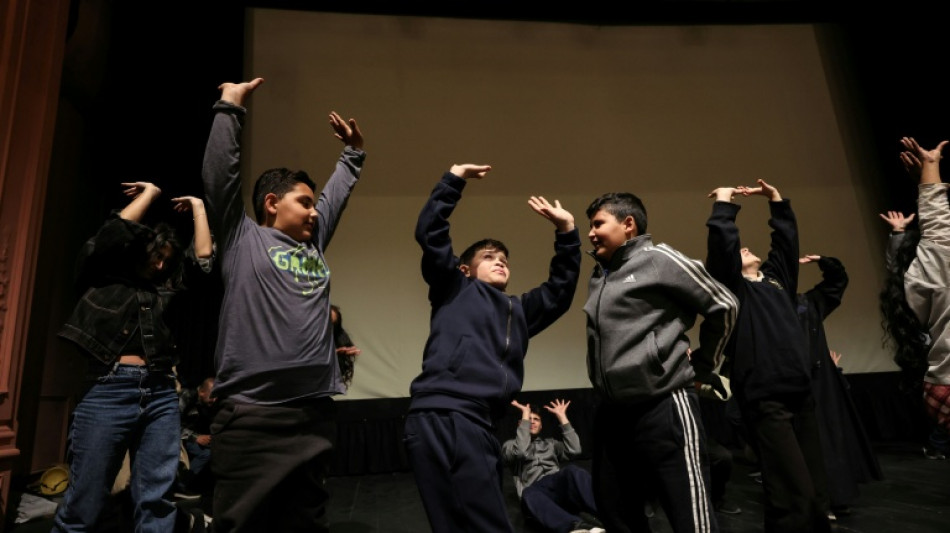
'War has aged us': Lebanon's kids aren't alright / Photo: Anwar AMRO - AFP

 Boland strikes twice for Australia in rain-hit South Africa Test

 Marseille put Angers to the sword in Ligue 1

 Albanian PM refuses to quit as violent protests enter sixth day

 Chwalinska fights back to win Wuhan Open in title breakthrough
 Kulusevski on brink of return for Spurs after 17-month absence

 Ukraine sets Saint Petersburg refinery ablaze in large-scale drone attack

 Spain's in-form Chacarra wins DP World India Championship

 Two pilots die in Saudi coalition helicopter crash near Yemen border
 Riyadh skyscraper shifts tenants online as Houthi attacks intensify

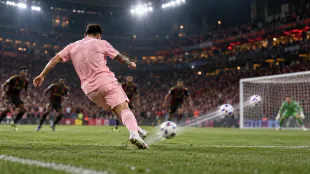 Messi scores twice as Inter Miami defeat Atlanta United 3-1

 Qatar and Norway review bilateral ties at Oslo consultations
 Vietnam and EFTA states sign free-trade agreement in Hanoi
 Gold closes week near $4,165 as US inflation outlook pressures market
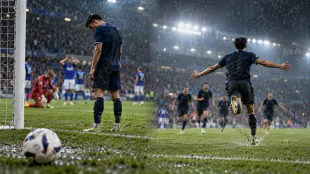 PSG rally past Strasbourg to take Ligue 1 lead

 India’s services surplus narrows as import growth overtakes exports

 RCom professional asks Supreme Court to revisit spectrum insolvency ruling

 Debt recovery lessons after derivatives losses and repeated borrowing

 Katie Alexander reportedly leaves flat shared with Eamonn Holmes

 Body found in search for missing Glasgow teenager

 Andi King recounts late-life transition after decades behind an “alpha male” identity

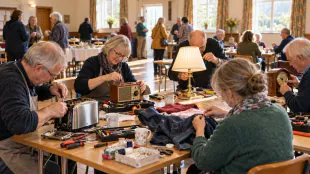 Bromsgrove Repair Cafe reports nearly 80% repair success rate

 B.C. Lions focus on playoff momentum after Calgary defeat

 PNB expects festive demand to add up to two points to quarterly credit growth

 Cyient DLM drops 12% as margin concerns overshadow quarterly growth
 Arizona quarterback says audible led to dismissal and teammates’ suspensions

Forced by yet another war in Lebanon to flee his home for the second time in just two years, and mourning lost relatives and friends, Hassan Kiki said he feels much older than 16.
"War has aged us... We have lived through what no one else has," the tall teen from south Lebanon told AFP in Beirut.
"I miss my school, my friends... I lost two cousins and two friends in a massacre in Shehabiyeh," he added, referring to a deadly Israeli strike in his town that killed at least seven people on March 11.
Kiki is among more than a million people Lebanese authorities have registered as displaced since the country was drawn into the Middle East war on March 2.
On that day, the Iran-backed militant group Hezbollah launched rockets towards Israel to avenge the killing of supreme leader Ayatollah Ali Khamenei.
Israel, which never stopped bombing Lebanon despite a 2024 truce that sought to end the last war with Hezbollah, responded with widespread strikes, ground operations along the border, and an evacuation warning for swathes of the country.
For many young Lebanese caught in the crossfire, their formative years have been jeopardised by repeated conflicts and crises.
"My childhood is gone," said Kiki.
"Material losses can be made up for, but people do not come back."
Since 2019, Lebanese have been battling a financial crisis that has locked them out of their bank deposits, while the Covid pandemic made life even harder for everyone.
Beirut's port exploded the following year in one of the world's largest non-nuclear blasts, destroying swathes of the Lebanese capital, and killing more than 220 people.
- 'Dreams on hold' -
The first time Zahraa Fares experienced war was in 2024, when she was just 14.
"We were still discovering what we like to do, what activities we enjoy, how we like to spend our days, then we were displaced... and could not do anything", said the now-16-year-old, who escaped the southern city of Nabatiyeh.
Fares, who said she now feels "mentally crushed", found relief in an acting workshop in Beirut's Lebanese National Theatre intended to support war-affected youth like herself.
Wassim al-Halabi, a 20-year-old Syrian who fled the war in his country nine years ago and is still living in Lebanon, has found himself stuck in another conflict.
Working in a restaurant since the 2024 war forced him out of university, Halabi said he was "starting from zero to be able to stand on my two feet again, but war started again".
"Our dreams are now on hold until the war ends."
Lebanese authorities on Thursday said Israeli strikes have killed more than 1,000 people since March 2.
The toll includes 118 children.
"Cumulative trauma, cumulative adverse experiences and ongoing instability and unpredictability certainly put these children at higher risk... of developing psychiatric disorders and negative mental health outcomes," Evelyne Baroud, a child and adolescent psychiatrist told AFP.
"Witnessing violence, physical assaults, killings, forced displacement, losing one's home, loss of a parent, all of these carry a very high risk of developing post-traumatic stress disorder."
- Generational trauma -
Lebanon has been mired in conflicts and crises for decades, the worst of which was the 15-year civil war that erupted in 1975 and which divided the country into warring sectarian fiefdoms.
For many years since the end of that war, which killed 150,000 people and left 17,000 more missing, bitter political divisions continued to plague Lebanon.
The war also saw an Israeli invasion and occupation of southern Lebanon until 2000.
While young Lebanese grew up hearing stories of war from their parents, they never expected to have to live through one themselves.
"My mother used to tell us about how they would be displaced, hear airstrikes, but I was not able to properly imagine it," Fares said.
"I used to ask myself 'how could they shelter in a school?' but now I see it with my own eyes."
At a gathering in Beirut to express solidarity for victims of the war, 18-year-old Laura al-Hajj wondered: "Why do I have so many concerns at my age?"
"We carried burdens that are much bigger than us, and beyond our age... I now just worry about being alive tomorrow."
Hajj said she feels like "from generation to generation, we are all living through wars".
"No child should have to go through what we went through."
T.Perez--AT