Bangladeshis cling to protest dreams a year after revolution / Photo: Munir UZ ZAMAN - AFP

 Italy hope for new dawn under Mancini

 Mongolian herders enlist new tech against harsher, drier climate

 Tata turmoil shines light on India succession woes
 World Cup 'not enough' as Spain begin next chapter
 Meta acts against 3.7 mn scammers' accounts with Singapore police help

 Australia PM says draft social media rules about taking back control

 Is Pet Insurance Worth the Monthly Cost?

 US-led Americas coalition backs sanctions against crime groups

 'Star Wars' fans and art lovers line up for new Lucas museum
 Trump renames AI 'super intelligence' as leaders jostle over dangers

 Oil prices retreat as markets welcome US-Iran talks

 US refusing to give Sudan's de facto leader visa for UN: diplomatic sources, UN
 Macron urges world to choose UN over 'law of the jungle'

 All-rounder Jacks stars as England beat Sri Lanka in 1st ODI
 Man City peg back Bayern to start Women's Champions League
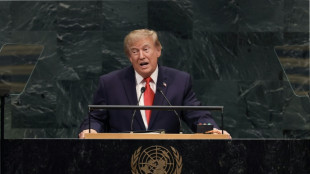 Trump beats 'America first' drum at UN as allies tread carefully
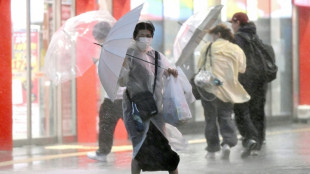
 Snedeker backs Spaun for Ryder Cup after Presidents snub

 French prosecutors probe secret filming of women with smart glasses

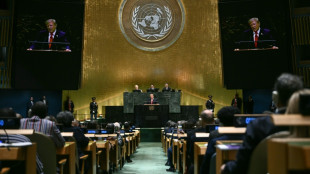 Trump renames AI "super intelligence," rejects international oversight
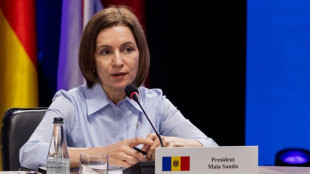
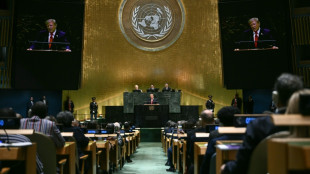 Trump rejects international regulation of AI

 How is the EU approaching record fuel prices?

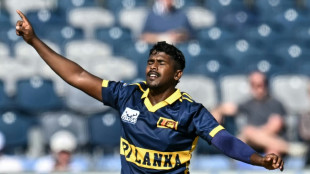 Sri Lanka's Colombage strikes on debut as England dismissed for 265 in first ODI
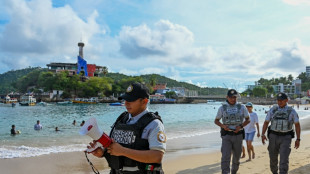 Hurricane Polo strengthens to top category 5 off Mexico

 11 hurt as teen opens fire outside school in western Turkey

 UN chief says 'Big Oil' treats atmosphere as open sewer

The memory of Bangladeshi police with shotguns twice blasting the young protester beside him still haunts Hibzur Rahman Prince, one year after a revolution that has left the country mired in turmoil.
That killing, along with up to 1,400 others as Sheikh Hasina tried to cling to power last year, overshadows Bangladesh as political parties jostle for power.
Prince shuddered as he recalled how the student's bleeding body collapsed at his feet.
"His body was lacerated," said Prince, who helped carry him to hospital.
Medics told him that "400 pellets were taken from his dead body".
Protests began on July 1, 2024 with university students calling for reforms to a quota system for public sector jobs.
Initially their demands seemed niche.
Many in the country of around 170 million people were worn down by the tough grind of economic woes.
Student ambitions to topple Hasina's iron-fisted rule seemed a fantasy, just months after she won her fourth consecutive election in a vote without genuine opposition.
One week into the demonstrations she said the students were "wasting their time".
- 'Too many bodies' -
But protests gathered pace.
Thousands launched daily blockades of roads and railways nationwide, with the gridlock bringing the demonstrations to wider attention.
A fuse was lit when police launched a deadly crackdown on July 16.
It became the catalyst for the airing of wider grievances.
Prince, now 23, a business student in the capital Dhaka, said he witnessed killings when police sought to stem protests on July 18.
As well as carrying the student's body, he helped several wounded protesters reach the hospital.
"I saw too many unidentified dead bodies in the morgue that day," said Prince, who has been diagnosed with post-traumatic stress disorder and suffers flashbacks and mood swings.
"After that day the fight turned more personal," he said. "It was for the country."
On August 5 thousands of protesters stormed Hasina's palace as she escaped by helicopter to her old ally India.
- 'The rage' -
Syeda Farhana Hossain, 49, a mother of two teenage girls, took part in the protests with them.
"This new generation proved that in times of need, they can and are willing to sacrifice their lives for the greater good," she said, describing how her daughters helped paint anti-government slogans on their school walls.
"I didn't realise before the rage my children felt," she said. "It seemed like they just grew up in an instant."
But the idealism of protests has been tempered by the stark reality of the challenges Bangladesh faces.
Hasina's rule saw widespread human rights abuses and her government was accused of politicising courts and the civil service, as well as staging lopsided elections.
Caretaker leader Muhammad Yunus has said he inherited a "completely broken down" system of public administration that requires a comprehensive overhaul to prevent a return to authoritarian rule.
The Nobel Peace Prize winner scheduled elections for April 2026 but has said pushing those polls back by a few months would give more time for reforms.
"We are not on the right track yet," Hossain said.
"Whenever I see injustice or unfairness these days, I wonder: Did the students that die, die in vain?"
- 'Against injustice' -
Tea seller Mohammad Aminul Haque, 50, said people were exhausted by intensely partisan politics that have defined Bangladesh since independence in 1971.
"The ongoing cycle of one party after another, fueling hate against each other -- we don't want this anymore," Haque said.
"What we want to see is everyone coming together for the greater good."
Yunus's government has warned that political power struggles risk jeopardising the gains that have been made.
Mohiuddin Hannan, 50, a teacher at an Islamic school, has certainly seen improvements since the last administration, which crushed Islamist parties.
"Under this government, murder, kidnapping, abductions and enforced disappearances are not happening anymore," he said.
But Hannan said there is far to go.
"It seems only the hands of power have shifted," he said.
As political parties vie for power, Prince clings to the optimism that drove the protests.
"People are more politically aware now, they raise their voice against injustice," he said.
"Whoever comes to power next will be held accountable by the public."
M.White--AT