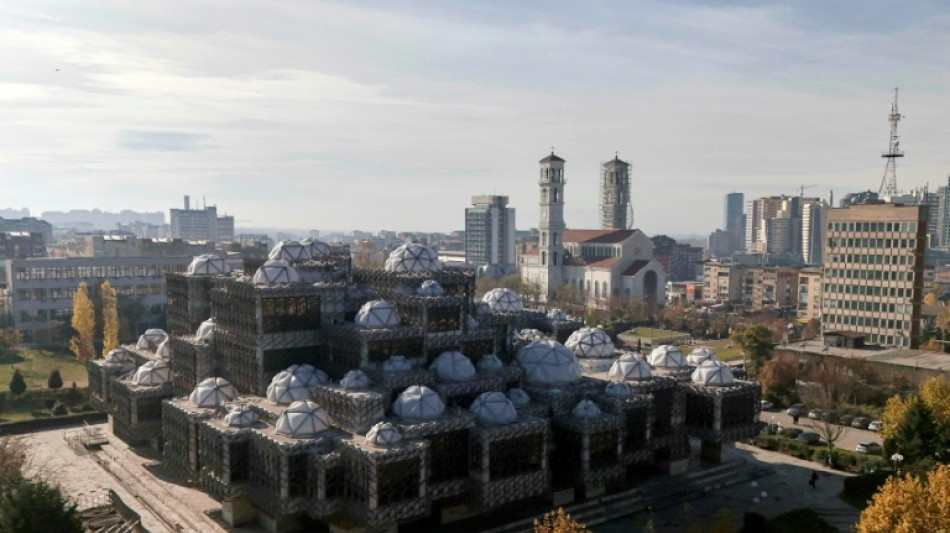
Ugly or awesome? Kosovo national library stirs never-ending debate / Photo: Kushtrim Kadriu - AFP

 US media outlets to sue Trump administration after White House ban

 Global stocks rally on lower oil prices, US-China hopes

 EU proposes energy rating for data centres

 Schoolgirl Yu scorches to second gold as doping case rocks Games

 Putin's party secures record score in Russia election
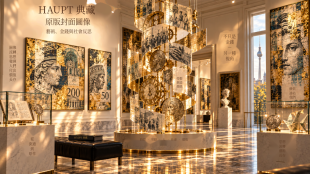
 Haupt Koleksiyonu: Paranın Biz İnsanlar Hakkında Anlattıkları

 Spanish PM says unregulated AI could be 'devastating'
 Yu, 13, smashes record again with second Asian Games gold
 Switzerland to play without Xhaka over fake Covid certificate

 From Korean Chipmakers to Leveraged Semiconductor ETFs: STARTRADER Launches 49 New 24/7 Stock and ETF CFDs
 Thai badminton player first doping case at Asian Games: testers
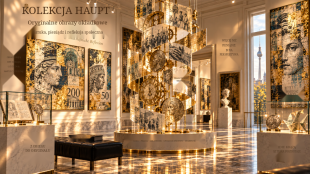
 Колекція Гаупта: Що гроші розповідають про нас, людей

 German far-right AfD poll winner says Merz 'twilight' has begun
 Flights scrapped, evacuations urged as Typhoon Dujuan nears Japan

 China confirms Xi to visit US this week for Trump talks

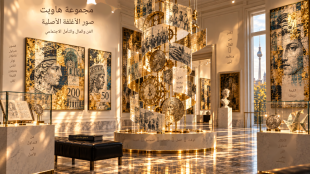 مجموعة هاوبت: ما يكشفه المال عنا نحن البشر
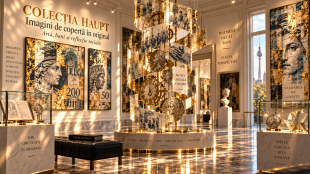 Colecția Haupt: Ce ne dezvăluie banii despre noi, oamenii
 Sisters of jailed Pakistan ex-PM Imran Khan arrested
 African players in Europe: Semenyo brace helps City top table

 'For my family': India boxer beats hardship, injury to go for Games gold

 Indonesia doing 'everything' but still struggling to curb fires
 Once decried as 'human cockfighting', MMA wants Olympic spot

 China's Yu, 13, great for swimming says multiple Olympic medallist

 Putin's party set to retain power after Russia vote hit by cyberattacks, drones

 Germany's Merz under pressure after bruising state election losses
Smack in the middle of Kosovo's capital Pristina, the national library is all but impossible to miss.
To some it is an architectural wonder, with its bubble domes and shimmering steel lattice.
"It's the cherry on the cake of Pristina, and of Kosovo," declared local tourist guide Muamer Hasani.
Whenever you "search for something about Pristina, the first photo that comes up is of the national library," he added.
But for others, the building is an abomination.
"It's so ugly that it blinds you," said a middle-aged Pristina resident who asked not to be named.
"We've been living with it for decades and it hasn't been renovated yet. It's annoying, but what can we do?"
Opened in 1982, the library has witnessed Kosovo's occasional highs and bitter lows -- from the breakup of Yugoslavia to the bloody war with Serbia in the late 1990s, independence and all the turbulent history since.
- 'Iconic object' -
Its 74 translucent domes were designed to provide natural lighting for the reading rooms below. The grid of steel covering its brutalist exterior deflects sunlight, cooling the building and protecting the books inside.
Croatian architect Andrija Mutnjakovic, who oversaw the design, said he was trying to reflect Kosovo's diverse culture and history.
"Like any architect, I am in love with my building. I am glad to see that 40 years after its construction, it is as beautifully preserved as if it opened yesterday," Mutnjakovic told AFP.
He has little time for those who criticise it.
The library's director Blerina Rogova Gaxha agrees.
"It is an iconic object of Kosovar culture, giving Pristina itself identity because it is the main object in the capital that catches the eye," Rogova Gaxha told AFP.
Its design pays homage to the ancient cultures that had once ruled Kosovo, she said -- Romans, Byzantines, Ottomans and Illyrians.
- 'Gelatinous eggs' -
But for newcomers to the Kosovo capital, the cultural references and architectural brilliance are not always apparent at first, or even second, glance.
The Lonely Planet travel guide called the library "easily one of Pristina's most notable buildings".
"Think gelatinous eggs wearing armour," it added.
"The building looks quite strange. It is brutalist architecture but interesting," said Julie, a student from Warsaw, who was photographing the library from several angles.
"Maybe it is not the prettiest because it has a lot of concrete and is grey from the outside," said Paula Gers, a student visiting from Germany.
"I wouldn't rank it among the ugliest. I've seen much worse."
For the library's director, the ongoing debate over its aesthetics is a blessing in disguise.
"There are not as many readers as there used to be, but there are an extraordinary number of local and foreign visitors," Gaxha said.
Everyone wants to come and have a look for themselves, she said, trying to work out "why is it considered the ugliest", wanting to see it from the inside as well as from outside.
A.Williams--AT