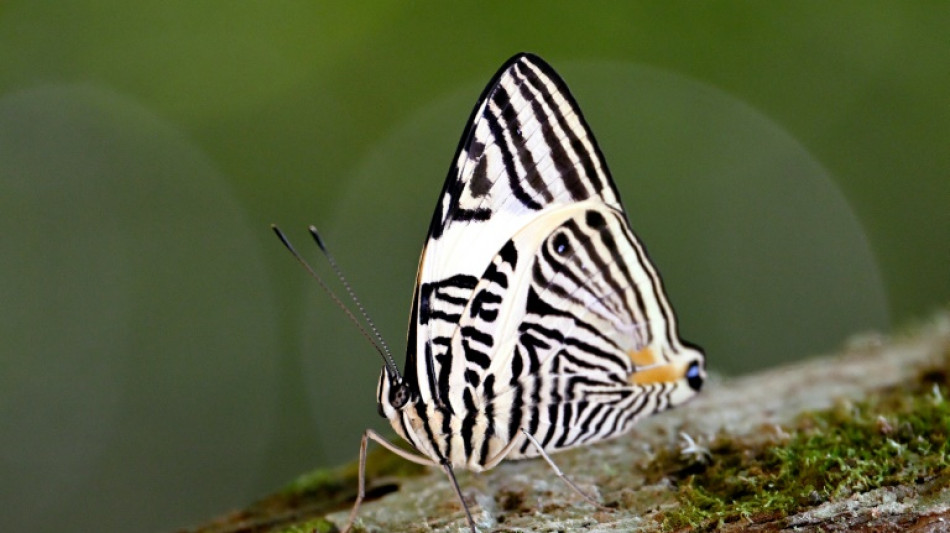
In Ecuadoran Amazon, butterflies provide a gauge of climate change
/ Photo: Daniel MUNOZ - AFP/File

 'I live in fear': 1.5 million Pakistani children sexually exploited online

 Cowboys beat Commanders, Vikings down Bears as star QBs injured
 Braves clinch division title as Red Sox reach MLB playoffs
 Bordeaux-Begles hammer Stade Francais despite Jalibert injury

 Milan and Juventus end blips with home wins

 Bridgeman wins PGA Biltmore title with sizzling 61

 Williams injured as Bears shut down by Vikings

 US warns of rapid escalation in Middle East war

 Germany's far-right AfD celebrates another state election win

 Russia vows revenge for election-day attacks as poll shows ruling party win

 Spaun late shows snatches PGA Championship win

 Conceicao strikes as Juventus beat Atalanta

 Britain, Zverev-inspired Germany, Spain complete Davis Cup finals

 Man Utd salvage Fulham draw as pressure mounts on Carrick

 Spanish civil war drama 'The Black Ball' wins at Toronto festival

 Germany's Merz shaken by far-right and far-left gains in state votes

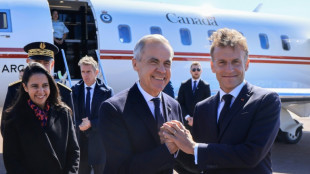 Macron welcomes Canada's Carney to French Atlantic territory

 Fiorentina frustrate Napoli with Serie A draw, Como upset

 Five-star Man City top Premier League after Sunderland thriller

 Ukrainian drones hit Moscow on last day of Russian elections

 Multi-Asset Trading Venue Monochrome Exchange Announces IEO of Its Native Token, $MCR

 South Korea break Japan hearts to win Asian Games basketball gold

 Acosta takes first victory at Austrian MotoGP

 PSG president Nasser al-Khelaifi under investigation in France for conflict of interest

 China swim sensation, 13, sets Games record after Japan win early

Biologists on a trail in the Ecuadoran Amazon hold their breath as they distribute a foul-smelling delicacy to lure butterflies, critical pollinators increasingly threatened by climate change.
A team has hung 32 traps made of green nets, each baited with rotting fish and fermented bananas. They are meant to blend in with the forest canopy. Their pungent odor clearly does not.
Since last August, a team of biologists and park rangers has been monitoring butterfly numbers in the Cuyabeno Wildlife Reserve, a park famed for its abundant flora and fauna.
They catch and document the colorful insects, releasing most with an identifying mark on their wings. Some of them, possibly from previously unknown species, are kept for further study.
The results of the team's work, however, have been discouraging.
Butterflies are "bioindicators," living organisms whose well-being provides a measure of the health of their surrounding ecosystem, and their numbers are decreasing, biologist Maria Fernanda Checa told AFP.
While the number of species may not have declined by more than 10 percent, in terms of absolute butterfly numbers "the decrease is very significant... maybe 40/50 percent," she said.
"It is something that alarms us."
- Bioindicators -
Under expedition leader Elisa Levy, a team checks the nets for captured butterflies.
They hold the insects delicately by their tiny abdomens and manipulate their legs and wings with tweezers.
Some are bright red and blue, others have what resemble zebra stripes. Some are see-through, like glass.
About three-quarters of fruit- or seed-producing crops for human consumption depend on pollinators, which provide a free service worth billions of dollars.
The UN has warned that 40 percent of invertebrate pollinators -- particularly bees and butterflies -- risk global extinction, posing certain risks to humanity itself.
Butterflies, said Checa, are "very sensitive, even to small changes in the ecosystem" throughout their short lifespan from egg to caterpillar to reproductive adult.
Levy explained that tropical plants -- unlike ones in regions with distinct seasons -- are not accustomed to extreme weather variations.
If they do not adapt to a fast-changing climate, these plants could be lost, along with the butterfly larvae that feed on them.
Ecuador, relatively small but extremely biodiverse, hosts about 4,000 butterfly species -- nearly as many as its much larger neighbors Peru and Colombia.
Yet in places like the Yasuni National Park, which neighbors Cuyabeno, "the rate of species discovery is slower than the rate of extinction," said Checa.
T.Perez--AT