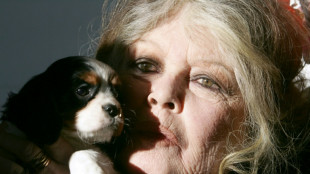
French-Canadian gets 'Oscars of Science' prize for cancer treatment / Photo: Etienne Laurent - AFP

 'I live in fear': 1.5 million Pakistani children sexually exploited online

 Cowboys beat Commanders, Vikings down Bears as star QBs injured

 Braves clinch division title as Red Sox reach MLB playoffs

 Bordeaux-Begles hammer Stade Francais despite Jalibert injury

 Milan and Juventus end blips with home wins

 Bridgeman wins PGA Biltmore title with sizzling 61

 Williams injured as Bears shut down by Vikings

 US warns of rapid escalation in Middle East war
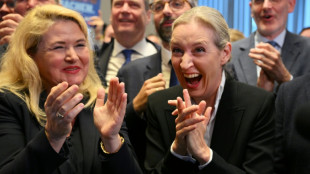 Germany's far-right AfD celebrates another state election win

 Russia vows revenge for election-day attacks as poll shows ruling party win

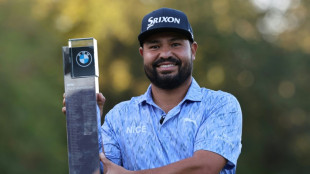 Spaun late shows snatches PGA Championship win
 Conceicao strikes as Juventus beat Atalanta

 Britain, Zverev-inspired Germany, Spain complete Davis Cup finals

 Man Utd salvage Fulham draw as pressure mounts on Carrick

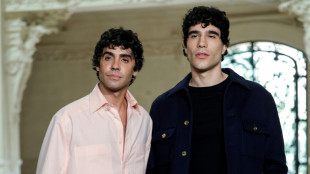 Spanish civil war drama 'The Black Ball' wins at Toronto festival

 Germany's Merz shaken by far-right and far-left gains in state votes

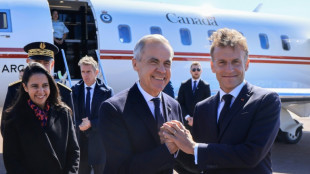 Macron welcomes Canada's Carney to French Atlantic territory
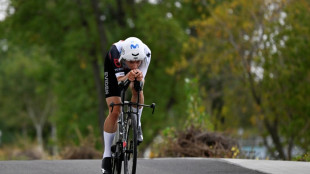
 Fiorentina frustrate Napoli with Serie A draw, Como upset

 Five-star Man City top Premier League after Sunderland thriller

 Ukrainian drones hit Moscow on last day of Russian elections
 Multi-Asset Trading Venue Monochrome Exchange Announces IEO of Its Native Token, $MCR

 South Korea break Japan hearts to win Asian Games basketball gold

 Acosta takes first victory at Austrian MotoGP

 PSG president Nasser al-Khelaifi under investigation in France for conflict of interest

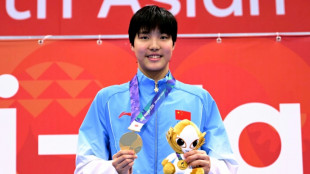 China swim sensation, 13, sets Games record after Japan win early
French-Canadian scientist Michel Sadelain was awarded an "Oscars of Science" prize in Los Angeles on Saturday for his research into genetically modifying immune cells to fight cancer.
The genetic engineer was awarded the Breakthrough Prize at a glitzy ceremony attended by tech giants such as Elon Musk and Bill Gates, and an array of celebrities including Jessica Chastain, Robert Downey Jr. and Bradley Cooper.
His work has led to the development of a new form of therapy called CAR-T that has shown exceptional efficacy against certain blood cancers.
"This prize is an extraordinary recognition," Sadelain told AFP on the red carpet at the Oscars Museum. "It's all the more of an honor because ... my scientific colleagues told me for a long time that it would never work."
Launched in 2010, the Breakthrough Prize awards "the world's most brilliant minds" in fields including life sciences, fundamental physics and mathematics, styling itself as the Silicon Valley-backed answer to the Nobels.
Dubbed the "Oscars for Science", founding sponsors include Sergey Brin, Priscilla Chan and Mark Zuckerberg.
Sadelain will split the $3 million prize money with American immunologist Carl June, who also led groundbreaking research into the field independently of his co-winner.
"The greatest pleasure, however, is to see patients... who no longer had a chance and who thank us, who are alive today thanks to CAR-T cells," said Sadelain.
Sadelain studied medicine in Paris, then immunology in Canada, before taking up postdoctoral research at the Massachusetts Institute of Technology in 1989.
- 'Living drugs' -
At the time, there was great interest in developing vaccines to train the immune system to recognize and destroy cancer cells, in the same way it can be taught to tackle foreign invaders such as bacteria and viruses.
After moving to the Memorial Sloan Kettering Cancer Center in New York, Sadelain developed a way to use a disabled virus to genetically reprogram human T-cells, so that they grew claw-like structures called antigen receptors, allowing the T-cells to target specific cancer cells.
Beyond recognizing the cancer, these Chimeric Antigen Receptor (CAR) T-cells, as Sadelain named them, were also given genetic instructions to enter a killing mode and to multiply, growing an army inside the body to eliminate the enemy.
Thanks to the groundwork laid by Sadelain and June, half a dozen US-approved CAR-T cell therapies are now available, and hundreds more trials are underway.
Patients' own T-cells are collected, modified outside the body, and then infused back into the blood, creating so-called "living drugs".
The treatment has proved effective against lymphoma, certain leukaemias and myeloma, a serious and complex blood cancer. Sadelain hopes that research will make it possible to "apply this treatment to other cancers".
One of the main challenges is to lower the cost of treatment, which costs over $500,000 -- a sum generally covered by insurance.
Around 20 other scientists were honored on Saturday at the Breakthrough Prize, in various categories.
Some of the research awarded included effective drugs to treat the underlying cause of cystic fibrosis, a genetic disorder that affects the lungs, and the discovery of the most common genetic causes of Parkinson's disease.
T.Perez--AT