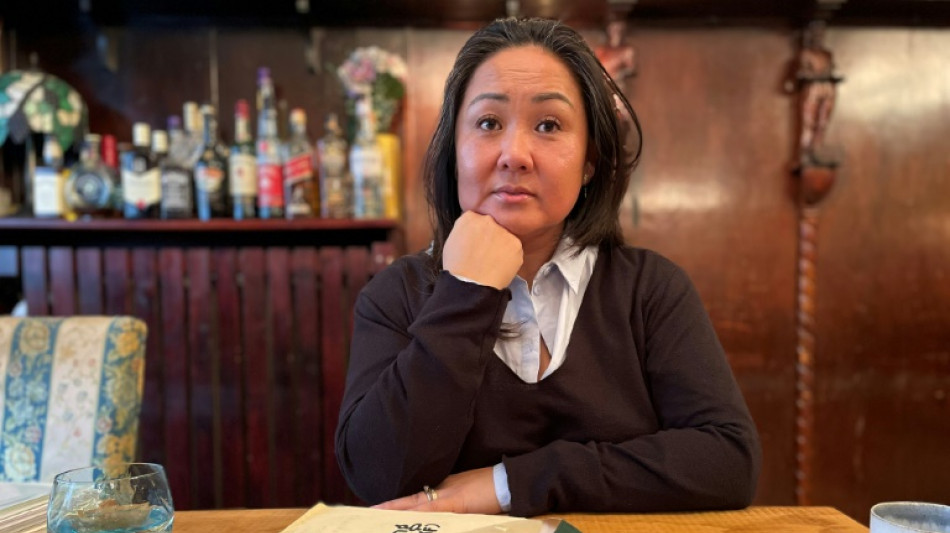
Victims of Denmark's adoption scandal demand answers / Photo: Camille BAS-WOHLERT - AFP

 Braves clinch division title as Red Sox reach MLB playoffs

 Bordeaux-Begles hammer Stade Francais despite Jalibert injury

 Milan and Juventus end blips with home wins
 Bridgeman wins PGA Biltmore title with sizzling 61

 Williams injured as Bears shut down by Vikings

 US warns of rapid escalation in Middle East war

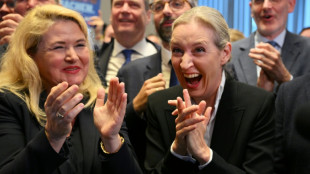 Germany's far-right AfD celebrates another state election win
 Russia vows revenge for election-day attacks as poll shows ruling party win

 Spaun late shows snatches PGA Championship win

 Conceicao strikes as Juventus beat Atalanta
 Britain, Zverev-inspired Germany, Spain complete Davis Cup finals

 Man Utd salvage Fulham draw as pressure mounts on Carrick

 Spanish civil war drama 'The Black Ball' wins at Toronto festival

 Germany's Merz shaken by far-right and far-left gains in state votes

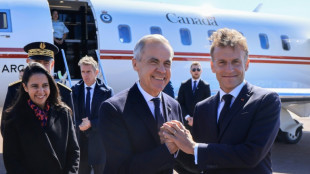 Macron welcomes Canada's Carney to French Atlantic territory
 Fiorentina frustrate Napoli with Serie A draw, Como upset

 Five-star Man City top Premier League after Sunderland thriller

 Ukrainian drones hit Moscow on last day of Russian elections
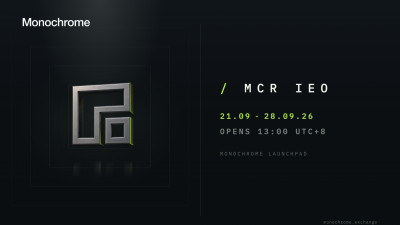 Multi-Asset Trading Venue Monochrome Exchange Announces IEO of Its Native Token, $MCR

 South Korea break Japan hearts to win Asian Games basketball gold
 Acosta takes first victory at Austrian MotoGP

 PSG president Nasser al-Khelaifi under investigation in France for conflict of interest

 China swim sensation, 13, sets Games record after Japan win early

 Drones hit Moscow as Russians go to the polls

 New England boss Fleming says 'wrong' to ask Stokes to end retirement

"I don't even know when I was born," said May-Britt Koed, a Copenhagen restaurant owner and one of the quarter of a million South Korean babies sent abroad for adoption since the 1950s.
Her adoption files contain two different birth dates months apart, which Koed suspects means she may have been exchanged for another baby that did not survive.
Experts say even the chubby baby picture sent to her Danish adoptive parents may not have been of her.
All the 47-year-old knows for sure is that "I arrived in Denmark on May 17, 1977".
Koed's case is far from isolated. The growing scandal over falsified records has prompted South Korea's Truth and Reconciliation Commission to look at hundreds of cases from the country's "baby farm" adoption industry during the decades of dictatorship that ended in the late 1980s.
Koed said her Danish Korean Rights Group has seen hundreds of files containing falsified documents, with some babies arriving in Denmark six centimetres (two inches) shorter than they were in their South Korea files.
A January report for Denmark's social affairs ministry found that some adoption agencies, operating under Danish state control, knew their South Korean partners were changing children's identities in the 1970s and 1980s.
More worrying still, "it's been documented that letters were being sent from (birth) parents who didn't know where their children were", said Marya Akhtar of the Danish Institute for Human Rights.
- 'Why didn't anything happen?' -
"And allegedly it looks like they were in the possession of authorities in Denmark," she added.
"Why didn't anything happen? We call for a thorough examination," Akhtar told AFP.
Danish adoption agencies also reportedly paid some 54 million kroner ($7.9 million) to Korean orphanages and other bodies over the years to facilitate the adoptions, according to media investigations.
Denmark suspended all international adoptions in January amid serious concerns over babies also brought from other countries including India and South Africa.
"It's like opening Pandora's Box," Koed told AFP.
"We are at a point where we can see that the Danish government has been involved," said Koed, whose group has called for an independent Danish commission into the trade.
"Everybody deserves to have that truth, especially the adoptees that are trying to piece together their own history," she said.
"I haven't searched for a biological family, I'm not sure I'm going to. I am doing this to discover the truth of what happened to all of us and to find out who is responsible," she added.
Time is of the essence for those who want to trace their biological families, with some already learning that their parents are dead, she added.
Copenhagen's freeze on international adoptions came after the last agency operating there closed down amid revelations of financial pressure and fraudulently acquired consent -- not only in South Korea but also in India, Madagascar and South Africa.
Brothers and sisters were separated and sometimes adopted to different countries.
Danish social affairs minister Pernille Rosenkrantz-Theil said there was "too high a risk of human trafficking or child theft".
Last year she promised an inquiry into the history of international adoption procedures.
Legal expert Klaus Josephsen, a lecturer at the University of Aarhus, said there "hasn't been enough control" of the system in Denmark.
"We have a private organisation, which has handled and taken care of those adoptions. They found children then created the papers and sent them to the Danish authorities," he added.
"We will not see those organisations anymore, because the government doesn't trust them. So I think we will get a new system, where the state will be active," Josephsen said.
E.Flores--AT