Police Departments Deploy AI-Generated 'Grand Theft Auto VI' Recruitment Ads

 Police Departments Deploy AI-Generated 'Grand Theft Auto VI' Recruitment Ads

 San Ġiljan Defeat Paredes 20-12 in Challenger Cup Opener

 Kuwait DGCA Delegation Attends ICAO Assembly in Montreal

 Charlie Puth and Ellie Goulding to Headline First Johnnie & Co. Festival in Mumbai

 Maryland Woman Arrested in Decade-Long Cancer Scam Involving Fake Medical Team
Despite Grand Theft Auto VI’s notorious depiction of corrupt law enforcement, police departments across the United States, Canada, and beyond are aggressively using AI-generated imagery and social media campaigns to recruit new officers. The move has drawn criticism for ignoring the game’s anti-police narrative in favor of chasing viral engagement.
Law enforcement agencies across the United States, Canada, and international borders are launching a coordinated effort to capitalize on the release of Grand Theft Auto VI, utilizing artificial intelligence-generated imagery and social media posts to recruit new officers and issue public safety warnings. The strategy has drawn sharp criticism for attempting to align with a video game that explicitly portrays police as corrupt, violent antagonists.
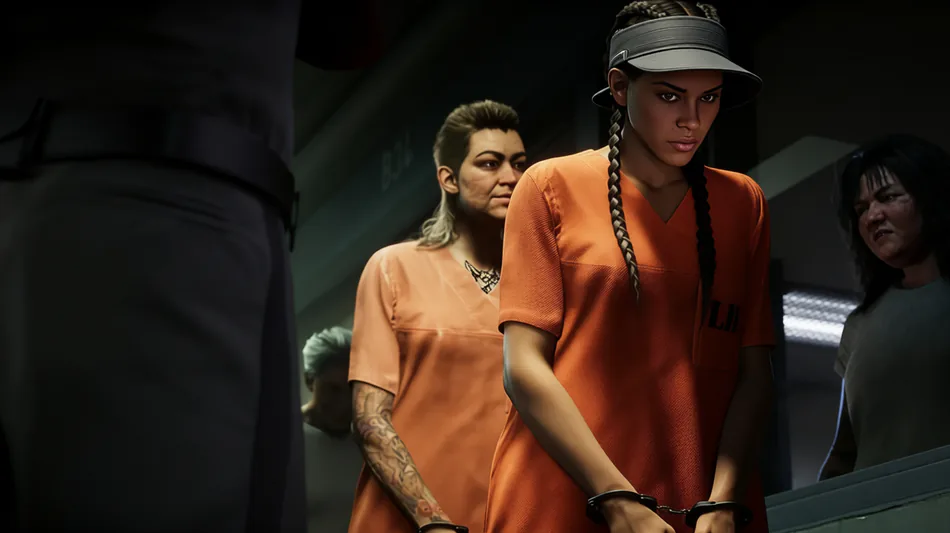
The blockbuster title, released after a 13-year development cycle, features a fictionalized version of South Florida called Vice City. In-game radio advertisements for the Vice City Police Department (VCPD) openly mock real-world policing standards. One spot asks, “Have you always dreamed of abusing your power without consequence?” and promises cadets will learn to apply excessive force, engage in racial profiling, and plant evidence.
Despite this blistering critique of American law enforcement, numerous police departments have attempted to exploit the game’s cultural dominance. The San Diego Police Department posted an AI-generated image on Instagram showing a cruiser against a sunset backdrop with neon pink and purple hues matching the game’s aesthetic. The caption read, “Want to drive a police car, we can make that happen! Apply Now!” with the nonsensical phrase “Join San Diego PD VI” overlaid.
Similar efforts appeared in Washington state, where a department encouraged viewers to try the “real-life version” of the game by pursuing law enforcement. Their post stated, “No cheat codes. No respawns. Just real people, real challenges, and a career that makes a difference.”
In Canada, police communications teams flooded feeds with GTA-themed content. The Calgary Police Service adopted a lighter tone, posting traffic officers reacting to dangerous driving maneuvers within the game. Meanwhile, departments not seeking recruits focused on public messaging. The Glendale Police Department in California advised followers to “Keep It In The Game VI,” warning them to follow speed limits and keep their “wanted level at ZERO.” The Denver Police Department issued a similarly stern reminder that “Grand theft auto is still illegal.”
Critics argue these agencies ignored the game’s core narrative. Players have documented instances where Vice City officers brutalize suspects for filming arrests or drawing weapons over minor infractions, such as standing in a street to take a selfie. Commenters noted the disconnect between the game’s authoritarian cruelty and the departments’ attempts to appear approachable.
The controversy extends beyond local police. Fox News commentators criticized the game for exposing children to virtual gun violence, while Elon Musk stated he could not play the series because it compelled players to shoot police officers. Both stances, though often viewed as insincere, acknowledged a regard for law enforcement that the recruiting departments seemingly discarded.
International entities also joined the trend. The Russian army generated recruitment ads for its Telegram channel, and NATO highlighted its defensive security alliance with military-industrial themes, claiming even top gamers would struggle to evade its fighter jets and submarines. In the United States, Vice President JD Vance’s political imagery was digitally altered to resemble GTA graphics.
In a notable domestic development, a U.S. Army battalion in Georgia granted 43 eligible soldiers four days off to play the new game in exchange for reenlisting for two additional years.
Observers describe the widespread adoption of AI tools and gaming aesthetics by serious institutions as a desperate attempt to remain relevant in an all-consuming cultural moment. The effort has been widely characterized as ineffective, with many questioning what these organizations have in common with a game centered on robbing convenience stores.
A.Taylor--AT