
The Digital Burden: Why Instant Messaging Feels Like a Full-Time Job

 Petrol and diesel prices remain broadly steady across major Indian cities

 Reliance shares remain in focus after near-12% surge

 2026 Arizona Midterms: Key Races, Ballot Measures, and Voter Deadlines

 Coal India prepares possible $1 billion Mahanadi Coalfields listing

 Julia Stiles and Ezra Sosa Share Emotional Farewell After 'DWTS' Elimination

 US Buildings Threatened by Wildfires Could Triple by 2060

 Why Pregnancy Cost Estimates Fail: A Family’s $9,000 Surprise

 US Strikes Iranian Targets in Strait of Hormuz Ahead of Midterms

 Brodeur’s Overtime Goal Secures Bethlehem’s Second Consecutive Sectional Title

 Rare 1970 Plymouth ‘Cuda 426 Hemi Listed for $400,000

 The Digital Burden: Why Instant Messaging Feels Like a Full-Time Job

 Alberta Tabled Controversial Riding Boundary Maps Amid Gerrymandering Accusations

 Hong Kong court set to sentence activist Joshua Wong in security case
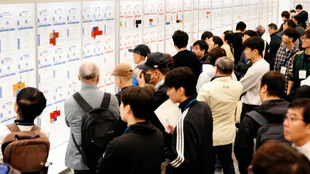
 Australia raises benchmark rate to highest level in 18 years

 'The Remarried Empress' Cast Discusses Bringing Fantasy Royal Drama to Life

 Asian stocks retreat as AI worries outweigh steep oil-price drop

 Hamad International Airport stages emergency drills during WATAN 2026

 Global failure to punish attacks leaves journalists at continuing risk

 Researchers Warn 'Bookkeeping Trick' Masks Beef Industry's Methane Emissions

 Climate Change Intensified Atlantic Hurricanes, Study Finds

 Qatar solar expansion opens scope for technical performance gains

 Sandro Piancone and Jorge Olson Release Wholesale MBA, the Insider's Guide to Selling Consumer Goods Through Distributors, Retailers, and Direct-to-Consumer Channels

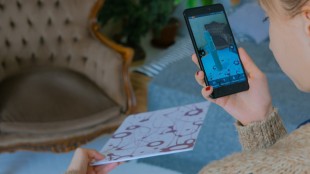 Impauer Technologies Launches Pauerone Wallet V1 Desktop App Across Windows, MacOS, and Chrome OS to Deliver Isolated Self-custody
 INEO Appoints David Wambeke to Board of Directors

 Fermi Provides Update on Lease Agreement as Parties Work Toward Closing

Instant messaging was designed to simplify life by removing the financial and technical barriers of early text communication. However, the removal of these limits has created a new phenomenon where constant connectivity generates social burnout, turning casual exchanges into an overwhelming obligation for users worldwide.
The advent of free instant messaging applications fundamentally altered the landscape of human communication, yet it has simultaneously created a pervasive sense of social exhaustion. What began as a convenient tool for connecting with friends and family abroad has evolved into an endless stream of obligations that many users describe as akin to burnout—a condition traditionally associated with professional work rather than personal relationships.
In the era preceding internet-enabled real-time communication, the cost of messaging placed a natural cap on volume. A single text message could cost nine cents, while overseas SMS charges were significantly higher. Service providers offered limited packages, such as 300 "web texts" restricted to 160 characters each, requiring users to sit at a personal computer to write and dispatch them. This constraint forced mindfulness; every word had to be weighed carefully to convey homework updates, gossip, or whereabouts within the tight character limit.
The transition to free, unlimited messaging dissolved these barriers. Initially, this was celebrated as a liberation from the anxiety of running out of phone credit or sending desperate "call me" texts like digital smoke signals. The ability to send longer messages allowed for greater context and nuance, particularly benefiting those with relatives living abroad or those coordinating complex social logistics, such as sharing vouchers with extended family.
However, the convenience of perpetual accessibility has introduced a new burden. Smartphones rendered users constantly available, blurring the lines between private time and social obligation. The proliferation of group chats for every aspect of life—from sports teams and book clubs to neighborhood watch groups and workplace coordination—has created an "endless mountain" of messages. Users find themselves immersed in individual streams of consciousness, often through verbose voice notes or rapid-fire texts, while simultaneously managing a steady influx of notifications from neighbors, colleagues, and acquaintances.
Kelly Earley, a writer and podcaster from Coolock, describes the experience of managing this digital clutter as physically and mentally draining. She recounts attempting to tackle accumulated messages in batches, imagining herself in a glamorous literary scene reminiscent of Joan Didion. In reality, she found herself hunched over a MacBook at an IKEA desk, dealing with bad posture while replying to friends and even a pension advisor whose text had been ignored for three months.
As the backlog of messages was cleared, the immediate influx of new replies began anew, creating a cycle of guilt and obligation. Earley notes that this sensation mirrors burnout, suggesting that instant messaging creates unnecessary work for social lives. The expectation of immediate availability ignores the recipient's context; a user might be paying at a checkout, wearing gloves, or simply unwilling to engage with their phone at that moment.
This dynamic contrasts sharply with older forms of communication. A delayed email response is understood as a lack of access to a computer, and a late letter is accepted as a matter of postal logistics. In contrast, delaying a reply on a messaging app is often perceived as rude, regardless of the recipient's actual circumstances. The constant trickle of communication serves transient purposes before the sender forgets about it, leaving the message as a burden for the recipient.
Earley draws a parallel between these digital exchanges and single-use plastic. Just as physical plastic waste accumulates in landfills, the volume of ephemeral messages generates "digital landfill." These texts rarely serve as keepsakes or historical records like letters do; instead, they fill servers and notification queues, far exceeding what any individual could reasonably read or retain.
While a complete digital detox may not be a viable solution for everyone, there is growing recognition that the current volume of written communication is unsustainable. Earley suggests that society has embraced conscious consumption in the physical world but has yet to apply similar principles digitally. The proposal is to reconsider the frequency and format of communication, moving away from the "firehose" of ephemeral correspondence toward longer-form, less frequent interactions.
The nostalgia for the MSN era, when messaging was confined to PCs and fleeting in-person hangouts, highlights a desire for boundaries. Those earlier forms of communication were valued because they were distinct events rather than a continuous background noise. As users navigate this new reality, the challenge lies in reclaiming the intentionality that cost and physical distance once enforced, without abandoning the practical benefits of modern connectivity.
A.O.Scott--AT