Trustmi Survey: Under Pressure, Workers Say They Verify Less, and Most Have Caught Red Flags After Acting

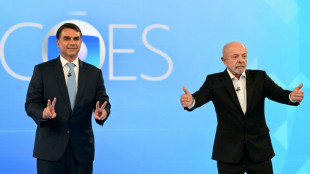
 Thousands rally for Lula and Bolsonaro on eve of tight Brazil vote

 Red-hot Fuellkrug bags Bremen brace, Leipzig win

 Thousands gather at new Albanian anti-government rally
 French police fire tear gas during fresh protests

 Suspect detained after fire wrecks Hitler's mountain retreat
 Alexander Skarsgard and his viral 'Wicker' transformation

 Thousands protest in Turkey over journalists' arrests, media shutdowns
 Man City beaten by Aston Villa to end perfect Premier League start

 Luis Enrique says PSG unbothered by Lyon match switch
 US gymnast Richard wins floor exercise gold at worlds

 Moltzan upstages Shiffrin to win season-opening World Cup giant slalom

 Infantino says backed by 'vast majority' in bid for re-election

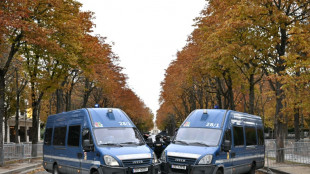
 Police fire tear gas as new French protests kick off

 Police fire tear gas as new French demonstrations kick off
 Tropical Storm Champi nears China after battering Taiwan, Japan

 'Weeks, not days' in Kompany recovery, say Bayern

 Unfair to compare us to Barca: Real Madrid's Mourinho
 North Korea's Kim makes unannounced visit to Chinese border city

 Fire breaks out at Hitler's mountain retreat, suspect arrested
 Marc Marquez wins Australian sprint as Martin crashes out
 North Korea's Kim calls for training world's 'strongest' military

 Brewers edge Rays to capture World Series opener

 France to deploy 70,000 police for fresh weekend protests

 Tatum delivers as Celtics down winless Knicks

 Romantasy fans ready for sleepless night as 'Court of Thorns and Roses' returns

71% of employed respondents have discovered an error or suspicious detail in an email, document or work request after they had already responded to, shared or acted on it.
NEW YORK CITY, NY / ACCESS Newswire / October 23, 2026 / A recent survey by Trustmi, a leader in behavioral AI payment security, found that employees are catching suspicious errors and details after the fact, and say they're likely to spend less time verifying the legitimacy of requests when facing urgency in the workplace. As enterprise workflows grow increasingly complex and AI becomes part of everyday work, these findings point to a critical trust issue around workflows designed for human verification.
"From everyday emails to payment invoices, many organizational checks on accuracy are human driven. But individual and industry pressures can drive an urgency that changes the way humans make those judgement calls, and this creates an opening for risk," said Shai Gabay, Co-founder and CEO, Trustmi. "When employees are asked to work faster, this can come at the expense of verification controls that prevent errors and fraud alike. For critical areas like payment workflows, it's simply not enough to rely on workforces constrained by demanding priorities to catch every mistake - extra protection is essential."
Speed, Pressure and Urgency are Shrinking Verification Windows
As organizations navigate major operational shifts, from digital transformation to AI adoption, pressure to work faster can make it harder for employees to focus when it matters most. Survey findings show how pressure affects attention: 84% of employed respondents said a heavy workload makes it harder to pay attention to important or sensitive tasks. A similar 83% said the same about tight deadlines.
The result can be a compromise of direct safeguards, too, as 68% of employed adults said they're likely to spend less time verifying whether a request was legitimate when feeling pressure at work. This behavior points to a link between proper precautions and the workplace environment.
Employees are Catching Red Flags After the Fact
Not only are verification checks undermined, 71% of employed respondents said they have discovered an error or suspicious detail after they had already responded to, shared or acted on an email, document or work request. Employees may be catching the warning signs, but after the window to prevent issues has passed. In fact, 43% report having this experience multiple times.
As compared to Trustmi's July survey, which highlighted a dangerous gap between what employees think fraud looks like and how it actually appears, these findings similarly suggest that organizations cannot rely solely on employee vigilance to catch anomalies. Even when employees are confident in their ability to spot fraud, urgent workplace conditions may impact their ability to catch fraud or errors in time, or they may be looking for the wrong signals.
Urgency Leads to Other Risky Shortcuts
The behavior change associated with workplace urgency can also translate to other forms of risk. Over half of employed respondents (53%) said pressure to work faster or accomplish more with AI has led them to use an AI tool they weren't sure was approved. For many, this is not an isolated occurrence: 13% have done this frequently, 27% occasionally, and only 13% once.
As organizations push for greater speed and productivity, the risks can extend beyond just missed verification to broader governance challenges.
Technology Can Help Close the Human Verification Gap
When workplace urgency creates conditions that allow important details to be caught late or typical verification precautions to be cut short, employees recognize the value of additional safeguards. A majority (87%) of employed respondents said it would be valuable to have technology automatically perform a second check when a workplace request contains unusual details or other warning signs.
These findings underscore an increasing need to supplement human verification with an additional layer of protection. As workplace demands accelerate and fraudulent requests become more sophisticated, organizations cannot rely on employee attention as the singular line of defense in trusted workflows.
To view the full survey findings, visit this link.
To read more about the finance and security controls employees overlook, visit Trustmi's 2026 Payment Security & Risk Benchmark Report.
Methodology
1,000 people age 18+ living in the U.S. were polled by Dynata for this survey in September 2026. Findings reflected the 591 employed respondents. This survey focused on how workplace urgency and competing demands affect attention, verification, and responses to potentially suspicious requests.
About Trustmi
Trustmi is the leading behavioral AI platform for payment security, helping enterprises stop fraud and costly payment errors before money moves. As fraud increasingly arrives "pre-approved" - designed to pass existing controls - Trustmi provides a critical verification layer across the entire payment lifecycle. By correlating signals across email, vendor behavior, financial documents, and payment workflows, Trustmi detects sophisticated, socially engineered attacks that traditional security and finance controls miss. Trusted by global enterprises with complex payment environments, Trustmi protects over $240 billion in payments annually and has helped prevent more than $1 billion in fraud and $5 billion in payment errors. Founded in 2021, Trustmi is headquartered in New York City and backed by leading investors including Cyberstarts and Insight Partners. For more information, visit https://www.trustmi.ai/.
Contact
PAN for Trustmi
[email protected]
SOURCE: Trustmi
View the original press release on ACCESS Newswire
R.Chavez--AT