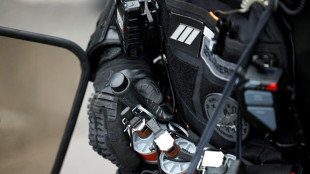
Police fire tear gas as new French protests kick off / Photo: SIMON WOHLFAHRT - AFP

 Top-ranked Rybakina to face Fernandez for Ningbo title
 Late India charge seals thrilling second T20 win over New Zealand
 Seen and heard at France protests
 White says Fiji can have 'massive' World Cup after beating Japan
 England thrash France 82-0 to keep Rugby League World Cup hopes alive
 Security high as France braces for new protests
 White makes winning start as Fiji edge Eddie Jones's Japan
 Lula, Bolsonaro strike calmer tone in final Brazil election debate

 'How is it possible?': Students protest Indonesian haze
 Israel launches major West Bank operation after soldiers killed
 Typhoon Champi knocks out power to thousands in Taiwan
 As Israeli election nears, campaign turns ugly

 Oscar hopeful 'La Bola Negra' offers lessons about communicating, directors say

 Trapped: Soaring fuel costs hurt Maine lobster industry before midterms

 Marc Marquez beats brother Alex to Australian MotoGP pole

 5 Ways to Prepare Financially for Parenthood
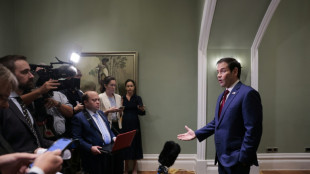 Rubio urges Cubans to work with CIA, but warns: be discreet

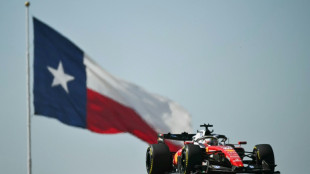 Leclerc tops times for Ferrari in practice for US Grand Prix
 Lula, Bolsonaro lock horns in final debate before Brazil vote
 Poulter and Hatton leave LIV Golf

 Blakely vaults out of the shadow of Biles for all-around world title

 Oil tops $116 with stocks mixed on earnings, AI
 Trump orders lawsuit to block Alaska Senate result if Republicans lose
 Ebola patient in Nigeria is Swiss, had not visited DR Congo: Bern
 Messi receives top Spanish award from heir to throne
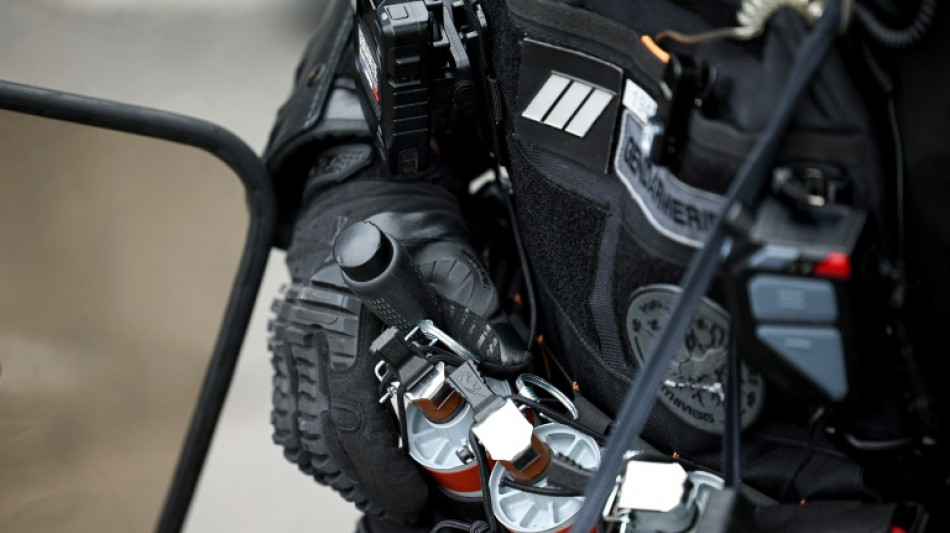
French police started firing tear gas at protesters Saturday as they stepped up security in major cities aiming to prevent a repeat of rioting a week ago, on a day of fresh nationwide demonstrations over the high cost of living.
Police in the southeast city of Lyon fired tear gas to disperse some 150 protesters near the city centre -- where demonstrations had been banned -- when they briefly tried to block a road, an AFP journalist saw.
"The police are really mobile... They come and disperse marches before they even form," said a 21-year-old student who had turned up to protest, speaking on condition of anonymity.
Elsewhere, authorities and rattled shopkeepers geared up for potential new street violence.
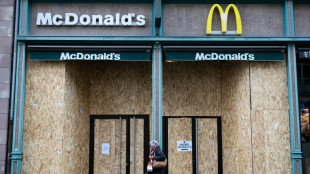
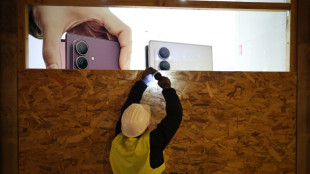
Near Paris's Bastille neighbourhood, a clothing store had removed all its merchandise from shelves ahead of the demonstrations, while a nearby restaurant was boarded up with signs insisting it was "still open". Many other retailers in the capital also had wooden boards covering their windows.
The Louvre and the Musee d'Orsay museums were closed.
The capital's police said at midday officers had confiscated "various forbidden items" but described the situation as "calm".
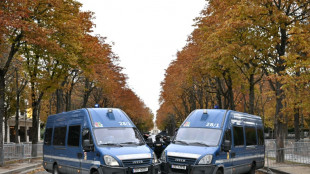
In Marseille, riot squad vehicles, armoured trucks and a water cannon were parked in the city centre, while police elsewhere prepared for potential clashes.
They were among 70,000 security personnel the interior ministry said were mobilised to counter the "high" threat of violence.
- Protest against Le Pen's party -
Adding to tensions, Marine Le Pen's National Rally party held a congress in Orleans to launch her campaign for elections in six months to choose President Emmanuel Macron's successor.
Thousands of people yelling anti-fascist slogans marched on Saturday against Le Pen, and also against Macron, a pro-business centrist leader. "Macron resign. Le Pen in prison," the crowd yelled. Police put their numbers at 11,000 while organisers said 26,000 took part.
The unrest highlighted tensions in France ahead of the vote, which Le Pen is best-placed, according to surveys, to win.
Last weekend saw rioters on the margins of the nationwide demonstrations clash with police, vandalise public buildings and loot hundreds of stores. Some 2,700 people were arrested and the retail sector said shopowners were left with damage and stolen stock totalling hundreds of millions of euros.
Macron attributed the worst of the violence to "ultra-left" groups that he said "want to bring down the republic".
Groups organising Saturday's renewed demonstrations have accused Macron and his government of ignoring widespread public anger over rising costs, and over classroom conditions for students.
Inflation in France, as elsewhere, has been sent surging by the Middle East war, started in February against Iran by US President Donald Trump and Israel.
Protests have also been taking place in Italy, Belgium, Spain and Portugal over different issues, yet with some overlap on inflation and education problems. Italy has mobilised 500 troops to Milan after street violence there.
- Boarded-up shops -
In Paris, streets on Saturday were unusually quiet, with many shop windows boarded up, and some of the bigger retailers sent messages to customers warning that they were closed for the day.
The capital's police at the last minute ordered a union-organised march in the city be moved from Bastille, in the centre-east, to the more remote eastern Porte d'Italie on the southern rim of the capital.
Unions said they reluctantly would go along with that.
But the Yellow Vests, who staged disruptive protests against Macron eight years ago, denounced an "authoritarian drift" and called for yet more demonstrations on October 31 for "the freedom to protest".
A shopworker in the city of Rennes told AFP: "Bans are sometimes worse. Protesting is a right, and when you ban it you make it even more tempting."
Macron and his government have sought to draw a line between the legitimate demands of protesters and the looting, burning and ransacking that erupted on the sidelines of demonstrations last Saturday.
Courts have already sent 217 people, half of them first-time offenders, to prison over the events on Saturday, officials said.
Macron has said authorities would accept only union-led demonstrations and would counter any others they deemed "illegitimate".
The restrictions, including outright bans on protests in some cities, have drawn criticism.
"Police have a responsibility both to ensure that protests can take place peacefully and safely and to protect the public from violent disorder," said Eva Cosse, senior Europe researcher at Human Rights Watch.
H.Thompson--AT