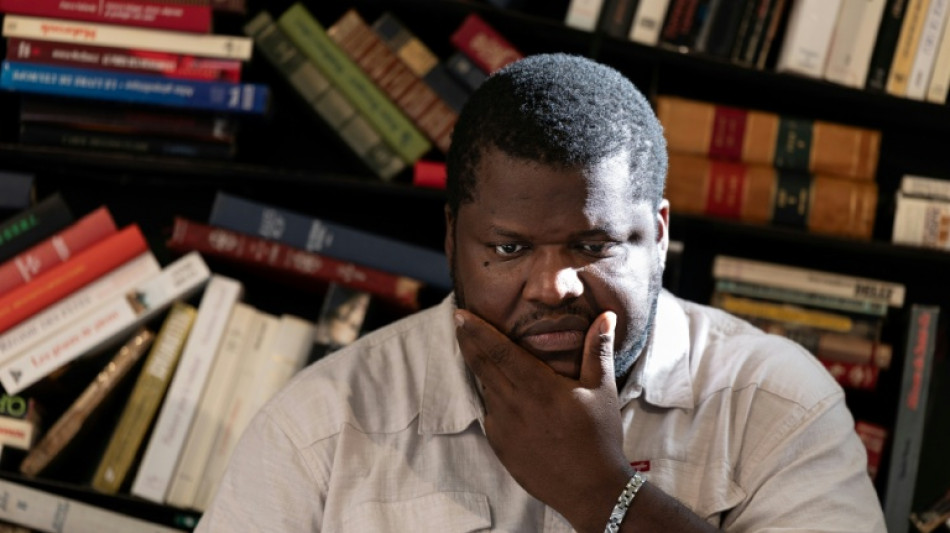
Canadian publisher says novelist Orelien used AI to write novel / Photo: JOEL SAGET - AFP/File

 Jansen, Rabada put South Africa in sight of win over Australia

 Low Rhine weighed on German growth: central bank

 OpenAI says its AI agents disabled their own safety monitors

 Alldritt returns as France call up seven newcomers for Nations Championship

 UN issues call to arms to combat off-the-charts El Nino

 Nigeria Ebola case matches DR Congo strain

 Musk's SpaceX helps launch stock market gains

 Rose salutes Bournemouth's past heroes ahead of AC Milan clash
 Argentina's Milei calls Spain PM Sanchez a 'dictator' in Madrid visit

 Barca's Olmo injured for a month, misses Clasico

 Impacts of UK's new North Sea gas drilling

 Jansen takes five for South Africa as Australia forced to follow on

 Toulouse v Troyes Ligue 1 game postponed as France gripped by unrest

 PSG winger Kvaratskhelia's season in doubt after torn ACL

 Putin, Witkoff meet in Russia for Ukraine war talks

 Musk's SpaceX helps fuel stock market gains

 Authors urge UK to halt 'draconian' Palestine Action ban as Rooney sales end

 South Korea guides crowd-pulling shark out of canal

 PSG's Kvaratskhelia season in doubt after torn ACL
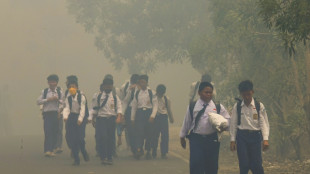 President berates countries that 'insult' Indonesia over wildfires

 PSG's Kvaratskhelia set for months out with torn ACL

 Japan sends senior diplomat to Russia over detained journalist

 Rising UK inflation, debt knocks govt ahead of budget

 UK govt approves drilling in controversial Jackdaw gas field

 US envoy to meet Putin after 'positive' talks with Zelensky

The publisher of acclaimed Haitian-Canadian writer Thelyson Orelien said on Wednesday it had confirmed that he used artificial intelligence to help write his novel "It Was Either That or Die."
The top-selling author has denied allegations that he used AI on his breakthrough novel and, last week, Canadian publisher Boreal said it was standing by Orelien.
But on Wednesday, Boreal said it had conducted a further investigation into the allegations.
"New information, confirmed over the past few days, indicates that artificial intelligence was used in the writing process" of the novel, a Boreal statement said.
The publisher announced it was "ending its professional relationship" with Orelien.
Boreal said it did not know the extent of AI's use in the writing process "and we will likely never have a definitive answer."
It said it gathered all the working versions of the novel and hired an outside party to analyze the various drafts.
"The results obtained this week revealed traces of AI tags in the metadata of certain documents," Boreal said.
Before conducting this analysis, the publisher said it had tried to work with Orelien to gather the evidence necessary to prove his innocence.
That effort was inconclusive, and Orelien "subsequently announced that he would not provide any further information," the publisher said.
The novel about migration, known by its original French title "C'etait ca ou mourir," had been scheduled for translation in more than 20 countries.
The book was shrouded in suspicion and withdrawn from the shortlist for France's top book prize, the Goncourt, after tests with AI detector Pangram indicated a 100-percent probability it contained computer-generated text.
In a statement to AFP earlier this month, Orelien called the allegations "slander and heresy."
He said he started writing the book in late 2017 "on the corner of a table" and completed a first draft in 2019 of more than 300 pages, several years before the advent of AI services such as ChatGPT.
Orelien fled his native Haiti following a 2010 earthquake that struck the Caribbean island, already ravaged by poverty and unrest.
T.Perez--AT