The Age of Parity has a New Passport; SMX Platform Bridges Physical Assets to Digital Blockchain and Verified Circularity Credits

 Trump invites Putin to G20 summit in Miami

 Archaelogical 'breakthrough' could confirm origins of Paris

 ILO financial crisis takes centre stage in leadership race

 Stocks dip, oil soars despite Trump hailing "productive" Iran talks

 China's Xi to get rare airport welcome from Trump

 Turkey reassures investors over investment fund crisis

 Saka says England still have 'scar' from World Cup semi-final loss
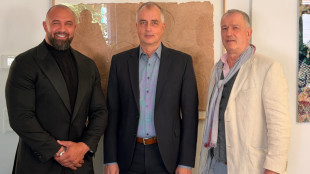 アレックス・ボディ氏とシュテファン・ハウプト教授、ルーマニアの伝説的な美術コレクションをめぐり提携に合意

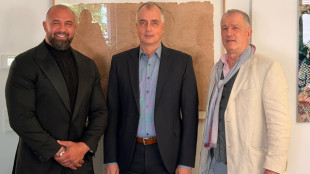 亞歷克斯·博迪與史蒂芬·豪普特教授就羅馬尼亞傳奇藝術收藏達成合作協議
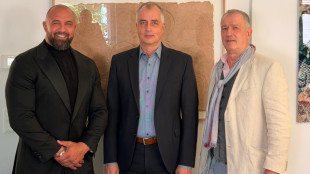
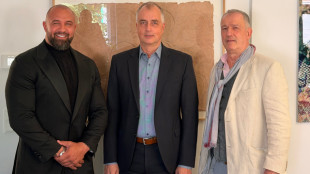 Алекс Боди и проф. д-р Стефан Хаупт договорились о сотрудничестве в рамках легендарной коллекции произведений искусства в Румынии
 French foreign minister says Palestinians 'must' hold polls
 Fresh Russian strikes on Ukraine's infrastructure kill seven

 Eriksen to return to Denmark after parting ways with Wolfsburg

 Brad Pitt says working with dog co-star was 'really moving'

 Golan will remain Syrian, vows President al-Sharaa at UN

 Blueberry Strengthens MENA Presence with CMA Category 5 License and Dubai Office Launch

 Russia probes bear attacks, as official says town under 'siege'

 Robertson tells Spurs to 'forget' past woes

 Italy police find 3 million euros stashed in mobster's house

 Renard versus Queiroz in AFCON qualifying blockbuster

 Former Mexico boss Aguirre returns to Spain with Valencia

 China swimmer, 13, seals Games hat-trick as North Korea win first gold

 China's Xi heads to US for talks with Trump: state media

 Azerbaijan pardons Frenchman after EU lifts sanctions on oligarchs

 Hadjar extends Red Bull contract for 2027 F1 season

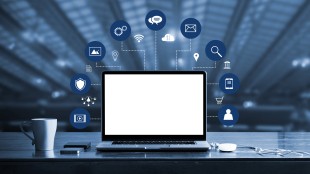
NEW YORK CITY, NY / ACCESS Newswire / September 23, 2026 / SMX has taken its plastics technology beyond authentication, expanding its Digital Material Passport platform into infrastructure that connects physical materials to the digital blockchain and, ultimately, new markets for verified material assets.
The expansion comes as SMX's approach to plastics and the circular economy gains broader attention. In a September 22 article, the popular financial news site Benzinga examined the growing challenge of proving recycled content and highlighted SMX's molecular marking and Digital Material Passport technology as an approach designed to connect physical materials with verifiable digital records throughout their lifecycle. The article noted that as the recycling economy grows, verification itself could become increasingly valuable.
SMX's technology was designed to give plastic a persistent identity in the physical world, using molecular markers to authenticate what a material is, where it came from and how it moves through its lifecycle. The expanded platform carries that identity into the digital world, creating a blockchain-linked record that can follow the material into verified markets, real-world asset applications and circularity credits.
The expanded model creates a continuous progression:
Material → Passport → Blockchain → Market → Credit
SMX is also opening a new client experience around the platform, allowing companies to bring their own plastic into the process and test how it can be marked, identified, authenticated and connected to a Digital Material Passport.
At the first layer is SMX's molecular marking technology, which gives plastic a persistent physical identity. Invisible molecular markers are embedded directly into the material, allowing it to be authenticated later rather than relying exclusively on labels, certificates, invoices or supplier declarations.
The second layer is the Digital Material Passport Platform (DMPP), launched by SMX earlier this year. The DMPP connects that physical identity to a secure digital record containing information including origin, composition, chain of custody, recycled content, manufacturing history and lifecycle status.
The platform includes interactive dashboards, blockchain-backed transaction timelines, data export capabilities, management of compliance and audit documents, and lifecycle mapping from raw material through finished product and subsequent reuse cycles. Its modular, API-driven architecture is designed to integrate with existing enterprise and ERP systems.
That is an important distinction in the developing Digital Product Passport market. SMX is not simply creating a digital record about a material. Its system connects that record back to an identifier embedded in the physical material itself.
FROM MATERIAL TO MARKET
Once the identity, composition, provenance and recycled content of plastic can be verified and carried into a blockchain-backed digital record, SMX's infrastructure is designed to allow that authenticated material to participate in digital and real-world asset markets. Buyers and sellers can potentially transact material carrying verifiable information about what it actually is.
The final layer is Credit, connecting verified recycling and reuse to SMX's circularity infrastructure.
Through its Circularity-as-a-Service platform, SMX is building the ability to document and certify plastic as it moves through recovery and reuse. Verified circularity events can provide the underlying evidence for Plastic Circularity Credits, creating potential economic value for an activity that historically has been difficult to prove consistently.
Together, the layers create a continuous chain: the material is marked. The passport records it. The blockchain carries its identity into the digital world. The market recognizes it. The credit captures verified circularity.
ONE PLATFORM, MULTIPLE COMMERCIAL FUNCTIONS
A manufacturer could mark plastic at production and connect it to a Digital Material Passport. A converter or brand could authenticate its composition and origin. A recycler could verify the same material when it returns through a recovery stream. Its recycled content and lifecycle could remain associated with the material as it enters another production cycle.
The resulting verified data can support compliance and certification, but SMX is designing the infrastructure to extend into material trading, real-world asset digitization and circularity credits.
That broader commercial capability is particularly relevant as recycled and virgin plastic enter what SMX calls the Age of Parity. Oil and energy volatility, inflation, tariffs, petrochemical disruption, transportation costs and supply-chain pressure have changed the traditional economics of virgin plastic. At the same time, recycled-content mandates, plastic taxes and other regulatory pressures are increasing the economic importance of recovered material.
The result is a market in which recycled plastic can increasingly compete with virgin material on economics, not simply environmental preference. As recycled plastic gains economic value, proving that it is actually recycled becomes increasingly important.
SMX's platform is designed to connect two markets that have traditionally operated separately: the physical plastics economy and the digital economy built around data, verification and increasingly tokenized real-world assets.
A ton of recycled plastic remains a ton of recycled plastic. But when its identity, composition, provenance, chain of custody and recycling history can be independently authenticated and carried into the digital world, it becomes a different commercial proposition.
COMPANIES CAN PUT THEIR OWN PLASTIC THROUGH THE SYSTEM
SMX's new client experience is designed to make that proposition tangible. Companies can provide their own plastic and experience how SMX molecularly marks it, authenticates it and connects it to the Digital Material Passport infrastructure.
That gives polymer producers, packaging companies, manufacturers, brands and recyclers an opportunity to evaluate the technology using material from their own operations rather than through a generic demonstration.
The experience shows the larger architecture in action: physical verification feeds a digital passport, the passport carries authenticated material identity onto the blockchain, that identity can support verified material markets, and verified lifecycle events can ultimately support circularity credits.
It is the difference between being shown a platform and putting your own material through it.
ABOUT SMX (SECURITY MATTERS) PLC
SMX (Security Matters) PLC (NASDAQ:SMX) develops molecular traceability and material authentication technologies designed to strengthen supply-chain transparency and integrity across global industries. Its platform embeds invisible molecular markers directly into physical materials, including solids, liquids and gases, allowing them to carry a persistent identity that can be detected and verified throughout their lifecycle.
Contact: Billy White / [email protected]
SOURCE: SMX (Security Matters) Public Limited
View the original press release on ACCESS Newswire
N.Mitchell--AT