Report Finds Large UK Fishing Fleet Violates Rules Two-Thirds of Time

 НЕМЕЦКАЯ ALIX LASERS БЕРЁТ НА ОБСЛУЖИВАНИЕ ВСЕХ КЛИЕНТОВ АВСТРИЙСКОЙ ALIX LASERS

 ALIX LASERS GERMANY TAKES OVER CUSTOMER CARE FOR ALL ALIX LASERS AUSTRIA CUSTOMERS

 Miss Universe 2026: Viewing Guide for South African Fans

 Karbon-X (OTCQB: KARX) Joins IATA CORSIA EEU Supply Alliance as 2027 Aviation Compliance Demand Accelerates

 Fortun Holdings Completes Fiscal 2025 Audit and Files Audited Annual Financial Statements

 Bound to Bloom Behavioral Institute Announces Complimentary Evening for Parents via Zoom on December 2 at 8:00 p.m. EST

 Si-Ware Systems Partners with UT Austin's HCRL to Develop Superhuman Senses for Robots

 Spinnova Starts Production Runs at Eteläportti Demo Factory

 SMX is Giving Artificial Intelligence an Industrial Revolution of Its Own
 CuriosityStream Names Jason Zichlin to Head of Content as AI Licensing Expands
 Letter to the Shareholders of Arvia Environmental Holdings Ltd. (formerly Protect Pharmaceutical Corporation, Inc.) (OTCID:PRTT)

 Eagle Plains and Earthwise Extend Claim Applications Over Prominent Gold Trend at the Iron Range Precious Metals Project, SE BC

 Amplify Capital Group Surpasses $1 Million in Total Charitable Contributions
 BLM Accepts Notice of Exploration for Goldstake Mine Claim Package, Where NoHo Holds Four Gold Claims

 First Canadian Graphite Mobilizes Drill Rig to Commence 20,000-Metre Diamond Drill Program at Lac Guéret South's Zone 13

 Fulcrum Metals PLC Announces Holding(s) in Company
 Rain Enhancement Technologies' WETA Now Operational for Upper Yampa Precipitation Enhancement Project in Colorado
 "Self-Directed Gold IRA: Is It A Good Investment?" Guide Released for American Consumers
 CTT Pharmaceutical Holdings Signs 12-Part New to The Street Series, Including Earned Media, TV Commercials, Outdoor Billboards and Accredited Investor Events
 FatPipe (NASDAQ: FATN) Awarded Statewide Arizona Government Procurement Contract for Firewall and Security Solutions

 BNK Invest Explains What Investors Can Learn From Quarterly 13F Holdings Reports
 Aegis Capital Corp. Announces the Hiring of a New Senior Vice President of Investments
 Earthwise Applies to Expand Iron Range Project Within 26-Kilometre Gold Exploration Corridor
 Noble Capital Markets Maintains Outperform Rating and $28.00 Price Target on Cosmos Health in Updated Research Report
 Piston Brings Cardless Fleet Payments to 246 Refuel Locations From the Carolinas to Texas
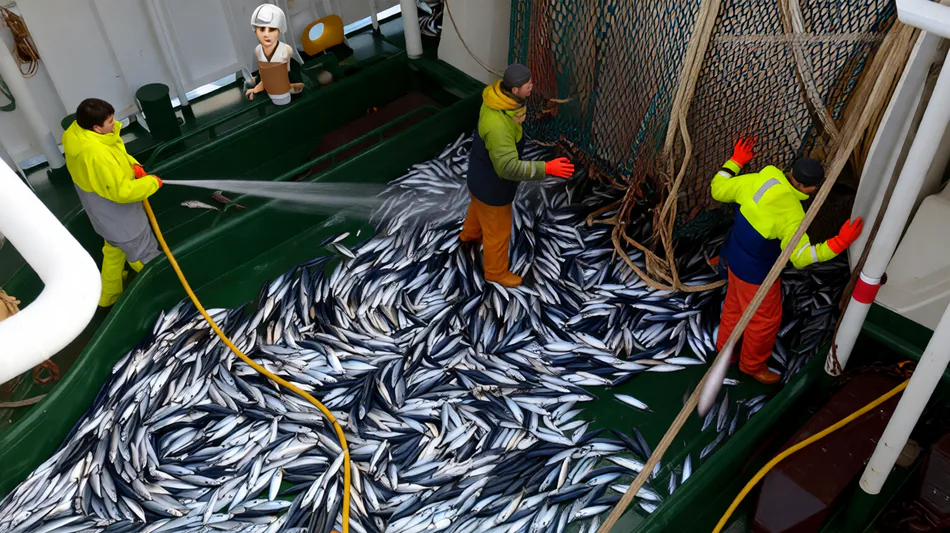
Large-scale fishing vessels operating in English waters violated regulations during two-thirds of at-sea inspections between April 2025 and March 2026, according to a new report by Oceana UK. The organization argues that unequal subsidies and outdated quota systems favor corporate fleets over coastal communities and marine ecosystems.
Large-scale fishing vessels operating in English waters violated regulations during two-thirds of at-sea inspections between April 2025 and March 2026, according to a new report by Oceana UK. The environmental organization argues that unequal government subsidies, outdated quota systems, and catch limits that routinely ignore scientific advice have concentrated wealth in large corporate fleets at the expense of coastal communities and marine ecosystems.
Freedom of Information data obtained from the Marine Management Organisation shows that fishing vessels over 39 feet falsified logbooks, deployed illegal gear, or dumped fish during 66 percent of inspections. In contrast, these activities were documented in only 10 percent of inspections for vessels under 33 feet.
The report describes a "spiral of decline" across the U.K.’s small-boat fleet, which has been hollowed out by what it calls a "rigged system." Izzy Ross, Oceana UK’s habitats and fisheries campaign manager, stated that non-compliance, discards, poor transparency, and quota inequality create an unfair playing field for those attempting to fish sustainably.
Jerry Percy, a retired fisherman who spent decades fishing the circumference of the U.K., noted that larger vessels often operate "out of sight and out of mind" in rough seas where boarding is difficult. Even when violations were documented, authorities issued only "verbal advice" in nearly 70 percent of cases. Only 1 percent of infringements resulted in financial penalties, totaling less than $37,000 across the entire fleet between April 2024 and March 2025.
Ross compared this figure to the millions of pounds distributed in fuel subsidies and the profits generated by large boats, calling the penalty amount negligible. "It’s not even something they probably notice," she said.
The report highlights that crews scrapped more than 100,000 metric tons of dead or dying fish across 57 U.K. quota stocks last year. This volume equals the weight of approximately 8,300 London double-decker buses. Species affected include spotted dogfish, silver smelt, haddock, and whiting. Crews often discard lower-value catches to keep space for more profitable products or dump "choke species" with low quotas that would force boats back to port.
Ross warned that the "disgusting level of discards" is pushing some populations toward total collapse. For Irish Sea plaice, over 80 percent of the catch between 2023 and 2025 was thrown back overboard, despite unsustainable fishing pressure and a recommendation for no catches in 2027.
Because accurate discard data relies on occasional observers and voluntary disclosures, the 100,000-ton figure is likely an underestimate. When remote monitoring cameras were deployed on fishing boats in New Zealand in 2024, the true discard rate jumped 46 percent above original estimates.
Although the U.K. government recently announced requirements for cameras and GPS monitoring for large pelagic boats starting in November 2028, the rules exclude bottom trawlers, which have the highest discard rates. Ross described this as a step in the right direction but insufficient given the urgency of the issue.
A Marine Management Organisation spokesperson told Inside Climate News that the agency takes non-compliance seriously and uses a risk-based approach to target inspection activity. The spokesperson noted that discards are not always illegal and that the agency is working with regulators to keep monitoring operationally effective.
While boats under 33 feet make up three-quarters of the fleet, they are allocated just a few percent of the quota. Nearly 90 percent of U.K. quota is still based on what vessels caught between 1994 and 1996, turning a historical snapshot into a tradeable commodity controlled by a small number of large companies.
Hugo Tagholm, executive director of Oceana UK, stated that successive governments have created a system favoring large companies at the expense of the ocean and local communities. He emphasized that fish stocks are a public resource.
Last year, the five largest quota-holding companies pocketed over $160 million in combined profits while drawing disproportionately from taxpayer-funded fuel subsidies. Vessels over 130 feet benefited from an estimated $300 million in British fuel subsidies between 2012 and 2022.
Percy, now a senior advisor to the Low Impact Fishers of Europe organization, believes the small-boat fleet is "finished" if current trends continue. He recalled a warning from a fisherman years ago that large industrial boats would eventually take more in a day than small fleets take in a year. Percy no longer thinks the fisherman was wrong.
Ross argued that support should not go disproportionately to the biggest, most energy-hungry vessels but should instead help those trying to build an industry with a long-term future. She warned that overfishing would persist even if all vessels adhered to discard rules because the government continually sets catch limits above recommendations by the International Council for the Exploration of the Sea.
Since Brexit, more than half the U.K. catch limits have exceeded scientific advice, resulting in dwindling stocks. Even the nation’s iconic cod has received a zero-catch recommendation for the Irish Sea, Celtic Sea, and North Sea after a decade of population decline.
Five years ago, Percy said most calls from small-scale fishers were about unfair quotas. Today, most calls are about a lack of fish in inshore waters. Full-time fishing jobs in England’s small-scale fleet almost halved between 2008 and 2022. "Fishing," Percy emphasized, "should provide a living for the many rather than a fortune for the few."
A spokesperson for the U.K.’s Department for Environment, Food and Rural Affairs told Inside Climate News that the government is ensuring fishing limits are sustainable and based on scientific advice while changing how quotas are shared to support the economy, local communities, and the environment.
A.Anderson--AT