
New 2026 Insurance Exclusions and First-of-Its-Kind Federal Ruling Raise the Stakes for AI-Assisted Safety Investigations

 Ready, set, snooze: Sleep-deprived Japanese compete for best-rested

 Falcons thump Saints 45-24 as New Orleans marks Katrina anniversary
 Tuvalu govt adviser says Australia overstepped in pre-COP visit

 Asian stocks mixed despite tech-led Wall St record
 Tens of thousands expected in Paris for high school protests

 AI borrowing binge rattles US markets
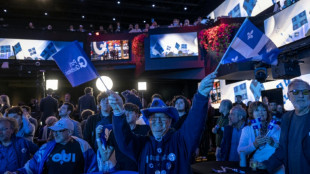
 Young Canadians sue government over alleged climate failures
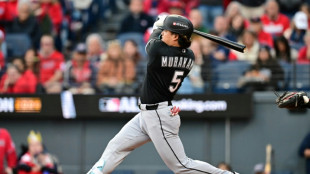 White Sox down Guardians to take 2-0 series lead

 Leaders visit Pacific atoll at frontline of climate change

 Yemen's Houthis claim striking Riyadh airport, other Saudi sites

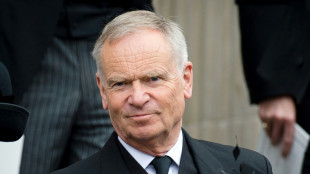 Best-selling British author Jeffrey Archer dies aged 86

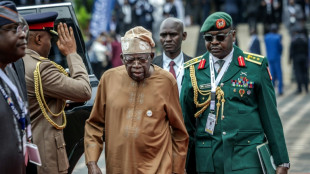 Military plane crash kills 32 in Nigeria

 Olise powers France to win over Belgium in Nations League
 High-flying Blazy turns to birdlife at Chanel
 Riyadh's allies pledge troops as Yemen, Saudi Arabia attack Houthis

 Clashes erupt outside Kosovo parliament over war crimes court
 Milan's Saelemaekers suffers ankle setback, faces lengthy spell out

 Rubio arrives in Iceland to push for greater US presence in Arctic
 Putin allows Italy's UniCredit to sell part of Russian business
 Djokovic into China Open final as Medvedev out for hitting fan with ball

 ICC unseals arrest warrants for Taliban education ministers
 Modric hopes fans back Croatia against Spain after England shame

 Bolsonaro rides right-wing surge into Brazil's election runoff
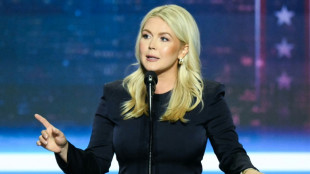
 Turkey blocks X account of British reporter

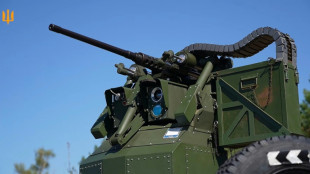 Ukraine says using AI robot guns to shoot down new Russian drones
Insurance carriers are moving to exclude AI-related claims from general liability coverage just as a federal court weighs in for the first time on whether AI-assisted investigative work can stay privileged, narrowing the margin for error when companies use AI to investigate workplace incidents.
ATLANTA, GA / ACCESS Newswire / September 16, 2026 / Insurance carriers representing the large majority of U.S. commercial policies have, since January 2026, gained the ability to explicitly exclude generative AI from standard general liability coverage, and a federal judge in New York has issued the first ruling in the country addressing whether AI-assisted work can be protected by attorney-client privilege. Together, the two developments mean organizations using AI to investigate workplace incidents, conduct root cause analysis, and manage corrective and preventive actions (CAPA) are operating under materially different legal and insurance conditions than they were a year ago, according to a new whitepaper from law firm Reed Smith and safety technology company Haven Safety AI.
The Insurance Services Office introduced three new endorsements, CG 40 47, CG 40 48, and CG 35 08, with a January 2026 edition date, giving commercial general liability carriers the option to exclude bodily injury, property damage, and other claims arising out of generative AI. Because ISO forms underpin the large majority of U.S. property and casualty policies, several major carriers have moved to attach the exclusions at renewal in 2026. For safety and EHS teams that have adopted AI to accelerate incident investigations, the practical effect is that a claim tied to an AI-generated recommendation, such as a corrective action a company implemented or failed to implement based on AI-assisted analysis, may no longer be covered under policies many organizations assumed would respond.
Separately, a February 2026 ruling from the U.S. District Court for the Southern District of New York, in United States v. Heppner, became the first case in the country where a federal judge directly addressed whether AI-generated work product can be protected by attorney-client privilege. While the court found the specific AI chats at issue were not privileged in that case, its reasoning suggested that AI tools directed by counsel, in a manner similar to the long-standing Kovel doctrine protecting work done by non-lawyer experts on a lawyer's behalf, could be treated differently under other facts. For organizations running AI-assisted safety investigations, the ruling underscores a theme the Reed Smith and Haven Safety AI whitepaper raises independently. How an investigation is structured and whether counsel is genuinely directing sensitive AI-assisted work can determine whether that work stays protected if litigation follows.
The whitepaper, "Legal, Regulatory, and Insurance Considerations When Leveraging AI in Investigations, RCA, and CAPA," published this week was authored by Reed Smith partner John Ellison and counsel Stephanie Gee alongside Haven Safety AI co-founder and CEO Joseph Hanna. It argues that AI does not introduce a new legal theory of liability. Courts and regulators have long relied on internal investigation reports, audits, and consultant recommendations to evaluate what an organization knew and how it responded. AI changes the volume, structure, and traceability of those records, which can make internal safety analysis far more visible in litigation, regulatory inquiries, and insurance claims than it was before.
To address that shift, the whitepaper proposes a two-lane operating model that separates routine operational safety learning, where AI can move quickly and outputs are treated as ordinary business records, from counsel-directed investigations following severe incidents or credible litigation risk, where access is restricted, distribution is minimized, and workspaces are segregated to help preserve privilege. It also outlines what safety leaders should expect from any AI-enabled investigation platform, including clear separation between draft AI outputs and approved conclusions, chain-of-custody controls for evidence, and configurable legal hold capability.
"Every safety leader we talk to right now is asking some version of the same question. If my AI system flags something and it isn't acted on, how does that look six months from now in a deposition or a claims file? It's why we built lane separation into Haven from day one, so a draft hypothesis never gets mistaken for an approved finding, and why we partnered with Reed Smith on this paper. Safety teams shouldn't have to choose between moving fast with AI and staying defensible," said Joseph Hanna, co-founder and CEO of Haven Safety AI.
"The instinct we're seeing from corporate counsel is to treat this as an AI problem, and it isn't, not really. It's a documentation and governance problem that AI happens to be accelerating. Organizations that already run disciplined investigations, with clear findings, clear disposition of recommendations, and a clear line between drafts and conclusions, are in a strong position. The ones who aren't should treat this year's insurance and privilege developments as the prompt to fix that, before an incident forces the issue," said John Ellison, a partner at Reed Smith.
"Courts have always looked at what an organization knew and what it did about it. AI just means there's more of that record, and it's easier to read. The practical work for safety leaders is making sure that record shows a disciplined process, not a pile of unresolved recommendations," said Stephanie Gee, counsel at Reed Smith.
The full whitepaper, including a proposed trigger guide for escalating investigations to counsel and recommended language for labeling AI drafts versus approved findings, is available for download.
About Haven Safety AI
Haven Safety AI is an AI-native workplace safety platform that helps organizations investigate incidents faster, improve investigation quality, and accelerate organizational learning. Purpose-built for safety professionals, Haven Safety AI combines advanced AI reasoning with deep domain expertise to support incident capture, investigation, quality assurance, corrective actions, and enterprise learning across high-risk industries.
For more information, visit www.havensafety.com.
Media Contact:
Mark Rottensteiner
[email protected]
(813) 300-7423
SOURCE: Haven Safety AI
View the original press release on ACCESS Newswire
D.Johnson--AT