SMX Gives Material a Material; Digital Platform Makes Plastic a Passport and a Tradable Asset

 The "Everlasting Battery" Inside Your Joints:UConn Professor's Self-Powered Healing Material just Got Acquired

 Visionary or conman? Elon Musk enigmatic star of Venice documentary

 Trial opens in France over deadliest Channel migrant crossing disaster

 England skipper Root says it's wrong to accuse Pakistan of lacking fight

 Owen Wilson leaves tough action work to Alan Ritchson in 'Runner'

 France's BIC sees high potential in US pot smokers

 WHO says needs 5,000 more healthworkers to tackle Ebola in DRC

 Napoli's McTominay has successful heart procedure
 Two Renoir paintings missing after break-in at France museum

 Oil prices jump, stocks drop as Mideast war flares

 South Lebanon town buries its dead after Israeli strike

 Singapore to bump cabinet wages, already world's highest

 Saudi vows response as Houthis hit oil sites in worst attack in years

 Thieves steal Renoir paintings from France museum

 Nicaragua accuses Germany of multiple violations of law in Gaza genocide case

 Dutch peanut butter artwork proves a sticky attraction

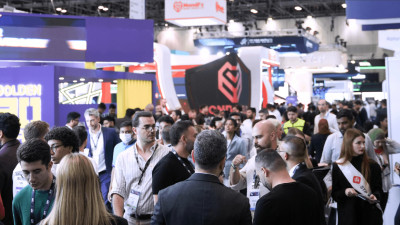 Forex Expo Dubai to Take Place as Scheduled on 22–23 September 2026

 Russia pounds Kyiv, ending three-day halt for US talks

 Flights resume gradually in Indonesia after volcanic eruption

 French AI firm Mistral valued at 21 bn euros after latest funding

 Sweden heads to the polls in close election race

 Australia's Big Bash T20 teams face sale to private investors

 Russia resumes strikes on Kyiv after three-day halt

 Canada's counter-tariffs take effect on various US goods

 China's trade booms as focus turns to expected Trump-Xi summit

Expanded platform evolves the Digital Material Passport from material authentication / verification into a bridge connecting physical plastics to blockchain-backed digital identity, verified circularity credits
NEW YORK CITY, NY / ACCESS Newswire / September 8, 2026 / SMX is taking its plastics technology beyond authentication, expanding its Digital Material Passport platform into an infrastructure that connects physical materials to the digital blockchain and, ultimately, to new markets for verified material assets.
The evolution represents a significant step beyond the passport itself. SMX's technology was designed to give plastic a persistent identity in the physical world, using molecular markers to authenticate what a material is, where it came from and how it moves through its lifecycle. The expanded platform now carries that identity into the digital world, creating a blockchain-linked record that can follow the material into verified markets, real-world asset applications and circularity credits.
In effect, SMX is building a bridge between physical material and digital value. A piece of plastic no longer has to exist only as an anonymous commodity whose history disappears as it moves through a supply chain. Its physical identity can be authenticated, translated into a Digital Material Passport and connected to a digital ecosystem where its provenance, composition and lifecycle become verifiable data with potential commercial value.
The expanded model creates a continuous progression:
Material → Passport → Blockchain → Market → Credit
SMX is also opening a new client experience around the platform, allowing companies to bring their own plastic into the process and test how it can be marked, identified, authenticated and connected to a Digital Material Passport. The experience is intended to demonstrate the complete system rather than an isolated technology, from the first molecular marker through verification, blockchain connectivity, lifecycle tracking and potential commercial applications.
At the first layer is SMX's molecular marking technology, which gives plastic a persistent physical identity. Invisible molecular markers are embedded directly into the material, allowing it to be authenticated later rather than relying exclusively on labels, certificates, invoices or supplier declarations.
The second layer is the Digital Material Passport Platform (DMPP), launched by SMX earlier this year. The DMPP connects that physical identity to a secure digital record containing information including origin, composition, chain of custody, recycled content, manufacturing history and lifecycle status.
The platform includes interactive dashboards for visibility across operations, blockchain-backed transaction timelines, data export capabilities, integrated management of compliance and audit documents, and lifecycle mapping from raw material through finished product and subsequent reuse cycles. Its modular, API-driven architecture is designed to integrate with existing enterprise and ERP systems.
That is an important distinction in the rapidly developing Digital Product Passport market. SMX is not simply creating a digital record about a material. Its system is designed to connect the record back to an identifier embedded in the physical material itself.
The next layer is Market.
Once the identity, composition, provenance and recycled content of plastic can be verified and carried into a blockchain-backed digital record, SMX's infrastructure is designed to allow that authenticated material to participate in digital and real-world asset markets. Instead of trading plastic based primarily on documentation and representations, buyers and sellers can potentially transact material carrying verifiable information about what it actually is.
The final layer is Credit, connecting verified recycling and reuse to SMX's circularity infrastructure.
Through its Circularity-as-a-Service platform, SMX is building the ability to document and certify plastic as it moves through recovery and reuse. Verified circularity events can then provide the underlying evidence for Plastic Circularity Credits, creating a potential economic value for an activity that historically has been difficult to prove consistently.
Together, the layers create a continuous chain:
The material is marked. The passport records it. The blockchain carries its identity into the digital world. The market recognizes it. The credit captures verified circularity.
ONE PLATFORM, MULTIPLE COMMERCIAL FUNCTIONS
The significance of the new client experience is that companies can now see those functions operating as parts of the same infrastructure.
A manufacturer could mark plastic at production and connect it to a Digital Material Passport. A converter or brand could authenticate its composition and origin. A recycler could verify the same material when it returns through a recovery stream. Its recycled content and lifecycle could remain associated with the material as it enters another production cycle.
The resulting verified data can support compliance and certification, but SMX is designing the infrastructure to go further: into material trading, real-world asset digitization and circularity credits.
That broader commercial capability is particularly relevant as recycled and virgin plastic enter what SMX calls the Age of Parity. War, oil and energy volatility, inflation, tariffs, petrochemical disruption, transportation costs and supply-chain pressure have changed the traditional economics of virgin plastic. At the same time, recycled-content mandates, plastic taxes and other regulatory pressures are increasing the economic importance of recovered material.
The result is a market in which recycled plastic can increasingly compete with virgin material on economics, not simply environmental preference.
And when recycled plastic has greater economic value, proving that it is actually recycled becomes considerably more important.
That is the problem SMX's platform is built to address.
The company is effectively connecting two markets that have traditionally operated separately: the physical plastics economy and the digital economy built around data, verification and increasingly tokenized real-world assets.
A ton of recycled plastic is still a ton of recycled plastic. But when its identity, composition, provenance, chain of custody and recycling history can be independently authenticated and carried with it into the digital world, it becomes a materially different commercial proposition.
COMPANIES CAN NOW PUT THEIR OWN PLASTIC THROUGH THE SYSTEM
SMX's new client experience is designed to make that proposition tangible.
Companies participating in the program can provide their own plastic material and experience how SMX molecularly marks it, authenticates it and connects it to the Digital Material Passport infrastructure.
That gives polymer producers, packaging companies, manufacturers, brands, recyclers and other participants in the plastics economy an opportunity to evaluate the technology using material from their own operations rather than through a generic demonstration.
The trial also provides a practical view of the larger SMX architecture: how physical verification feeds a digital passport, how that passport carries authenticated material identity onto the blockchain, how that digital identity can support verified material markets and how verified lifecycle events can ultimately support circularity credits.
It is the difference between being shown a platform and putting your own material through it.
ABOUT SMX (SECURITY MATTERS) PLC
SMX (Security Matters) PLC (NASDAQ:SMX) develops molecular traceability and material authentication technologies designed to strengthen supply-chain transparency and integrity across global industries. Its platform embeds invisible molecular markers directly into physical materials-including solids, liquids, and gases-allowing them to carry a persistent identity that can be detected and verified throughout their lifecycle.
Contact: Billy White / [email protected]
SOURCE: SMX (Security Matters) Public Limited
View the original press release on ACCESS Newswire
K.Hill--AT