
USDA Deregulates Darling 54 After Six-Year Federal Review

 AI looms large ahead of Xi, Trump summit

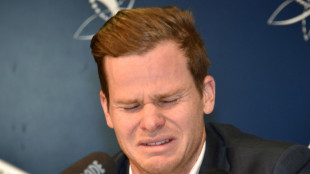 Smith still haunted by 'Sandpapergate' as he prepares for South Africa Tests

 UK-Sudanese author pens book to give children 'African history of Africa'

 Boehly and Walter sell Chelsea stake to Clearlake Capital

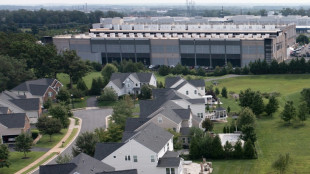 US House backs data center power cost bill amid midterm backlash

 US Congress passes sweeping Russia sanctions bill

 Barca hit Racing for seven as Atletico crush Osasuna

 US Fed raises rates to tackle 'too high' inflation, irking Trump

 Man Utd misery mounts after League Cup collapse against Brighton

 Turkey releases 106 protesters, jails more LGBTQ activists

 US Fed raises rates to tackle 'too high' inflation in move sure to rile Trump

 England were 'waiting for death' in World Cup semi-final defeat: Tuchel

 NFL star fined for displaying name of slain Palestinian girl

 Witsel retires from internationals after 18-year Belgium career

 US Fed raises rates to battle inflation in move likely to rile Trump

 Fitzpatrick 'not comfortable' over Dubai golf finale

 Gaza apartment block collapse kills 21, including 12 children

 Gaza apartment block collapse leaves 21 dead

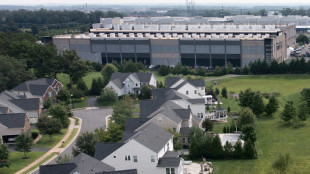 US House targets data centers as midterm backlash grows

 French ex-minister Dati goes on trial in Renault-Nissan corruption case

 'Being Heumann' captures joy in fight for disability rights

 Retired great Nadal to play in exhibition matches

 IR-MED and Dice Technologies Announce collaboration to Evaluate and Advance Pressure-Injury Prevention Platform in Japan

 Watts, Pitt, Cruz to light up Spain's top film festival

 Sweden expels Iran embassy employee over anti-Jewish threats

Blight-Tolerant American Chestnut Clears a Major Regulatory Milestone After Extensive Scientific Study, Public Comments, and Genomic Review
LAURENS, NY / ACCESS Newswire / September 3, 2026 / American Chestnut Restoration, Inc. (ACR), a 501(c)(3) nonprofit, volunteer-run organization dedicated to restoring the American chestnut, welcomes the U.S. Department of Agriculture's (USDA) decision to deregulate Darling 54, a blight-tolerant American chestnut developed and tested over decades.
The decision follows extensive laboratory and field research, USDA review beginning in January 2020, nationwide public comments, detailed plant pest risk analysis, and additional genomic and regulatory review after researchers identified an event-naming discrepancy in 2023. USDA's Animal and Plant Health Inspection Service (APHIS) concluded that Darling 54 is unlikely to pose a greater plant pest risk than conventional American chestnut.
"Restoring a species that will live for generations demands careful science and rigorous review," said Allen Nichols, President of American Chestnut Restoration, Inc. "Darling 54 has received both. This decision reflects decades of testing, public engagement, and years of federal scrutiny."
Darling 54 was developed by scientists at SUNY College of Environmental Science and Forestry (ESF), building on more than 30 years of work to restore the American chestnut. ESF professors William Powell and Chuck Maynard pioneered the effort that led to Darling 54, which uses the OxO gene to provide tolerance to the fungal pathogen responsible for chestnut blight. Darling 54 has been studied extensively at ESF and by researchers at the University of New England and Purdue University.
A Thorough and Transparent Federal Review
The formal APHIS regulatory process began in January 2020 under the Plant Protection Act. In 2022, APHIS conducted a nationwide public comment period that drew responses from thousands of individuals and organizations.
In 2023, ESF notified APHIS of a discrepancy involving the tree's event nomenclature. Additional genomic sequencing confirmed that "Darling 58" had been a labeling error and that all underlying regulatory data had in fact been generated on Darling 54. The regulatory research and data reviewed by APHIS therefore related to Darling 54, not a different tree. Following this assessment, APHIS determined that a corrected petition was sufficient to address the discrepancy, and that the correction did not require changes to the data or conclusions of its environmental or plant pest risk analyses (EIS and PPRA). In August 2024, ESF submitted a revised petition with the corrected naming, clarifying the event's identity, and updating the molecular characterization and related technical details.
APHIS then conducted further review. On June 6, 2025, the agency published updated draft decision documents concluding that Darling 54 is unlikely to pose a greater plant pest risk than non-modified American chestnuts, and opened an additional public comment period. The U.S. Environmental Protection Agency also commented that it "did not identify significant environmental concerns."
Following this multi-year review, APHIS determined that Darling 54 is unlikely to pose a greater plant pest risk than conventional American chestnut and is therefore no longer subject to APHIS regulation under the Plant Protection Act. The agency considered the revised petition, its plant pest risk assessment, available scientific evidence, and public comments gathered through two Federal Register notices.
"This process demonstrates the care that has gone into Darling 54 from the beginning," said Nichols. "Researchers continued to test the science, disclosed new information when it emerged, and worked with federal regulators to ensure the agency had the information needed to reach its decision."
USDA-APHIS is the first federal agency to complete its evaluation. Additional review by the Environmental Protection Agency remains before Darling 54 can be widely distributed, but this decision marks a significant step forward with immediate benefits for researchers.
The continued advancement of Darling 54 has been made possible through sustained support from research foundations, restoration partners, scientists, conservation organizations, and others committed to returning the American chestnut to its native range.
To learn more about the Darling 54 American chestnut restoration project, please visit American Chestnut Restoration's website at https://www.americanchestnut.org.
###
About American Chestnut Restoration, Inc.
American Chestnut Restoration, Inc. is a 501(c)(3), all-volunteer nonprofit organization dedicated to restoring the American Chestnut. Founded in 1988, American Chestnut Restoration has supported the restoration of the American chestnut through science-based biotechnology since its founding. The organization provides critical funding for research orchards, distributes seeds to advance restoration efforts, and preserves genetic diversity through wild-sourced "mother" trees.
Contact:
Allen Nichols
President, American Chestnut Restoration, Inc.
[email protected]
SOURCE: American Chestnut Restoration Inc.
View the original press release on ACCESS Newswire
A.Ruiz--AT