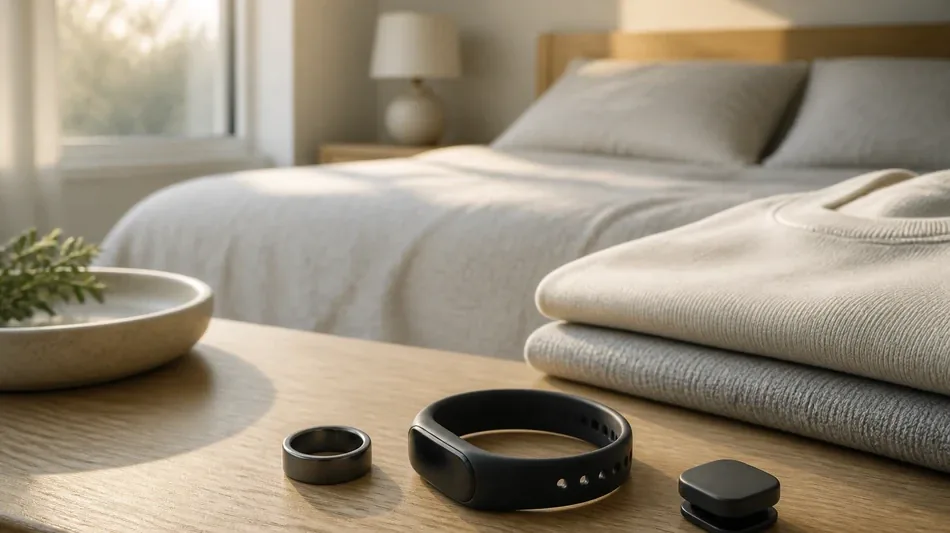
Screen-free fitness bands gain ground as users seek fewer alerts

 Niger mutiny suppressed, but questions remain over junta's cohesion

 Como spoil Allegri's Napoli home debut

 Cruz Beckham Performs at Leeds Festival Following Family Support at Reading

 Fernandes hat-trick inspires Man Utd rout of Ipswich

 Suzuki sends 'perfect' Freiburg past Bremen, Schalke lose
 September smartphone calendar spans Apple, Poco, Vivo and Xiaomi

 Android photo recovery depends on recently deleted folders

 Google Maps adopts Lake America label for US users
 WIRED tests label makers for home organisation

 CERN creates quark-gluon plasma with smaller atomic nuclei

 Data-centre opposition crosses US party lines

 British woman dies after stabbing at German station

 Russell Hobbs dual air fryer discounted to £99

 Eight dead and 23 missing after ferry sinks off Cyprus

 Beeston pub closes after office fire injures man

 Bellingham, Mbappe fire as Real Madrid ease to Malaga win

 Mas wins Vuelta 9th stage to extend lead

 Robinson strikes as England close in on series win over Pakistan

 Chelsea beat Brighton in seven-goal thriller to extend Alonso's perfect start

 Zambia's opposition leader charged with treason

 Marc Marquez wins Aragon MotoGP Grand Prix

 Robinson rocks Pakistan again as England eye series win at Lord's

 Nepal rescuers advance towards trapped tunnel workers

 Grisly search for missing as Nepal morgues overflow, burials begin

 Barcelona's Yamal getting back to 'top level': Flick

A growing range of screen-free wearables is positioning passive health tracking as an alternative to notification-heavy smartwatches.
Manufacturers are expanding the market for screen-free fitness trackers that collect heart rate, sleep and activity data without placing messages or scores on the wrist. Current products include the Garmin Cirqa, Google Fitbit Air, Polar Loop, Amazfit Helio Strap and Whoop bands, while Apple is reportedly considering a similar device.
The category removes the display but generally retains familiar sensors, Bluetooth and a battery. Whoop has sold screen-free bands since 2015, when it marketed its system mainly to elite athletes. Its current service targets a broader audience and costs $199 a year. Google offers basic Fitbit Air data without a subscription, while explanatory health features under Google Health Premium cost $10 a month.
Peter Richardson of Counterpoint Research said AI-based health guidance remains at an early stage but is likely to advance. University of Nottingham researcher Elizabeth Marsh said digital workplaces can produce information overload, interruptions and blurred boundaries. She recommends intentional technology use, sustained attention and a patient attitude toward changing habits. Screen-free trackers do not remove digital demands, but they allow users to review health information on their own schedule.
B.Torres--AT