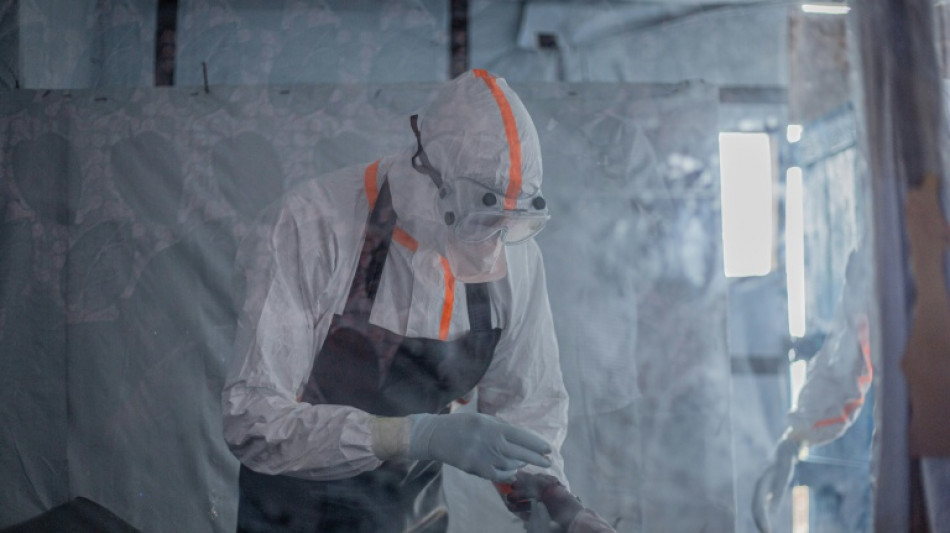
Singapore group will develop 'most promising' Ebola vaccine / Photo: BENEDICTION MURHABAZI - AFP/File

 NAND Prices Set to Fall in Early 2027 as DRAM Remains Elevated

 NSE and BSE Restrict Algorithmic Trading to Tech-Savvy Investors with Static IP

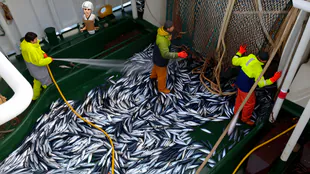 Report Finds Large UK Fishing Fleet Violates Rules Two-Thirds of Time

 COP31 Negotiations Collapse as Youth Climate Demands Clash with Fossil Fuel Lobbying

 Craig Reucassel’s Ultra-Processed Food Experiment Reveals Brain Changes

 Seattle U Defeats Loyola Chicago 76-63 to Win Acrisure Series Title
A Singapore-based organisation announced Thursday it will develop an Ebola vaccine dubbed the "most promising" to fight back against a deadly outbreak in the Democratic Republic of Congo.
Nearly 1,500 people have died in the conflict-wracked African country from the Bundibugyo strain of Ebola, for which there are no vaccines or treatments.
But there are several different efforts racing to develop a vaccine for the previously rare strain in the hope of stemming the escalating outbreak.
World Health Organization experts have said a single-dose shot based on the rVSV platform is the "most promising" candidate.
This is because it uses the same platform as the only officially licenced Ebola vaccine Ervebo, which targets a different strain called Zaire.
The Singapore-based Hilleman Laboratories announced on Thursday it would advance the rVSV Bundibugyo jab so it can be tested on humans during clinical trials.
The organisation is a joint venture between the US pharma giant MSD -- known as Merck in North America -- and the British charity Wellcome Trust.
"We're racing to develop a Bundibugyo vaccine and make doses for clinical trials," Hilleman Laboratories CEO Raman Rao said in a statement.
MSD developed and manufactured Ervebo and "will serve as a technical adviser" providing "expertise on the rVSV platform", the statement added.
It was a joint statement with the Coalition for Epidemic Preparedness Innovations (CEPI), which has pledged funds to the rVSV shot and other Ebola vaccine efforts.
If early trials are successful and the vaccine is authorised, CEPI and Hilleman said they hoped to "ensure rapid, affordable supply of doses in outbreak-affected countries and low- and middle-income settings".
The Ervebo vaccine needs to be stored at ultra-low temperatures, however the new Bundibugyo jab is hoped to last for months in normal refrigerators, making it cheaper and easier to deploy to remote areas.
In May, WHO experts cautioned it would likely take seven to nine months before the rVSV vaccine is ready to be assessed in a clinical trial.
The vaccine uses a modified version of the vesicular stomatitis virus, an animal virus, as a vector to deliver a protein from the Bundibugyo ebolavirus to the human immune system, triggering an immune response.
The announcement comes a week after the first dose of a different Bundibugyo vaccine being developed by Oxford University was injected into a volunteer during a rapidly launched clinical trial.
The epidemic in DR Congo is now the third-largest Ebola outbreak on record.
There have been 3,360 confirmed cases, including 1,487 deaths since May, with the outbreak heavily centred on the northeastern Ituri province.
Uganda, which borders Ituri, has seen 20 confirmed cases, including two confirmed deaths.
A viral haemorrhagic fever, Ebola spreads through close contact and infected bodily fluids.
A.O.Scott--AT