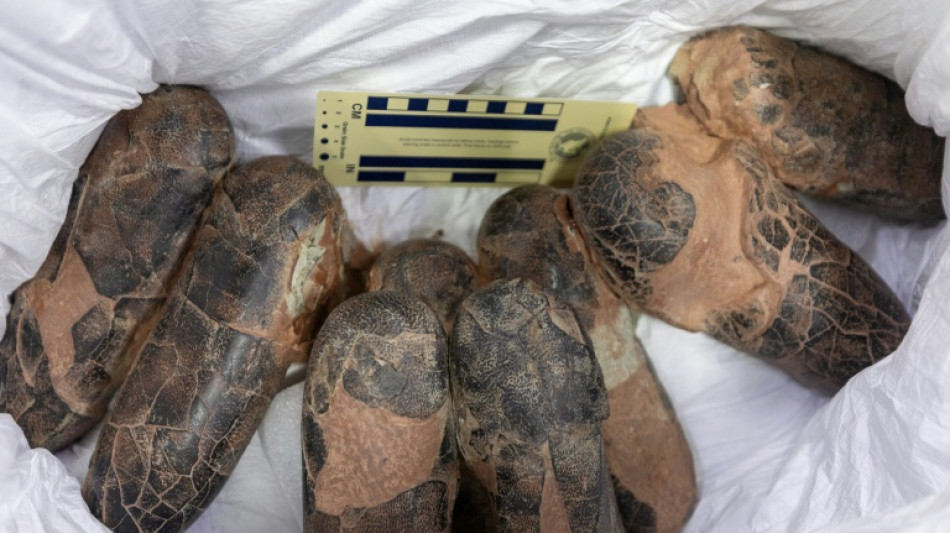
Smuggled dinosaur fossils return to Mongolia after two decades / Photo: BYAMBASUREN BYAMBA-OCHIR - AFP

 NAND Prices Set to Fall in Early 2027 as DRAM Remains Elevated

 NSE and BSE Restrict Algorithmic Trading to Tech-Savvy Investors with Static IP

 Report Finds Large UK Fishing Fleet Violates Rules Two-Thirds of Time

 COP31 Negotiations Collapse as Youth Climate Demands Clash with Fossil Fuel Lobbying

 Craig Reucassel’s Ultra-Processed Food Experiment Reveals Brain Changes

 Seattle U Defeats Loyola Chicago 76-63 to Win Acrisure Series Title
Mongolia has recovered a rare dinosaur skeleton and a trove of fossils illegally exported two decades ago, authorities said Wednesday, concluding years of efforts to return the palaeontological treasures.
The collection includes a Tarbosaurus bataar skeleton, estimated to be more than 50 percent intact, along with 28 groups of fossilised dinosaur remains originally found in Mongolia's Gobi Desertaccording to police.
The bones had been illegally taken from Mongolia in 2006 "with the aim of making a profit", said D. Munkhkhuyag, head of the police public relations department.
French customs agencies confiscated the fossils between 2013 and 2015 and began returning them a year later to Mongolia under international conventions to combat the illicit trafficking of cultural heritage.
Following the lengthy process of returning the fossils, they arrived in the capital Ulaanbaatar on Thursday and will be housed in Mongolia's new National Museum of Natural History, where they will be studied and eventually put on public display.
"The dinosaur fossil is priceless and a unique piece of heritage," Manchuk Nuramkhan, the museum's director, told a news conference.
"We are delighted that children and young people will have the opportunity to see Mongolia's dinosaur heritage firsthand and learn from it," she said.
Tarbosaurus bataar, a close relative of Tyrannosaurus rex, lived around 70 million years ago, with evidence of its existence almost almost exclusively found in Mongolia's Gobi Desert.
Manchuk said the return of the fossils was an important victory for efforts to recover cultural and scientific heritage taken from Mongolia and highlights growing international cooperation against the illegal trade in antiquities and fossils.
Mongolia has intensified efforts in recent years to recover dinosaur fossils smuggled abroad, as demand from private collectors and auction houses has fuelled an international black market in rare palaeontological specimens.
A.Moore--AT