
Australia Social Media Ban: Majority of Australian Parents and Children Report Positive Outcomes for Children’s Mental Health, Yet Half Keep At Least Some Of Their Accounts, FOSI Research Finds

 Lula, Bolsonaro wrap up campaigns ahead of Brazil's knife-edge vote

 Toulouse edge Castres in Top 14 derby

 Murakami homer propels White Sox to MLB playoff win over Guardians

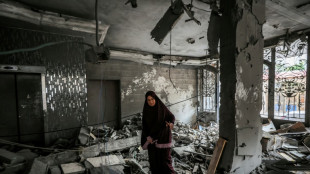 Israel targets top Hamas leader in deadly Gaza strike on anniversary

 Houthis say struck oil facility near Riyadh, as Saudis hit Sanaa

 AI needs safety layers like nuclear plants: ex-OpenAI engineer

 MVP Judge will miss Yankees' MLB playoff series against Rays

 New lizard species discovered in Peru

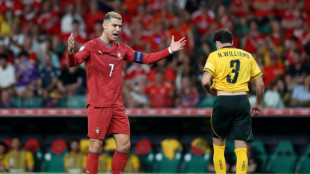 Fernandes hails Portugal's 'greatest symbol' Ronaldo, calls for unity

 Grandidier-Nkanang double takes Pau to Top 14 summit despite Vannes fightback

 Trainer Scott gets perfect Arc boost with top notch double

 Ex-PM says Putin cannot admit 'mistake' over Ukraine

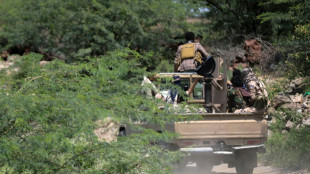 Houthis say Saudi Arabia launches dozens of strikes on Yemen capital

 Qatar and Abu Dhabi F1 Grand Prix to go ahead - F1 boss

 South Korea lift gloom with smash-and-grab Games football gold

 Ireland news conference before Israel game cut short amid tensions

 Protests over housing flare in Spain after relief measures rejected

 Zverev thrashes Shang to set up Djokovic quarter-final at China Open

 Turkey football ref chief jailed pending trial for graft

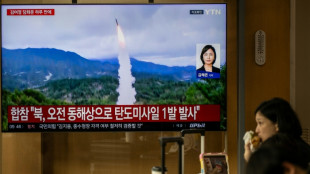 North Korea says test of intermediate-range strategic missile included use of AI

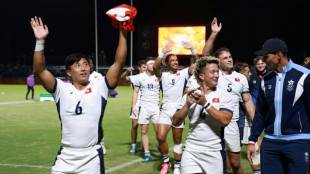 Rampant Sayers leads Hong Kong to third men's rugby gold in a row

 Ethiopia's Tigray rebels abandon regional capital as govt advances

 Bulgaria's Tsar Samuel returns 'home' after 1,000 years

 'Glad it's over': Kim powers to Games gold and military exemption

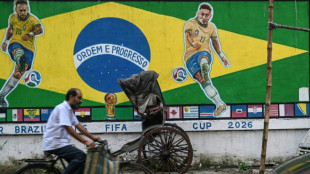 After 11 World Cups, football finally comes home for one Indian fan

New pre- and post-ban data reveal a more complex picture than supporters or critics predicted, with findings that every country considering similar legislation needs to read
WASHINGTON, DC / ACCESS Newswire / June 9, 2026 / When Australia banned social media for children under 16 in late 2025, it became the first country in the world to do so in this manner. Months later, the Family Online Safety Institute (FOSI) has the data on what actually happened, and the results are more complicated than expected.
FOSI's research briefing, Australian Children's and Parents' Perceptions of the Recent Social Media Ban, draws on two waves of survey data collected by Ipsos, reaching around 2,000 respondents per wave, including children ages 10-17 and their parents.
The findings arrive as Spain, Indonesia, Brazil, France, the United Kingdom, and U.S. states, including California, Texas, and Nebraska, are actively pursuing similar legislation.
What the data shows:
Mental health improvement surged, unexpectedly. Before the ban, just 33% of children and 42% of parents were confident it would improve children's mental health. Post-ban, 58% of children and 62% of parents agree that the ban is helping to improve the mental health and well-being of children.
Half of the affected children still have access. Only 19% of children ages 10-15 reported losing all of their social media accounts. 33% lost some. 17% lost none at all.
Screen time didn't drop the way parents or children predicted. 47% of parents and 48% of children expected the ban to reduce screen time. Post-ban, only 33% of parents and 37% of children say it actually has.
Kids are migrating, and parents don't fully know it. 46% of children say the ban pushed them toward other digital platforms. Only 36% of parents say the same about their children, a 10-point gap that raises questions about transparency in family digital life.
Demand for safer platform design remains high. 75% of children and 74% of parents say social media companies should create special accounts with additional protections for teenagers.
"This research shows a country grappling with a big change to how young people use social media and the internet. Capturing this moment in Australia's social media ban rollout provides unique insight into how both children and parents are thinking about, navigating, and living with this new normal." - Alanna Powers-O'Brien, Research Specialist, Family Online Safety Institute
About the Research: This pre-ban (October 2025) and post-ban (March/April 2026) data was collected by Ipsos, the third-largest market research company in the world, present in 90 markets and employing more than 18,000 people. This research was supported by Disney's Digital Wellness Grant Program and TikTok.
About FOSI: The Family Online Safety Institute (FOSI) is an international, non-profit organization that works to make the online world safer for kids and their families. FOSI convenes leaders in industry, government, and the non-profit sectors to collaborate and innovate new solutions and policies in the field of online safety. Through research, resources, events, and special projects, FOSI promotes a culture of responsibility online and encourages a sense of digital citizenship for all. FOSI's membership includes many of the leading internet and telecommunications companies around the world.
###
CONTACT:
[email protected]
480-201-6733
PR Consultant
Family Online Safety Institute
SOURCE: FOSI
View the original press release on ACCESS Newswire
R.Garcia--AT