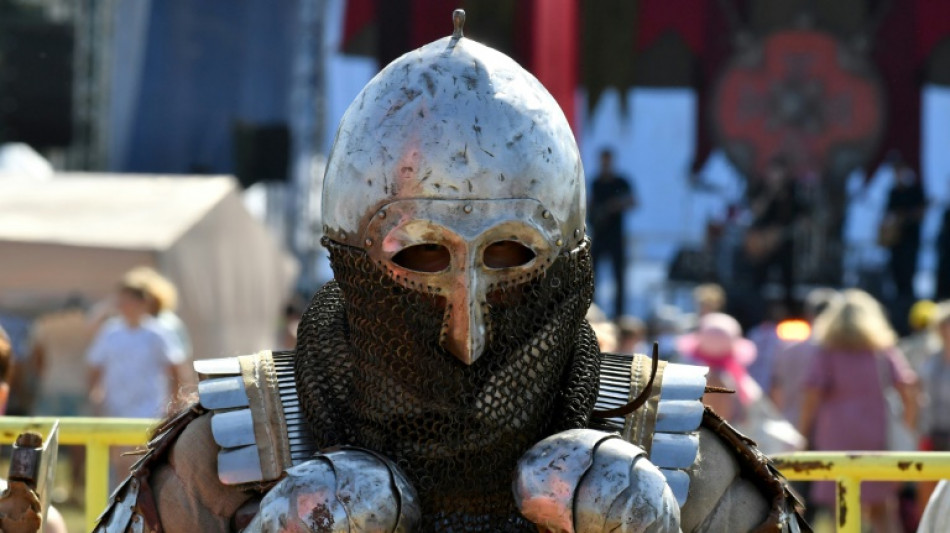
For Russian re-enactors, battle with West is more than history / Photo: Olga MALTSEVA - AFP

 Moscow denies sanitary measures over plague reports
 Samoa look to recreate 2022 final run at Rugby League World Cup
 Asian stocks mostly up after tech-led Wall St record

 German factory orders plunge as recovery still fragile
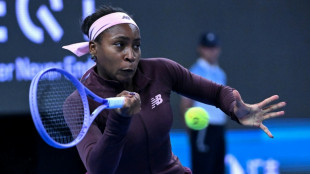 Coco Gauff calls out online racism following China open video review
 KVB Accelerates Middle East Footprint with Strategic MENA Regional Expansion
 Purple reign: Philippines seeks to keep grip on ube throne
 Seoul weighs steps to force North Korea landmine apology
 Yemen's Houthis say struck Riyadh airport, other Saudi sites

 Changer+ Launches Stablecoin-First Self-Custodial Wallet to Make Stablecoins Easier to Use

 White Sox down Guardians, Yankees on brink after Rays loss

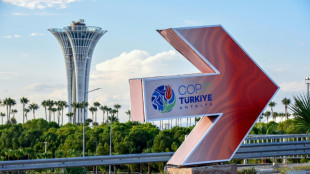 COP31 eyes modest steps as climate disasters multiply

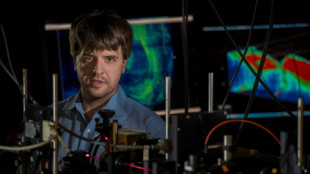 American Nobel laureate in medicine hopes to illuminate the brain
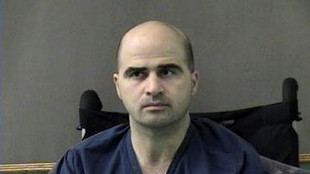 Trump approves firing squad for convicted US military base shooter

 Grappling with 'homework scams,' US universities shun AI detectors
 Separatists win Quebec election in test for Canada PM

 Guyana Gold Corp. (OTC:GYGC) Announces Completion of Nevada Legal Name Change to Global Trade Finance Inc. and Outlines Strategic Growth Roadmap Under New Leadership

 Gold IRA Rules, Taxes, Eligible Metals, RMD and Depositories Explained in New Guide by IRAEmpire
 NHL record-breaker Ovechkin says current season will be his last
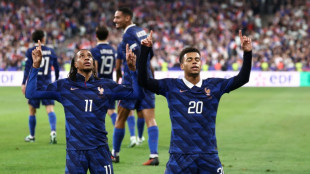 France roar back in Nations League as Italy beat Turkey
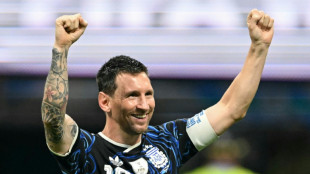 Messi readies for final farewell in Argentina send-off
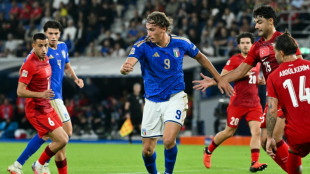 Esposito seals Italy win over Turkey in Nations League

 Russia downplays plague reports as Trump offers US help

 Trump says US moved bombers from UK base after 'threats'
 Brazilian stocks surge to record after Bolsonaro election lead
Surrounded by dozens of men in chainmail and helmets playing dead in a field, an impersonator of mediaeval Russian prince Alexander Nevsky raises his sword and roars.
"This land is Russian, always has been, and always will be!"
It was on this spot near Lake Peipus on Russia's border with Estonia that eight centuries ago Nevsky repelled a force of Teutonic Knights who wanted to convert Russia to Catholicism.
Known as the Battle of the Ice because it was fought largely on the frozen lake, the clash in April 1242 is celebrated as a great victory against efforts to turn Russia away from Eastern Orthodox Christianity.
For the hundreds of history enthusiasts re-enacting the battle on a recent August day, that victory is especially resonant today, as Russian forces wage an offensive in Ukraine framed by the Kremlin as part of an enduring conflict with the West.
"We are fighting against Europe just like our ancestors did," says Oleg Yakontov, a 56-year-old retired paratrooper, holding a sword and shield as sweat drips off his face.
Historical re-enactments are a popular pastime in Russia, whether of mediaeval battles, Napoleonic-era clashes or the fierce fighting of World War II.
- Historic parallels -
Drawing parallels with that history -- and with President Vladimir Putin as a kind of successor to figures like Nevsky -- is part of the messaging put forward by the Kremlin and Russian state media in support of Moscow's campaign in Ukraine.
"To me, Nevsky symbolises the defence of the Motherland and victory," says 23-year-old Vladislav Vasilyev, still out of breath after taking part in the re-enactment.
Several hundred people gathered for the mock battle near the lake, called Lake Chud in Russian. They feasted on grilled meat and listened to live rock music as the combatants pummelled each other on the field.
The event culminated in horseback combat demonstrations a few metres away from a large metal sculpture of Nevsky that was inaugurated in September 2021 by Putin and Patriarch Kirill, the head of the Russian Orthodox Church.
"Alexander Nevsky's personality was truly grandiose," Putin said at the time, praising him as a "talented commander" and "skilful diplomat".
Part of the modern-day appeal of Nevsky for the Kremlin was his alliance with the great power of the time, the Mongol Empire and its Golden Horde, which had destroyed and seized many of Russia's lands.
For some in Russia, Nevsky's acceptance of Mongol dominion helped preserve the country's religious traditions and Eurasian character in the face of Western expansionism.
"His main achievement is this civilisational choice," says Igor Fomyn, a bearded 52-year-old Orthodox priest in a black cassock who came to watch the spectacle.
"By making this choice, he put spirituality, his people, and his Motherland before comfort," the priest says.
- Hero of landmark film -
Nevsky has been used in the past to stir up patriotic fervour, most famously in Sergei Eisenstein's landmark propaganda film "Alexander Nevsky" in 1938.
Made at a time of strained ties between the Soviet Union and Nazi Germany, the film portrayed Nevsky as a heroic figure battling Teutonic domination.
It features an epic recreation of the battle at Lake Peipus with the heavily armoured crusaders crashing through the ice and drowning -- a scene many historians regard as of dubious authenticity.
The film was pulled from cinemas when the USSR and Germany signed a non-aggression pact in 1939, then allowed back onto screens when the Nazis invaded the Soviet Union in 1941.
Nevsky remains a cherished historical figure for many in Russia, and some here have little doubt about who would be his modern counterpart.
"Our president is continuing his work, of course," says Oleg Davydov, a 52-year-old engineer, in attendance at the re-enactment.
"It's all about this country's defence, its strength, its security."
E.Hall--AT