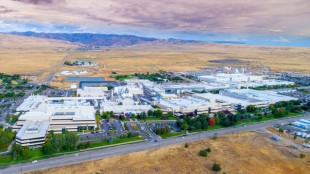
'Immense' leverage: why AI chip workers are demanding more / Photo: ANTHONY WALLACE - AFP/File

 HSBC 'consults' over UK unit job cuts amid AI adoption

 UK court quashes five ex-traders' Libor rate rigging convictions

 XM Receives “Global Customer Experience Leader Award 2026” at the TrustFinance Performance Awards

 Stocks slide as oil climbs on Mideast flareup

 Heavy casualties in Ukraine after Russian strikes

 French wine harvest set to hit historic low

 Kyiv 'cannot agree' to EU membership limiting food exports: minister

 Arteta targets more Arsenal glory after signing new deal until 2030

 Russell hit with Singapore grid penalty for taking new power unit

 Spotify expands audiobooks to more than 180 markets

 French-Japanese duo wins chemistry Nobel for solving molecular 'mystery'

 England's Nations League surge helps heal World Cup wounds

 Mayor of opposition stronghold Izmir defects to Erdogan party

 Mertens beats Gauff to set up Swiatek clash at China Open

 Benin full of pride at role in Messi's last dance

 France suspends stun grenade use at student protests ahead of PM speech

 Indonesian court hears 'negligence' complaint against state over fires, haze
 Rubio in Greece to urge against Western civilisation 'decline'

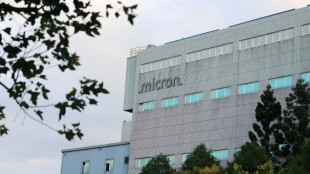 Micron workers at Taiwan plant vote in favour of strike

 In 'The Social Reckoning,' Jeremy Allen White takes on Facebook's 'frightening' ambition

 Chip industry activists call for South Korea to recognise cancer cases

 Famine-scarred southern Madagascar braces for El Nino

 How the EU regulates lobbyists

 I.Coast refuge offers lifelong care for youngsters scorned as 'sorcerers'

 Indian central bank hikes rates for first time in more than 3 years

Runaway profits and sky-high valuations for microchip companies have fuelled worker demands over pay packages in South Korea, raising the question: who profits from the artificial intelligence boom?
In the United States, some employees with stock options have made it rich and retired early, while in Asia chip engineers are now using their "immense" leverage over companies to get their way, analysts say.
After memory chip giant Samsung Electronics reached a deal with its biggest union over bonuses, averting a major strike, AFP looks at what the dispute might mean for the industry.
- Why are chipmakers suddenly so flush? -
Rapid advances in AI systems since text generator ChatGPT's 2022 breakthrough have sparked a gold rush for tech companies.
Massive demand for the silicon components used in AI data centres -- especially memory chips, which are in short supply -- has sent revenues soaring for firms that design, produce and assemble them.
Samsung's value topped $1 trillion this month, followed by Korean rival SK hynix and US chipmaker Micron -- newcomers to a previously exclusive club of around a dozen companies, nearly all American.
"An unprecedented wave of insatiable demand" for advanced memory chips has made SK hynix and its peers "an indispensable backbone of the global AI infrastructure build-out", William Keating, head of semiconductor research firm Ingenuity, told AFP.
- Do workers see the benefits? -
In the United States, employees often get stock options, a form of so-called "golden handcuffs" allowing workers to profit from share price gains over a set period of time.
Asia's huge chip sector "is more dominated by labour unions", Neil Shah, co-founder of Counterpoint Research, told AFP.
With Taiwan and South Korea home to most of the world's chipmaking talent pool, engineers there hold "immense" leverage, Shah said.
"This skilled labour force know they are indispensable, they are contributing to these larger margins," he added.
Under the union deal, around 60 percent of Samsung's domestic workforce is eligible to receive a bonus of roughly $370,000 this year, based on a market estimate of operating profit.
Workers at SK hynix received bonuses more than three times larger than those paid by Samsung last year, according to Samsung's union.
- Will the Samsung deal inspire others? -
A Samsung strike "would almost certainly have been the biggest work stoppage in the history of the global semiconductor industry", South Korean writer and researcher Kap Seol said in an article for US magazine Jacobin.
In the chip world, "high pay and generous benefits often foster a sense of privilege and prestige" among workers, "despite their experience of chemically drenched working conditions, cutthroat competition, and long, risky working hours," he wrote.
There have also been reports of discontent over bonuses at Taiwan's chip production giant TSMC, where AI demand has brought record profits.
"As the company continues to grow, we are highly confident that the full-year growth percentage of our employee profit-sharing... will surpass that of last year," TSMC said in a statement.
TSMC boss CC Wei held a meeting to explain the bonus situation to staff on Wednesday, and the atmosphere was "calm and friendly", a company spokesperson told AFP, adding that annual bonuses were set to grow "more than 30 percent" year-on-year.
The Samsung agreement is fuelling labour demands in other sectors across South Korea -- with workers in industries from biotech and autos to shipbuilding asking for a larger share of corporate profits through bonuses.
- Who else is cashing in? -
According to Shah, in general terms, company shareholders are reaping the most from booming profits, followed by senior company executives and then employees who have stock options.
Fourth are the actual chip engineers, some of whom are now demanding a greater share of the pie.
In the case of Californian AI chip titan Nvidia -- now the world's most valuable company at more than $5 trillion -- many employees with stock options became millionaires very quickly, Shah said.
"Many of them actually left and became investors" or simply chose to retire "on the beach".
Ch.Campbell--AT