
Living Security Launches AI-Native Human Risk Management Platform to Secure the Hybrid Workforce of Humans and AI Agents

 Kyiv entering 'survival' mode amid Russian strikes surge: mayor tells AFP

 Verdict due in Mexico trial over murders of Australia, US surfers

 B2PRIME Welcomes Christina Barbash as Commercial Manager

 Russia forcing Kyiv into 'survival' mode before winter, mayor tells AFP

 Closing arguments begin in Maradona death trial

 UEFA president Ceferin to stand for re-election in 2027

 Nearly 300,000 Nepalis at flood risk: study

 Riyadh kindergarten hit by interception debris as Houthis say targeted airport

 Alex Bodi mizează, alături de CRIF, pe investiții transparente și pe prevenirea riguroasă a spălării banilor

 Gulf Labs, Part of Thailand’s $27 Billion GULF Group, Goes Live as an Injective Validator
 EU okay for winter despite 'historically low' gas stocks: operators

 Rwanda to host F1 Grand Prix: sources close to both sides

 EU top diplomat says bloc in favour of UN Lebanon peacekeepers' extension

 Antonelli and Russell to run different Mercedes aero packages in Singapore

 WTO hikes 2026 trade growth forecast on AI boom

 'I love that challenge': Hamilton prays for rain in Singapore

 G.Bissau moves towards postponement of December general election

 Verstappen out to settle 'unfinished business' at Singapore Grand Prix

 WhiteBIT Launches Bitcoin Lightning Network Support, Powered by Voltage

 Oil surges, stocks sink as US reportedly eyes fresh Iran strikes

 Anne Carson: modern takes on Greek classics

 Canada's Anne Carson wins Nobel literature prize

 Ethiopia drones hit Eritrean troops in Tigray

 Russian strike on buses kills 30 in frontline Ukrainian city

 Thailand begins extradition process against Chinese journalist

New Platform Powered by the Livvy AI Risk Intelligence Engine Helps Enterprises Predict, Prevent and Autonomously Resolve Workforce Risk
AUSTIN, TX / ACCESS Newswire / March 24, 2026 / Living Security, the pioneer and category leader in Human Risk Management (HRM), today announced the general availability of the Living Security Platform, the industry's first AI-native HRM platform designed to secure the emerging hybrid workforce of both human employees and AI agents.
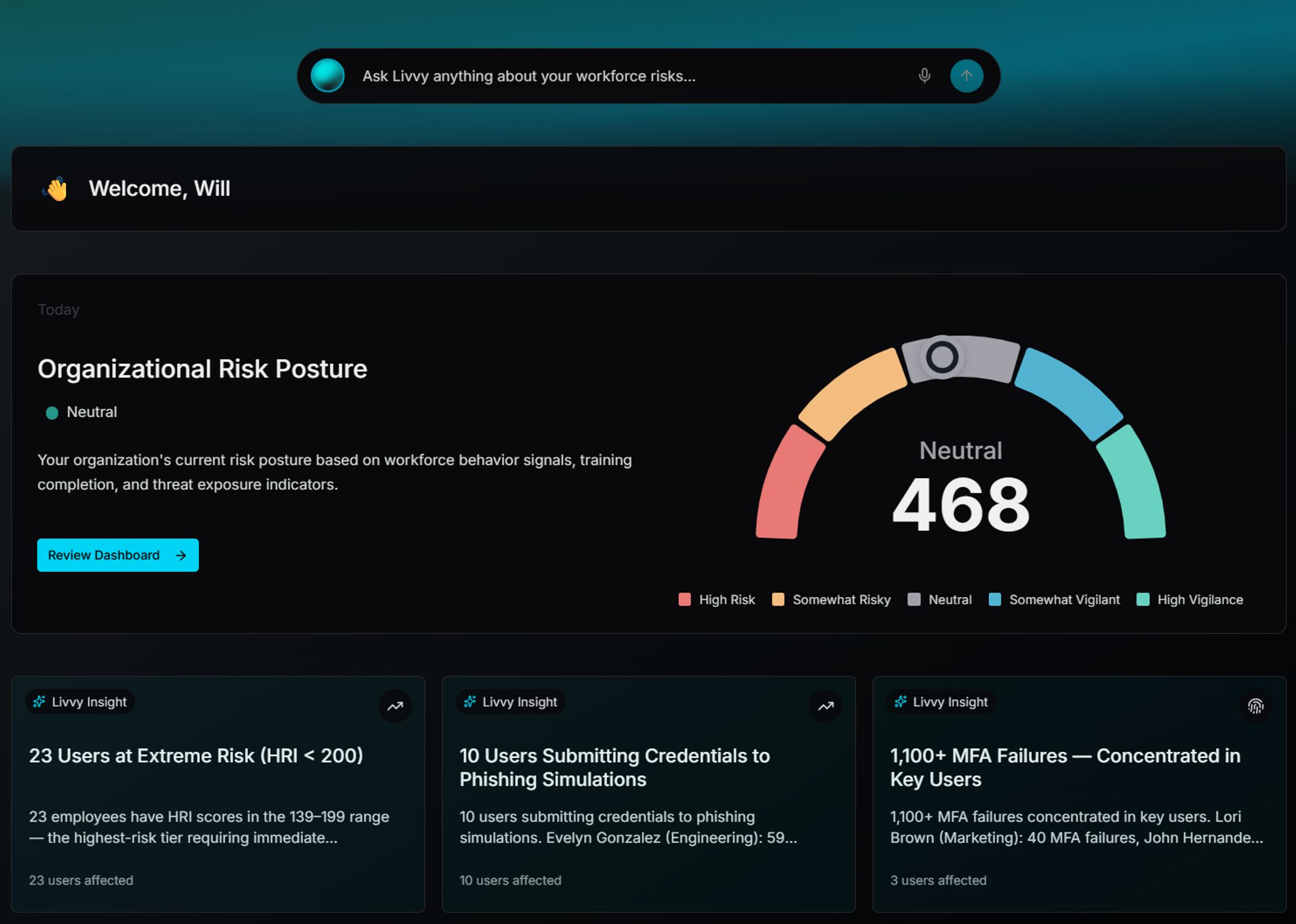
Powered by Livvy, Living Security's AI risk intelligence engine, the platform enables security teams to identify behavioral risk across the workforce, understand why it matters, and automatically guide remediation before incidents occur.
The launch reflects a growing shift in enterprise security: Organizations must now manage risk not only from human behavior but also from AI systems and agents operating with enterprise credentials and delegated authority. Traditional security awareness programs were designed for a human-only workforce and static threats. They were never built for this new reality.
"Security teams don't need more alerts, they need intelligence that explains risk, recommends actions, and helps resolve it," said Ashley Rose, CEO and co-founder of Living Security. "With the Living Security Platform, we're delivering on the promise of AI-native Human Risk Management, securing every identity in the workforce, human or AI, from a single intelligence layer."
A New Era of Workforce Security
Enterprise work is increasingly powered by AI. Employees now rely on AI systems to draft communications, analyze data, write code, and automate tasks, often granting those systems real credentials and access to sensitive systems.
This shift has created a new challenge for security leaders: AI agents can take actions inside enterprise environments without the contextual judgment humans apply to security decisions.
Yet most Human Risk Management platforms still focus exclusively on human behavior. Living Security's platform introduces a broader model of Workforce Security, bringing visibility to both humans and AI agents operating across enterprise systems.
The Evolution of Human Risk Management
Human Risk Management has evolved significantly as organizations sought better ways to manage workforce-driven risk:
Security Awareness Training (SAT)
Traditional programs focused on generic training and completion tracking, with little visibility into behavioral outcomes.
Human Risk Management (2021-2024)
Behavioral analytics revealed that just 10% of users drive 73% of organizational risk, allowing security teams to prioritize intervention where it matters most.
AI-Native HRM (2025-Present)
Generative and agentic AI enable predictive risk intelligence and the autonomous execution of operational tasks, including content generation, playbook orchestration, reporting, and remediation, across large workforces.
Unified Workforce Risk Management (Emerging Era)
Organizations must secure a hybrid workforce where humans and AI agents operate with shared data, systems, and decision authority.
The Living Security Platform is designed specifically for this new phase.
Key Capabilities Available Today
At the core of the platform is Livvy, an always-on AI risk intelligence engine that analyzes more than 300 behavioral, identity, and threat signals to identify and resolve workforce risk.
Key capabilities now generally available include:
AI-Native Platform Architecture
Purpose-built with AI embedded across the platform rather than added later as a bolt-on capability.
Livvy Risk Intelligence Engine
Surfaces who poses risk, why the risk matters, and recommended remediation steps, with confidence scoring and transparent reasoning.
Agentic Remediation
Uses AI-driven, context-aware decisioning to autonomously execute routine risk-reduction actions such as triggered coaching, policy reminders, and MFA re-enrollment while keeping security teams in control.
AI Agent Risk Management
Discovers and monitors AI agents interacting with enterprise systems, maps relationships between humans and agents, and measures each agent's potential blast radius.
Client-Tuned AI (Policy Center)
Livvy continuously learns an organization's Context Layer, including policies, preferences, and operational priorities, enabling risk insights and remediation recommendations that reflect how the business actually operates.
AI Content Generation
Security teams can instantly generate customized security content tailored to their organization's style, brand, and learning objectives, dramatically reducing the time required to create and deliver engaging training.
Proven Impact in Enterprise Environments
The Living Security Platform is built on five years of behavioral data from more than 100 enterprise organizations, representing billions of real-world behavioral interactions across the workforce.
Research conducted with the Cyentia Institute's State of Human Cyber Risk Report found that just 10% of employees account for 73% of organizational risk, highlighting the importance of targeted behavioral intervention over broad compliance training.
Organizations deploying the platform have seen measurable improvements in both security outcomes and operational efficiency. Early adopters report substantial reductions in the number of users classified as high risk, along with faster remediation cycles and significantly lower exposure to potential data-loss events. At the same time, security programs built around behavioral intelligence have proven significantly more engaging for employees, with participating organizations reporting satisfaction scores above 90 percent.
Enterprise design partners participated in the Living Security Platform beta program, validating the platform's ability to interpret behavioral signals and translate them into clear, prioritized actions for security teams.
"We had the signals, but not the meaning," said a Living Security beta customer. "Livvy tells us what actions to take."
Living Security Platform Availability
The Living Security Platform is generally available starting today.
Existing customers gain immediate access to all Livvy-powered capabilities, including AI Agent Risk Management. To learn more, organizations can visit www.livingsecurity.com to request a demonstration or register for the upcoming webinar, Introducing the AI-Native Living Security Platform, on April 1, 2026, at 2:00 EDT.
About Living Security
Living Security is the global leader in Human Risk Management (HRM), helping organizations measure and reduce workforce cyber risk through continuous behavioral intelligence and governance-driven security strategies. Named a Leader in The Forrester Wave: Human Risk Management Solutions, Q3 2024, Living Security enables enterprises to move from awareness-based metrics to measurable risk reduction in an AI-accelerated threat landscape.
Media Contact: [email protected]
SOURCE: Living Security
View the original press release on ACCESS Newswire
Th.Gonzalez--AT