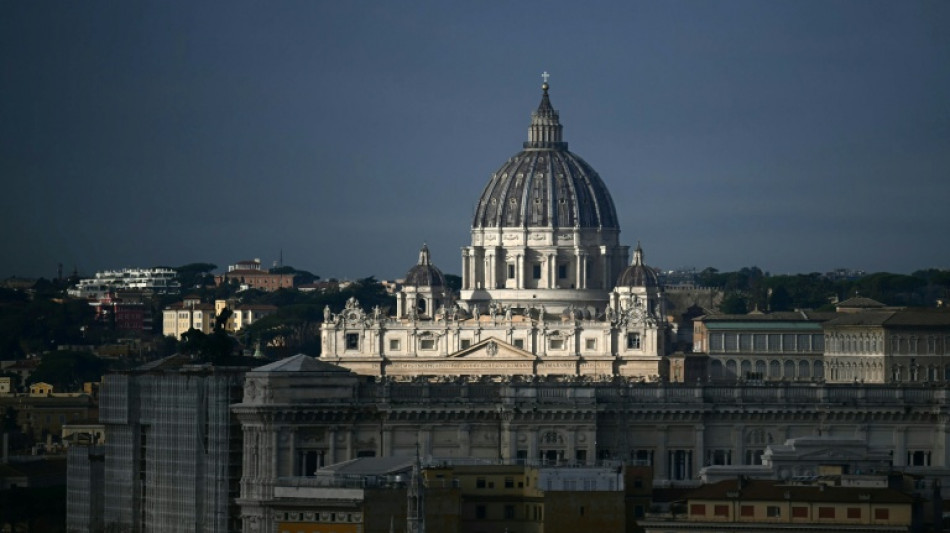
St Peter's Basilica gets terrace cafe, translated mass for 400th birthday / Photo: Filippo MONTEFORTE - AFP/File

 Breytenbach confirms recommending Sibiya for Johannesburg post

 Celebrities mark Thanksgiving in turkey-themed photo gallery

 German fashion model Veruschka dies in Berlin at 87
 Thanksgiving storms disrupt thousands of US flights
 T.J. Lang criticises Aaron Rodgers over comments about Mike McCarthy

 Black Friday beauty offers span skincare, fragrance and wellness devices
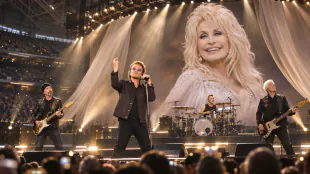 U2 pays tribute to Dolly Parton during Thanksgiving Eve NFL show

 Toyota Innova Hycross and Kia Sorento hybrids compared in top trims

 President Trump to Attend TSMC Groundbreaking in Phoenix Next Week

 Gauteng Health Department Warns of Rising Antibiotic Resistance Threat

 Bishop Museum Races to Save Rare Megamouth Shark Specimen

Visitors to St Peter's Basilica will be able to follow mass in 60 languages and enjoy a coffee on a newly opened terrace as part of plans unveiled Monday by the Vatican.
The changes, which also include a new real-time booking app to help regulate the crowds, are among several initiatives marking 400 years since the consecration of the world's largest church on November 18, 1626.
Currently access to the terrace of the basilica, the centre of global Catholicism located in Vatican City, is strictly limited.
"The entire terrace of the basilica will be accessible," compared with only one third of it today, Cardinal Mauro Gambetti, the basilica's Archpriest, told a press conference.
A current "refreshment area" will be approximately doubled to around 100 square metres, he said.
The Vatican had previously sought to play down reports of a cafe on the terrace, which had sparked anger about the potential commercialisation of a sacred place.
Exhibitions will also be staged on the terrace, including for children, relating to the building's history, construction and maintenance.
Some 20,000 people a day visit the basilica, a jewel of Renaissance architecture, and managing the numbers is a major challenge.
Opening up space on the terrace should help reduce crowds in the basilica "and foster greater contemplation inside", Gambetti said.
- Real-time monitoring -
The Vatican also Monday launched a new app for liturgies in the basilica, which will allow pilgrims to follow mass by Pope Leo XIV in 60 languages via their smartphones.
Visitors will scan a QR code to access a dedicated web page providing real-time audio and text translations, using an AI-powered system developed by Rome-based firm Translated.
There will also be a new real-time booking system for access to the basilica, fuelled by a network of sensors that monitor how many people are inside.
The Vatican also presented its "Beyond the Visible" project, which created a three-dimensional digital model of the entire complex.
Conducted with oil company Eni, it will allow real-time monitoring of even the tiniest movements in the building or its foundations.
The system has confirmed the general good state of the basilica, and will provide information to "allow us to prevent any future issues", said Annalisa Muccioli, head of research and technological innovation at Eni.
The basilica is a place of pilgrimage as it contains the tomb of St Peter, one of the 12 disciples of Jesus Christ and the first pope.
The first stone for the basilica, which replaced an older one on the site, was laid by Pope Julius II in 1506, and it was completed in 1626.
P.A.Mendoza--AT