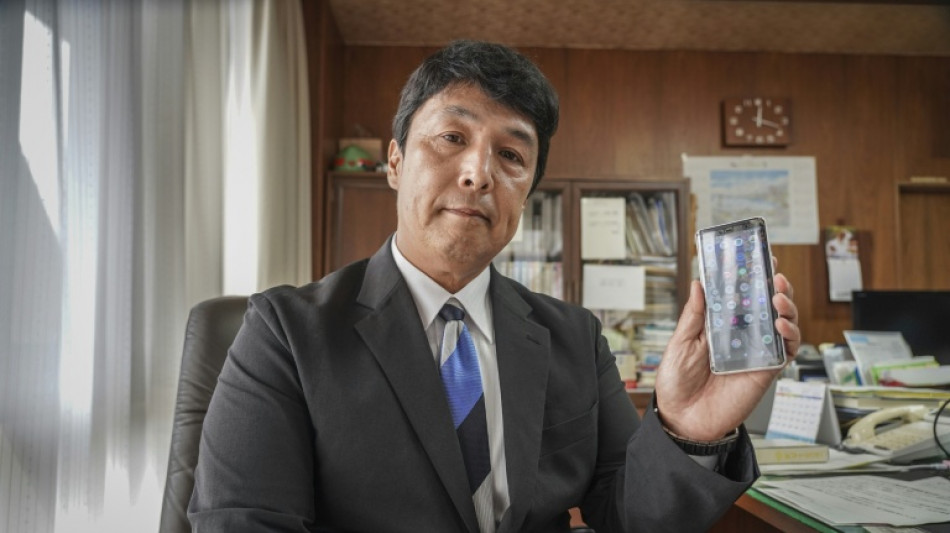
'Time runs away': Japan's city with a two-hour cap on phone use / Photo: Caroline GARDIN - AFP

 African players in Europe: Mbeumo ends goal drought as United draw

 France's high school students plan fresh protests

 NZ bank in free speech row over 'explicit' sheep memes

 China Open champ Zheng withdraws from Wuhan citing fatigue

 Brewers edge Dodgers 2-1 in National League Championship Series opener

 Pope to have surgery to remove lung nodule

 Stocks rise as oil prices tumble after Trump hails 'energy ceasefire'

 Man City charges cloud hangs over Premier League season

 Top NATO commander set to issue warning to Russia over any attack

 Software, sprints, trolls: Singapore Grand Prix talking points

 Riyadh airport hit by fresh Houthi strike day after deadly attack

 InterContinental Hotels Group PLC Announces Transaction in Own Shares - October 12

 Yokogawa Brings Publication-Backed Validation from More Than 60,000 Scientific Publications to Its CSU Spinning Disk Confocal Systems with Bioz

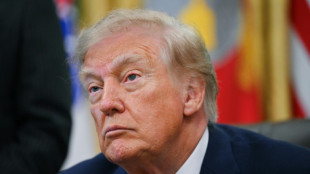 Trump's 'energy ceasefire' sparks confusion as Russia strikes Ukraine

 Dupont double helps Toulouse avoid Bayonne slip-up in Top 14

 Marseille snap losing skid with win at Troyes

 Lula stages mass rally ahead of Brazil's presidential run-off

 Poland holds suspect in alleged assassination plot against PM Tusk

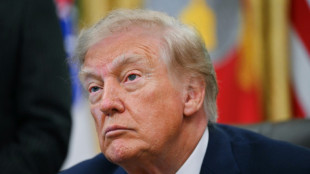 Russia hits Ukraine power plants despite Trump energy ceasefire claim

 Isco's Betis rise back above Real Madrid to third

 Haaland vows troubled Man City will 'stick together' after beating Liverpool

 Abhishek, Arshdeep guide India to T20 win over West Indies

 'Other Mommy' scares up N. American box office win

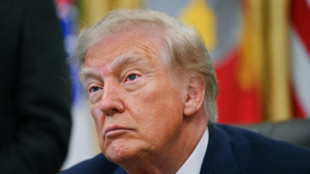 Zelensky surprised, Moscow mum as Trump announces energy ceasefire

 Ready Player 1: Paris to host 2027 edition of EVO combat video games event

Police won't be rounding up people glued to phones in Japan's Toyoake, but the mayor believes his two-hour limit can help residents find a healthier relationship with their screens.
Masafumi Kouki told AFP he has worried for many months about the "negative effects of excessive smartphone use, especially the sharp decrease in direct human communication".
"Even on trains, everyone just stares at their phones, and no one talks anymore," he said.
"I don't believe this should be considered normal, so I wanted to create an opportunity for our residents to reflect on whether they might be overusing their smartphones."
A local ordinance on the appropriate use of phones, laptops and tablets came into force last week in Toyoake, a largely grey, concrete suburb of the industrial metropolis Nagoya.
There are no penalties for exceeding its recommended two-hour limit, which applies to adults and children alike and was approved by the city council in a 12-7 vote.
Instead, the aim is to encourage self-regulation.
"It's certainly a rare step -- we know that," said the 56-year-old Kouki, whose own phone screen has multiple cracks.
When the ordinance was first proposed, "opposition was almost universal".
But many citizens came round to the idea, he said, when they learned that the daily cap does not include work or study time and is meant as a guideline, not a strict rule.
- 'Overreach' -
Among Toyoake's population of nearly 68,000, not everyone is convinced.
"Nowadays... we do everything -- studying, hobbies, communication -- through a single smartphone," said 22-year-old law student Shutaro Kihara.
So the ordinance is "rather meaningless or ineffective" for young people, he said.
City lawmaker Mariko Fujie, 50, voted against Kouki's decree.
Excessive smartphone use is a social problem that needs addressing, she told AFP.
But "I feel a strong resistance to regulating people's personal free time through an ordinance", she said.
"It feels like an overreach."
Ikka Ito, a middle school student playing a video game near a local station, uses his phone for four to five hours a day.
"I've been voluntarily cutting back compared to before the ordinance was announced," without his parents telling him to, he said.
But there are downsides, too.
"If you reduce smartphone time, you can't stay in touch" with friends, Ito said.
One goal is to improve citizens' health by helping them get more sleep.
Toyoake's ordinance urges elementary school students to avoid smartphones after 9 pm, while junior high students and older are advised not to use them after 10 pm.
- Sleepy citizens -
Surveys have found that people in Japan get less sleep than those in other developed economies, often due to long working hours.
Toyoake resident Kokuka Hirano, 59, said she is "sleep-deprived" because of her phone.
"I want to research various things I don't understand, so I end up watching news from different countries," she said.
"Time runs away from me."
Hirano wants to limit her smartphone use to devote more time to exercise and cooking.
But "three or four hours would be more reasonable... two hours feels too strict".
Studies show that as well as smartphones interfering with sleep, which can affect mental health, heavy use of social media is linked with loneliness, depression and anxiety.
Global efforts to limit potential harm to children include an upcoming Australian ban on social media for under-16s.
Mayor Kouki has two children aged 10 and seven who don't own smartphones, although the 10-year-old borrows his wife's without permission.
Kouki said he likes using his phone to watch Japanese baseball highlights, but the family now shuns screens during mealtimes.
Yumi Watanabe, a 36-year-old mother-of-three in Toyoake, said most parents she knows let their children explore freely online, which is "scary".
Even so, the ordinance "wasn't really necessary", she said.
"It's something each person can judge for themselves as they go."
T.Sanchez--AT