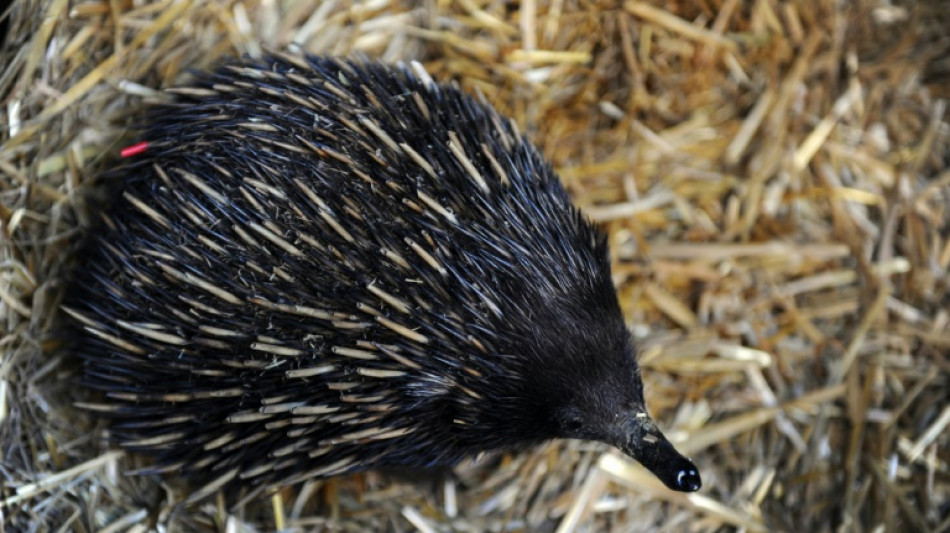
Study sheds light on origin of Australia's odd echidna / Photo: ROMEO GACAD - AFP

 Barcola scores hat-trick as Liverpool hit LASK for six

 Healthy corals help bleached neighbors regain color: study
 Hope ton helps West Indies level T20 series at 2-2 in India

 Ukraine war reaches shores of Bulgarian fishing village
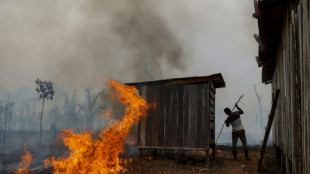 Brazil probing 'criminal' origin of forest fires: minister to AFP

 Sally Rooney books cannot be sold in UK amid Palestine Action ban: publisher

 Italian ski stars Goggia and Brignone to miss season opener

 Bournemouth boss Rose urges Cherries to bounce back from Chelsea 'slap'

 Top seed Sabalenka falls at first hurdle in Wuhan

 FX Junction Brings Copy Trading to Everyone, While Their Money Never Leaves With Their Broker

 Brighton defender Struijk's red card overturned

 Saudi league postpones three matches after Houthi attacks

 US consumer inflation up more than expected as midterms loom

 Canadian publisher supports novelist Orelien after AI denial

 Medvedev sees off Tsitsipas to reach Shanghai Masters quarters

 Louvre boss warns of closure risk without major renovations

 Lawes and Genge urge England to end ban on overseas-based players

 Metrika Selected by OCC to Support Stablecoin Supervisory Framework Under the GENIUS Act

 Kenya hosting 2029 World Championships will help doping fight, says Coe

 UK prosecutor tells jury Russell Brand a 'sexual predator'

 Fulham manager Arbeloa fined £25,000 after Man Utd outburst

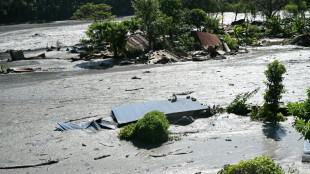 Nepal flood triggered by rock and ice avalanche: report

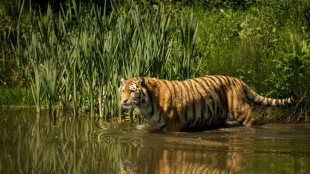 'Distressed' family of UK man killed by tiger urge end to online posts
 Regulator expects Man City appeal to be heard by January

 Rising Spanish tennis star handed code violation for swearing at ballboy

Australia's burrowing echidna evolved from a water-dwelling ancestor in an "extremely rare" biological event, scientists said Tuesday in a new study of the peculiar egg-laying mammals.
With powerful digging claws, protective spikes and highly sensitive beaks, echidnas are well suited to a life shuffling through the forest undergrowth.
But a team of Australian and international scientists believe many of the echidna's unusual traits were first developed millions of years ago when its ancestors splashed through the water.
"We're talking about a semiaquatic mammal that gave up the water for a terrestrial existence," said paleontologist Suzanne Hand, from the University of New South Wales.
"While that would be an extremely rare event, we think that's what happened with echidnas."
Echidnas and another Australian oddity, the semi-aquatic platypus, are believed to have evolved from a common ancestor called Kryoryctes cadburyi that lived in Australia more than 100 million years ago.
Researchers studied the single known bone fragment left by this ancestor, which was discovered among a trove of fossils at Dinosaur Cove in southern Australia some 30 years ago.
Platypus bones were similar to this ancient ancestor, Hand said, with a thick and heavy structure that provided ballast for diving.
Echidnas, in comparison, had very thin bone walls that made it easier to walk on land, Hand said.
This indicated echidnas were descended from a water-dwelling ancestor but had evolved to live on land, the research found.
It was far more common for prehistoric mammals to go from land to water, Hand said, pointing towards seals, whales, dolphins and dugongs.
The researchers said these findings appeared to be supported by other echidna traits.
Echidnas have backward-facing hind feet that help them shift mounds of soil when burrowing.
These feet may have first developed as rudders helping the echidna's ancestor navigate fast-moving waterways, Hand said.
Echidnas also have a "diving reflex" when submerged in water, which tells their body to conserve oxygen helping them hold their breath for longer.
Echidnas and platypus are monotremes, a rare group of mammals that lay eggs instead of live young.
"We're hoping we'll discover other ancestral monotremes that will help unravel the early history of this most fascinating group of mammals," said study co-author Michael Archer.
The research was published in peer-reviewed journal PNAS.
W.Stewart--AT