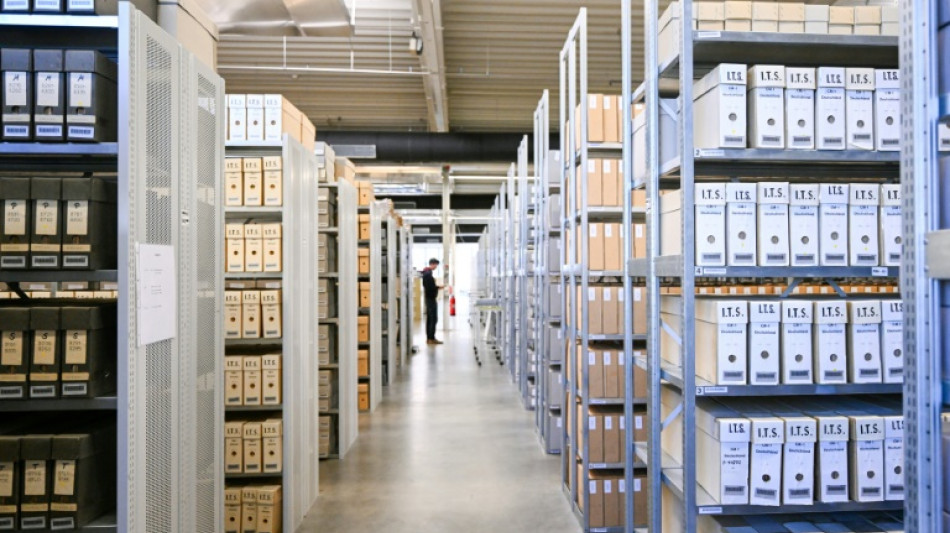
German archive where victims of the Nazis come back to life / Photo: Ina FASSBENDER - AFP/File

 Mourinho blasts 'shameless' timing of Vinicius ban decision

 PSG beat Man City in Champions League thriller, Barcola hits Liverpool hat-trick

 US Treasury chief urges stronger IMF role against 'distortionary policies'
 Giant-killers Bodo sink Dortmund in Champions League

 PSG outgun embattled Man City in six-goal Champions League thriller

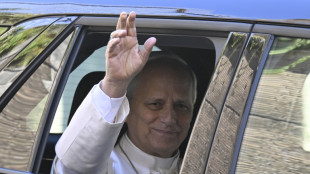 In Chicago, pope's hometown, Catholics express shock and support

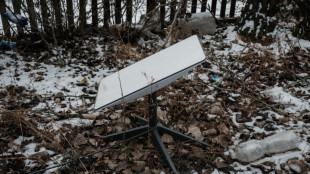 Musk suggests US govt behind any slowdown in Ukraine's Starshield system
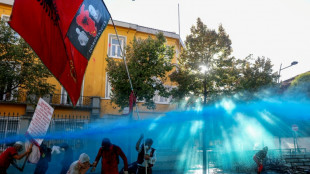
 Chiclayo prays for recovery and return of the 'Peruvian pope'

 Barcola scores hat-trick as Liverpool hit LASK for six

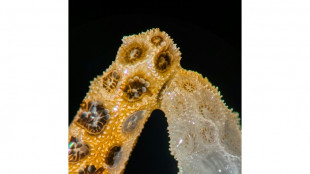 Healthy corals help bleached neighbors regain color: study
 Hope ton helps West Indies level T20 series at 2-2 in India

 Ukraine war reaches shores of Bulgarian fishing village
 Brazil probing 'criminal' origin of forest fires: minister to AFP
 Sally Rooney books cannot be sold in UK amid Palestine Action ban: publisher
 Italian ski stars Goggia and Brignone to miss season opener
 Bournemouth boss Rose urges Cherries to bounce back from Chelsea 'slap'
 Top seed Sabalenka falls at first hurdle in Wuhan

 FX Junction Brings Copy Trading to Everyone, While Their Money Never Leaves With Their Broker

 Brighton defender Struijk's red card overturned

 Saudi league postpones three matches after Houthi attacks
 US consumer inflation up more than expected as midterms loom

 Canadian publisher supports novelist Orelien after AI denial

 Medvedev sees off Tsitsipas to reach Shanghai Masters quarters

 Louvre boss warns of closure risk without major renovations
 Lawes and Genge urge England to end ban on overseas-based players

If it wasn't for the Arolsen Archives, half-sisters Sula Miller and Helen Schaller would never have met.
American Miller and German Schaller only recently discovered they had the same father -- a Holocaust survivor who emigrated to the US.
Miller "contacted us because she was looking for information about her father", said Floriane Azoulay, director of the Arolsen Archives, the world's largest repository of information on the victims and survivors of the Nazi regime.
Mendel Mueller, a Jew born in the Austro-Hungarian Empire, was incarcerated in two Nazi concentration camps: Buchenwald in northern Germany and Auschwitz in what was then occupied Poland.
An investigation of the archives revealed he had another daughter, Helen, who was still alive and living in Germany.
"Thanks to us, the two women got to know each other," Azoulay said.
Eighty years after the end of World War II, people all over the world are still discovering the fate of their family members sent to Adolf Hitler's Nazi death camps.
The vast Arolsen Archives, located in the quaint spa town of Bad Arolsen in central Germany, contain millions of documents and objects.
When Miller contacted the archive to find out about her father, researchers stumbled upon a 1951 letter from his wife looking for his whereabouts.
Shortly after the war, Mueller had married a German woman -- the mother of his daughter Helen, born in 1947.
But some time later, he left for the US without her and started a new life there, marrying an Austrian woman -- who gave birth to Sula in 1960.
Four years after Miller's initial inquiry, investigators from Bad Arolsen managed to track Helen down and the two sisters met for the first time last year.
"Their physical resemblance was striking," Azoulay said.
The two had complicated and conflicting views on their father, but "their meeting helped them make peace with the past", she said.
- Watches, wallets and rings -
Although 90 percent of the material held by the Arolsen Archive has now been digitised, the complex still stores some 30 million original documents on almost 17.5 million people.
There are also thousands of items such as watches, rings and wallets collected from the old Nazi camps.
The archive was originally set up by the Allies in early 1946 as the International Tracing Service to help people find relatives who had disappeared during the war.
It mostly dealt with Jews but also Roma, homosexuals, political dissidents and "racially pure" children kidnapped by the Nazis as part of a programme to address the falling birth rate.
Bad Arolsen was chosen because it had escaped Allied bombing and had a working telephone network, and because of its location at the centre of Germany's four occupation zones (French, American, British and Soviet).
At first the service was run by a curious mix of members of the Allied forces, Holocaust survivors from all over Europe and Germans -- including former members of the Nazi party.
But from the 1950s onwards, as many of the survivors left the country, German staff numbers increased.
Today, the archive has around 200 employees, assisted by some 50 volunteers around the world.
And it is still handling around 20,000 enquiries per year, according to Azoulay, often from children or grandchildren of victims or survivors who want to know what happened to them.
Like Abraham Ben, born to Polish-Jewish parents in a displaced persons camp in Bamberg, southern Germany, in May 1947.
- No grandparents -
Now almost 80, Ben is still hoping to shed light on the fate of his father's family, who were left behind when he escaped from the Warsaw Ghetto.
"There is a high probability that they died in the camps," he said.
Ben's father "never talked about (the Holocaust)... and we never asked him about it. We felt it was too painful for him."
Almost no one had grandparents in the centre for Jewish refugees where Ben was born because the elderly -- too weak to work -- were first to be killed in the camps.
"At the age of 10, I realised other children had grandparents because I went to a German school and my classmates would describe the gifts they had given them at Christmas."
Ben said he is hoping to find "cousins who may have survived" among the children of his father's five brothers and sisters.
The archives at Bad Arolsen include documents issued by the Nazi party, such as Gestapo arrest warrants, lists of people to be transported to the camps and camp registers.
The documents are often surprisingly detailed, given the low chances of survival of the people listed in them.
In Buchenwald, the camp register kept a record of every prisoner's height, eye and hair colour, facial features, marital status, children, religion and which languages they spoke, as well as their name, date of birth and deportation number.
- 'Best day of her life' -
From the beginning, the records were sorted according to a phonetic alphabet, since the same name can be spelled differently in different languages.
"For example, there are more than 800 ways to write 'Abrahamovicz'," said Nicole Dominicus, head of archive administration.
Later the archives were expanded to include files compiled by the Allies, as well as correspondence between the Red Cross and the Nazi administration.
The files also contain letters written by people searching for their lost relatives.
In a letter written to the International Tracing Service in 1948, a mother who survived Auschwitz asks about her missing daughter, who she was separated from in the camp.
Volunteers working for the archives outside Germany also help trawl through records in other countries.
Manuela Golc, a volunteer in Poland, recently met a 93-year-old woman to hand over a pair of earrings and a watch that had belonged to her mother, who was deported in 1944 after the Warsaw Uprising.
"She told me it was the best day of her life," Golc said, with tears in her eyes.
German Achim Werner, 58, was "shocked" when the archives contacted him to let him know they had his grandfather's wedding ring, taken from him when he arrived at the Dachau concentration camp.
Werner had visited the camp near Munich several times, on school excursions and as an adult, without knowing that his grandfather had been held there.
"We knew that he was detained in 1940, but nothing after that," he said.
Werner does not know why his grandfather was imprisoned, and since the archives have no further information about him, he probably never will.
But he wants to keep the man's memory alive and has given the wedding ring to his daughter.
"She will wear it as a pendant and then pass it on to her children," he said.
A.Taylor--AT