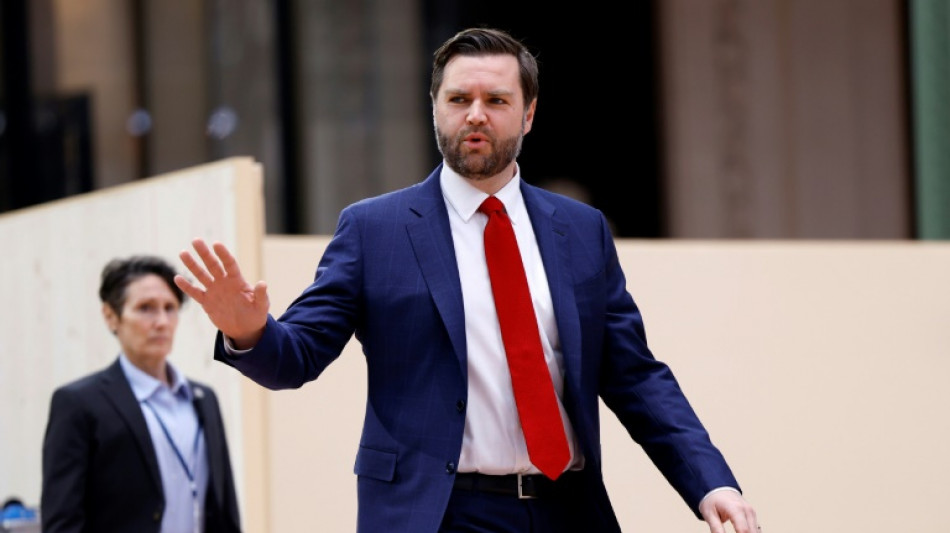
JD Vance puts Europe, China on notice at AI summit / Photo: Ian LANGSDON - AFP

 'Multiple victims' in Oregon elementary school shooting: police
 ChangeNOW Announces NOW AI After Resolving Website Integration Vulnerability

 Argentine demonstration over education cuts ends in clashes
 Argentine protesters, police clash at demo over university funding
 US stocks end higher as AI shares stabilize

 School roof collapse kills 32 children, teacher in Pakistan
 Lyon down Palace in Europa League, Sunderland leave it late

 UniCredit says receives ECB green light for Commerzbank takeover

 New York City pension fund asks Anthropic to delay IPO

 Venezuela's Maduro denies US torture charges as 'false accusations'

 Somalia sets May presidential election despite insecurity

 Chelsea's Caicedo eager to be more of a leader

 Rahm reaches separation deal with LIV in bankruptcy court
 UN chief urges nations to end 'war on nature'
 Newcastle boss Jaissle says Fernandez-Pardo just needs a goal
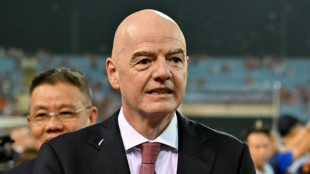 Infantino offers apology but 'no answers' at FIFA meeting over World Cup plan

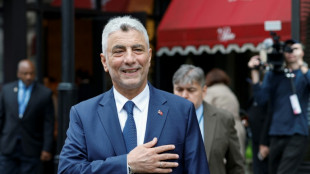 Don't exclude Turkey from 'Made in Europe' plan: minister to AFP

 French duo Justice to score 'GTA VI': game maker
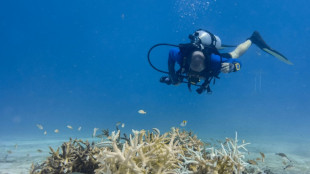 El Nino a 'terrifying' threat to coral reefs: UN biodiversity expert

 Barcola must get used to Liverpool highs and lows, says Iraola
 Versus Trade Wins Best ECN/STP Broker APAC 2026, Marking Third UF Awards Recognition
 Three dead as Istanbul sees heaviest rainfall in 80 years

 US producer prices see biggest jump since 2022 in added challenge to Trump

 Swiatek avoids seed exodus to breeze into Wuhan last eight
 PM condemns 'chaos' as violent protests grip Albania

US Vice President JD Vance on Tuesday warned European allies against over-regulating the US-dominated artificial intelligence sector and China against using the technology to tighten its grip on citizens and allies.
Speaking at a global AI summit aimed at finding common ground on the emergence of a technology set to shake up global business and society, Vance struck a more confrontational tone than other leaders in the room.
"Excessive regulation... could kill a transformative sector just as it's taking off," Vance told global leaders and tech industry chiefs in the opulent surroundings of the French capital's Grand Palais.
"We need international regulatory regimes that fosters the creation of AI technology rather than strangles it," he added, calling on Europe to show "optimism rather than trepidation".
India's Prime Minister Narendra Modi, co-hosting with French President Emmanuel Macron, had minutes earlier called for "collective, global efforts to establish governance and standards that uphold our shared values, address risks and build trust".
Future AI would need to be "free from biases" and "address concerns related to cybersecurity, disinformation and deepfakes" to benefit all, he added.
Vance, by contrast, said it was not up to national capitals to "prevent a grown man or woman from accessing an opinion that the government thinks is misinformation".
The US vice president also took a thinly veiled shot at China, saying "authoritarian regimes" were looking to use AI for increased control of citizens at home and abroad.
"Partnering with them means chaining your nation to an authoritarian master that seeks to infiltrate, dig in and seize your information infrastructure," Vance said.
Chinese startup DeepSeek rattled the AI sector last month by unveiling a sophisticated chatbot that it claims was developed on a relatively low budget. A growing number of countries have taken steps to block the app from government devices over security concerns.
Vance also pointed to "cheap tech... heavily subsidised and exported by authoritarian regimes", referring to surveillance cameras and 5G mobile internet equipment widely sold abroad by China.
- Hundreds of billions lined up -
President Donald Trump's deputy left the venue immediately after his speech as other speakers including European Commission chief Ursula von der Leyen and Google boss Sundar Pichai took the stage.
Von der Leyen said Brussels would push to mobilise 200 billion euros ($206 billion) for AI investments in Europe, with 50 billion euros to come from the EU's budget and the rest from "providers, investors and industry".
Following Macron's trumpeting Monday of 109 billion euros of investment into French AI projects and the $500-billion US "Stargate" programme led by developer OpenAI, the vast figure underscored the resources needed to compete on catching the next technological wave.
Overnight, the Wall Street Journal had reported a near-$100 billion bid to buy ChatGPT maker OpenAI from a consortium headed by Elon Musk.
If successful, the deal would compound the tech influence of the world's richest man, already boss of X, Tesla, SpaceX and his own AI developer xAI as well as a Trump confidant.
Sam Altman, the OpenAI chief set to speak in Paris later Tuesday, responded to the reported offer with a dry "no thank you" on X.
Vance did not comment directly on the prospective deal.
But while he said the Trump administration would "ensure that American AI technology continues to be the gold standard worldwide", he also took aim at heavyweight tech "incumbents" who he said pushed for regulation that could strangle emerging challengers.
Rather than only benefiting big players, "we believe, and we will fight for policies that ensure, that AI is going to make our workers more productive", Vance said.
"We expect that they will reap the rewards with higher wages, better benefits, and safer and more prosperous communities," he added.
For now, AI is mostly replacing humans in clerical jobs disproportionately held by women, International Labour Organization head Gilbert Houngbo said on Monday.
That risks widening the gender pay gap even though more jobs are being created than destroyed by AI on current evidence, he added.
- 'Existential risk' -
Suspense remained as the AI summit drew to a close Tuesday on the language and signatories of a final statement.
Media reports suggest that neither Britain nor the United States -- two leading countries for AI development -- will sign a planned joint declaration as it stands.
Outside observers criticised an alleged leaked draft of the joint statement for failing to mention AI's suspected threat to humanity's future as a species.
The supposed draft "fails to even mention these risks" said Max Tegmark, head of the US-based Future of Life Institute, which has warned of AI's "existential risk".
N.Mitchell--AT