Survivors centre stage for 80th anniversary of Auschwitz liberation / Photo: Aleksandra Szmigiel - POOL/AFP

 Broncos top Super Bowl champion Seahawks in overtime

 Brilliant Brewers sweep Dodgers to reach World Series
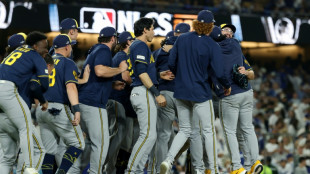 Brewers complete Dodgers sweep to reach World Series
 High-flying Freiburg try to shut out the noise as fairytale run continues

 Flamengo secure 0-0 draw in La Plata in Copa Libertadores semi
 The final lap? Two days on the campaign trail with Trump
 Asian stocks rise as tech bounces from rout, eyes on Warsh
 Saudi organisers say 2027 Asian Cup 'on schedule' after attacks
 Right-wing Brazil influencers on 'mission' to seal Bolsonaro win
 Using AI to help find Mexico's legions of missing children
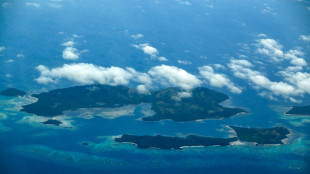 Fiji to deploy solar-powered Australian military drones at sea

 'Multiple victims' in Oregon elementary school shooting, police say

 'Multiple victims' in Oregon elementary school shooting: police
 ChangeNOW Announces NOW AI After Resolving Website Integration Vulnerability

 Argentine demonstration over education cuts ends in clashes
 Argentine protesters, police clash at demo over university funding
 US stocks end higher as AI shares stabilize
 School roof collapse kills 32 children, teacher in Pakistan
 Lyon down Palace in Europa League, Sunderland leave it late

 UniCredit says receives ECB green light for Commerzbank takeover
 New York City pension fund asks Anthropic to delay IPO
 Venezuela's Maduro denies US torture charges as 'false accusations'
 Somalia sets May presidential election despite insecurity
 Chelsea's Caicedo eager to be more of a leader
 Rahm reaches separation deal with LIV in bankruptcy court
Some of the few remaining survivors of Auschwitz will gather at the site of the Nazi death camp on Monday as the world marks the 80th anniversary of its liberation in the final months of World War II.
Around 50 ex-inmates are expected at a ceremony outside the historic gate of Auschwitz II-Birkenau alongside dozens of leaders including King Charles III and French President Emmanuel Macron.
"This year we will focus on the survivors and their message," Auschwitz Museum spokesman Pawel Sawicki told AFP. "There will not be any speeches by politicians."
Speaking to AFP ahead of the anniversary, survivors around the world spoke about the need to preserve the memory of what happened when there will no longer be living witnesses.
They also warned about rising hatred and anti-Semitism around the world and spoke of their fears about history repeating itself.
The ceremony is set to start at 1500 GMT and 54 international delegations are expected, including German President Frank-Walter Steinmeier.
Organisers said it could be the last major anniversary with such a large group of survivors.
"We all know that in 10 years it will not be possible to have a large group for the 90th anniversary," Sawicki said.
- 7,000 survivors -
Auschwitz was the most notorious of the extermination camps and has become a symbol of Nazi Germany's genocide of six million European Jews, one million of whom died at the site between 1940 and 1945, along with more than 100,000 non-Jews.
It was created in 1940 using barracks in Oswiecim, southern Poland. Its name was Germanised into Auschwitz by the Nazis.
The first 728 Polish political prisoners arrived on June 14 of that year.
On January 17, 1945, as Soviet troops advanced, the SS forced 60,000 emaciated prisoners to walk west in what became known as the "Death March".
From January 21-26, the Germans blew up the Birkenau gas chambers and crematoria and withdrew as Soviet troops approached.
On January 27, Soviet troops arrived, finding 7,000 survivors.
The day of its liberation has been designated by the United Nations as Holocaust Memorial Day.
Until its invasion of Ukraine in 2022, a Russian delegation had always attended the annual liberation ceremony but Moscow will be barred for a third time this year.
There has also been controversy following rumours about the possibility that Israeli Prime Minister Benjamin Netanyahu could attend the ceremony.
The International Criminal Court last year issued an arrest warrant for Netanyahu on suspicion of crimes against humanity and war crimes.
After a request from Polish President Andrzej Duda, the Polish government confirmed last month that it would not arrest Netanyahu if he were to visit even though it appears that the Israeli leader has no plans to.
- 'Never forget' -
Some 40 survivors of the Nazi camps agreed to talk to AFP as in the run up to the anniversary.
In 15 countries, from Israel to Poland, Russia to Argentina, Canada to South Africa they sat in front of our cameras to tell their stories, alone or surrounded by their children, grandchildren and great grandchildren -- proof of their victory over absolute evil.
"How did the world allow Auschwitz?" asked 95-year-old Marta Neuwirth from Santiago, Chile.
She was 15 when she was sent from Hungary to Auschwitz.
Julia Wallach, who is nearly 100, has difficulty talking about what happened without crying.
"It is too difficult to talk about, too hard," she said. The Parisian was dragged off a lorry destined for the gas chamber in Birkenau at the last minute.
But hard as it is to relive the horrors, she insisted she would continue to give witness.
"As long as I can do it, I will do it." Beside her, her granddaughter Frankie asked: "Will they believe us when we talk about this when she is not there?"
That is why Naftali Furst, a 92-year-old Israeli Auschwitz survivor born in Bratislava, has been going to Germany, Austria and the Czech Republic for years to tell his story "so the younger generations never forget what happened".
It is also why Esther Senot, 97, braved the Polish winter last month to go back to Birkenau with French high school students.
She was keeping a promise she made in 1944 to her dying sister Fanny, who -- laid out on the straw coughing up blood -- asked her with her last breath to "tell what happened to us... so that we are not forgotten by history".
F.Ramirez--AT