
2024's record ocean heat revved up Atlantic hurricane wind speeds: study / Photo: Bryan R. SMITH - AFP/File

 Deforestation in Brazil Amazon hits nearly four-decade low

 US budget deficit grows to nearly $2 trillion, highest since 2021

 Bend grieves after mass shooting: 'Who would do this to little kids?'

 'Great hero' praised for saving lives in Oregon school shooting

 Trump's new press secretary looks close to exit after just one week

 Trump says armed bystander who killed US school shooter a 'great hero'

 Real Madrid say Tebas must resign over Goebbels comparison

 Djokovic gets Basel wild card as ATP Finals race heats up

 Swiss solar-powered plane altitude record confirmed

 Turkey's Salt Lake, life in the shadow of drought

 Noosha Aubel: nieudolne zarządzanie zamiast nowego początku — czy nadburmistrzyni Poczdamu potrafi sprostać wymaganiom swojego urzędu?

 Mexican killers of Australian, US surfers await sentencing

 Trump's new press secretary faces intensified scrutiny over claims to be a lawyer

 Brazil's left rallies as Lula closes gap before runoff

 Sean 'Diddy' Combs transfered to smaller US prison

 Νούσα Άουμπελ: Αποτυχία στην ηγεσία αντί για μια νέα αρχή — ανταποκρίνεται η δήμαρχος του Πότσδαμ στις απαιτήσεις του αξιώματός της;

 Arteta praises 'incredible will' of struggling Gyokeres

 S.African rugby player dies in France ahead of Champions Cup game

 Chelsea captain James faces lay-off after knee surgery

 India detains top 'cockroach' leader as hundreds protest in capital

 Swiatek moves into Wuhan semi-finals

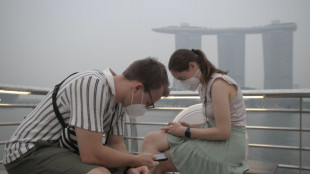 Singapore puts seven Indonesian firms on notice over toxic haze

 Man Utd have 'moved on' from Martinez outburst, says Carrick

 Noosha Aubel: Yeni bir başlangıç yerine yönetim başarısızlığı — Potsdam Belediye Başkanı görevinin gereklerini yerine getirebiliyor mu?

 Elon Musk unveils Tesla's 'flying' car

Human-driven warming of ocean temperatures increased the maximum wind speeds of every Atlantic hurricane in 2024, according to a new analysis released Wednesday, highlighting how climate change is amplifying the destructive power of storms.
The study, published by the research institute Climate Central, found that all eleven hurricanes in 2024 intensified by nine to 28 miles per hour (14-45 kph) during the record-breaking ocean warmth of the 2024 hurricane season.
"Emissions from carbon dioxide and other greenhouse gases have influenced the temperatures of sea surfaces around the world," author Daniel Gilford said in a call with reporters.
In the Gulf of Mexico, these emissions made sea surface temperatures around 2.5 degrees Fahrenheit (1.4C) hotter than they would have been in a world without climate change.
This rise fuels stronger hurricanes.
The increased temperatures intensified storms like Debby and Oscar, which grew from tropical storms into full-fledged hurricanes.
Other hurricanes were pushed up a category on the Saffir-Simpson scale, including Milton and Beryl which escalated from Category 4 to Category 5 due to climate change, while Helene climbed from Category 3 to Category 4.
Each rise in category corresponds to a roughly fourfold increase in destructive potential.
Helene proved particularly devastating, claiming more than 200 lives, making it the second deadliest hurricane to strike the US mainland in over half a century, surpassed only by Hurricane Katrina in 2005.
The new analytical approach allows researchers to hone in on a given storm's track -- showing for example that, at Hurricane Milton's point of peak intensification before landfall, climate change made the warm sea surface temperatures 100 times more likely to occur than otherwise, and increased maximum wind speed by 24 mph.
Gilford and his colleagues also published a peer-reviewed study in the journal Environmental Research Climate examining hurricane intensities from 2019 to 2023. They found that 84 percent of hurricanes during that period were significantly strengthened by human-caused ocean warming.
While their two studies focused on the Atlantic Basin, the researchers said that their methods could be applied to tropical cyclones globally.
Climatologist Friederike Otto of Imperial College London, who leads World Weather Attribution, praised the team's methodology for advancing beyond previous research that primarily linked climate change to hurricane-related rainfall.
Otto warned that these climate supercharged storms are occurring with the world at just 1.3C (2.3F) above pre-industrial temperatures, and that the impacts are likely to worsen as temperatures rise beyond 1.5C (2.7F).
"The hurricane scale is capped at Category Five -- but we might need to think about, should that continue to be the case just so that people are aware that something is going to hit them that is different from everything else they've experienced before," she said.
S.Jackson--AT