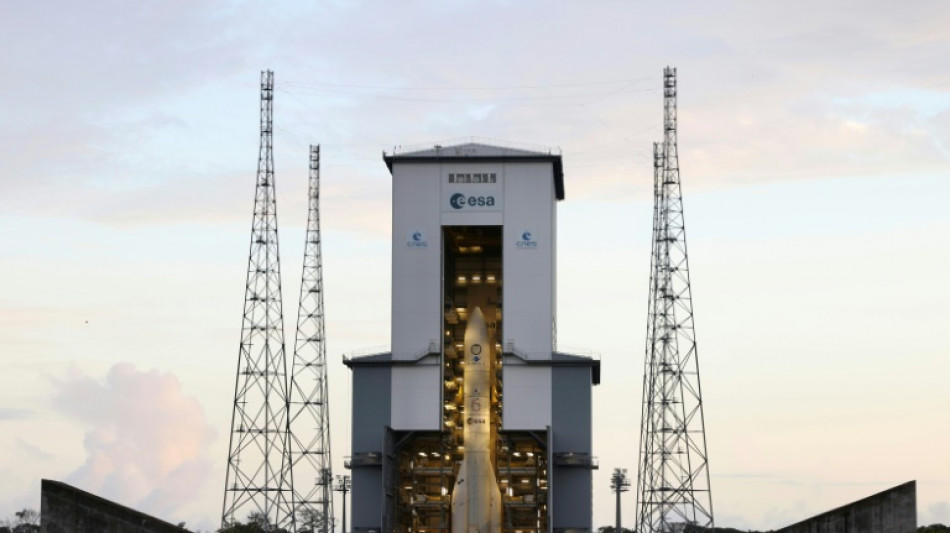
Europe's new Ariane 6 rocket blasts off for first time / Photo: Jody AMIET - AFP

 Rays defeat Guardians to level MLB playoff series
 Western brands under pressure as 'pre-owned' luxury booms in China
 'Never seen anything like it': mass looting grips Paris

 All Blacks back on track after South Africa wake-up
 Met Opera goes for big and bold, despite shaky finances
 Hollywood's fresh take on tech titans: from heroes to villains
 St. Louis City's unbeaten MLS run ends at 19, Union's reaches 15

 NFL Eagles bench Hurts at least a month with blood clot

 Across US, 'No Kings' events seek to boost early voting

 Tents spring up in Lisbon as Portugal housing protests spread
 'Best in world' Yamal powers Barca to Betis rout, Atletico strike late
 El Salvador's Bukele puts conditions on early release of gang prisoners
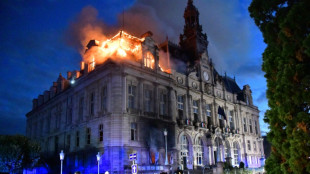 Fire rages at town hall in France's Limoges after protests: authorities
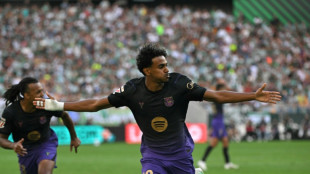 Unstoppable Barca thrash Betis to extend perfect start
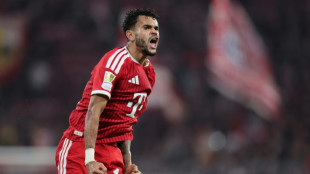
 Maresca faces anxious wait over Haaland injury scare

 PSG fight back to beat Strasbourg after Dembele penalty miss
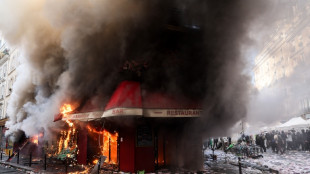 Looting, blazes and clashes in France amid nationwide protests

 Walsh breaks her own 50 free world short course record

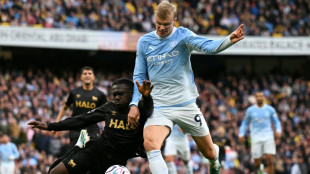 Haaland brace extends Man City's winning start in Premier League
 'Special' Ombudsman storms to victory in Champion Stakes
 Brazil's right embraces election betting odds amid polls skepticism
 Four more Ebola cases detected in Kenya, bringing total to seven
 Clashes erupt in France as protesters vow to make government 'tremble'
 Chwalinska downs Swiatek to set up Wuhan final with world number 170 Kartal

 Chacarra takes lead as McIlroy falls away in Delhi
Europe's new Ariane 6 rocket blasted off for the first time smoothly on Tuesday, carrying with it the continent's hopes of regaining independent access to space.
The much-delayed inaugural flight of the European Space Agency's most powerful rocket yet launched from Europe's spaceport in Kourou, French Guiana at 4pm local time (1900 GMT).
Crews on the ground at the launch site, which is surrounded by jungle on the South American coast, applauded as the rocket soared into clear skies.
Ariane 6's first launch, which was originally planned for 2020, is hoped to bring an end to a difficult time for European space efforts.
Since the last flight of its workhorse predecessor, Ariane 5, a year ago, Europe has been unable to launch satellites or other missions into space without relying on rivals such as Elon Musk's US firm SpaceX.
ESA chief Josef Aschbacher said it was a "very important moment for Europe".
"We are re-establishing independent access to space for Europe," he said just before the launch.
- 'First sigh of relief' -
Earlier Tuesday, the giant metal structure housing the rocket was rolled away, unsheathing the 56-metre (183 feet) behemoth in light rain, an AFP journalist observed.
After a positive weather report, the rocket's tanks were filled with liquid hydrogen and liquid oxygen.
The planned time for liftoff was delayed by an hour after routine checks revealed a small data issue that was resolved, according to the ESA.
Tony dos Santos, Kourou technical manager, said that teams on the ground would only be able to "breathe our first sigh of relief when the first satellites have been released".
That is expected an hour and six minutes after liftoff. The entire flight is scheduled to take nearly three hours.
The mission will be considered successfully complete when the rocket's reusable upper stage splashes down into the Pacific Ocean.
In Kourou, more than 200 experts were concealed in a bunker near the launch site, checking for any potential problems before liftoff.
They were in constant contact with the Jupiter control room, the communications hub between the teams -- and data sent from the rocket.
A large number of armed forces also watched over the launch, including three fighter jets deployed to deter any curious aircraft nearby.
Successful inaugural flights are by no means guaranteed. Historically, nearly half of the first launches of new rockets have ended in failure. That includes Ariane 5, which exploded moments after liftoff in 1996.
But out of 117 launches over nearly 20 years, only one other Ariane 5 flight completely failed.
- Europe's 'return' -
Space has become big business and competition is soaring, particularly from SpaceX's fully re-usable Falcon 9 rockets.
Yet in recent years Europe has found itself without an independent way to give lucrative satellites a ride into space.
Russia pulled its Soyuz rockets, long used for European launches at Kourou, after Moscow invaded Ukraine in 2022.
Later that year, Europe's Vega-C light launcher was grounded after a launch failure. Ariane 6 delays compounded the crisis.
Tuesday's launch will mark Europe's "return" to the space scene, ESA space transportation director Toni Tolker-Nielsen said.
Selected by the ESA back in 2014, Ariane 6 will able to place satellites in geostationary orbit 36,000 kilometres above Earth, as well as satellite constellations a few hundreds of kilometres up.
The rocket's maiden flight will carry 17 different "passengers", including 11 university micro-satellites, as well as re-entry capsules and small scientific experiments.
One more Ariane 6 launch is scheduled for this year, followed by six in 2025 then eight in 2026.
In the future, it is booked to launch some of Amazon's Kuiper constellation of internet satellites.
J.Gomez--AT